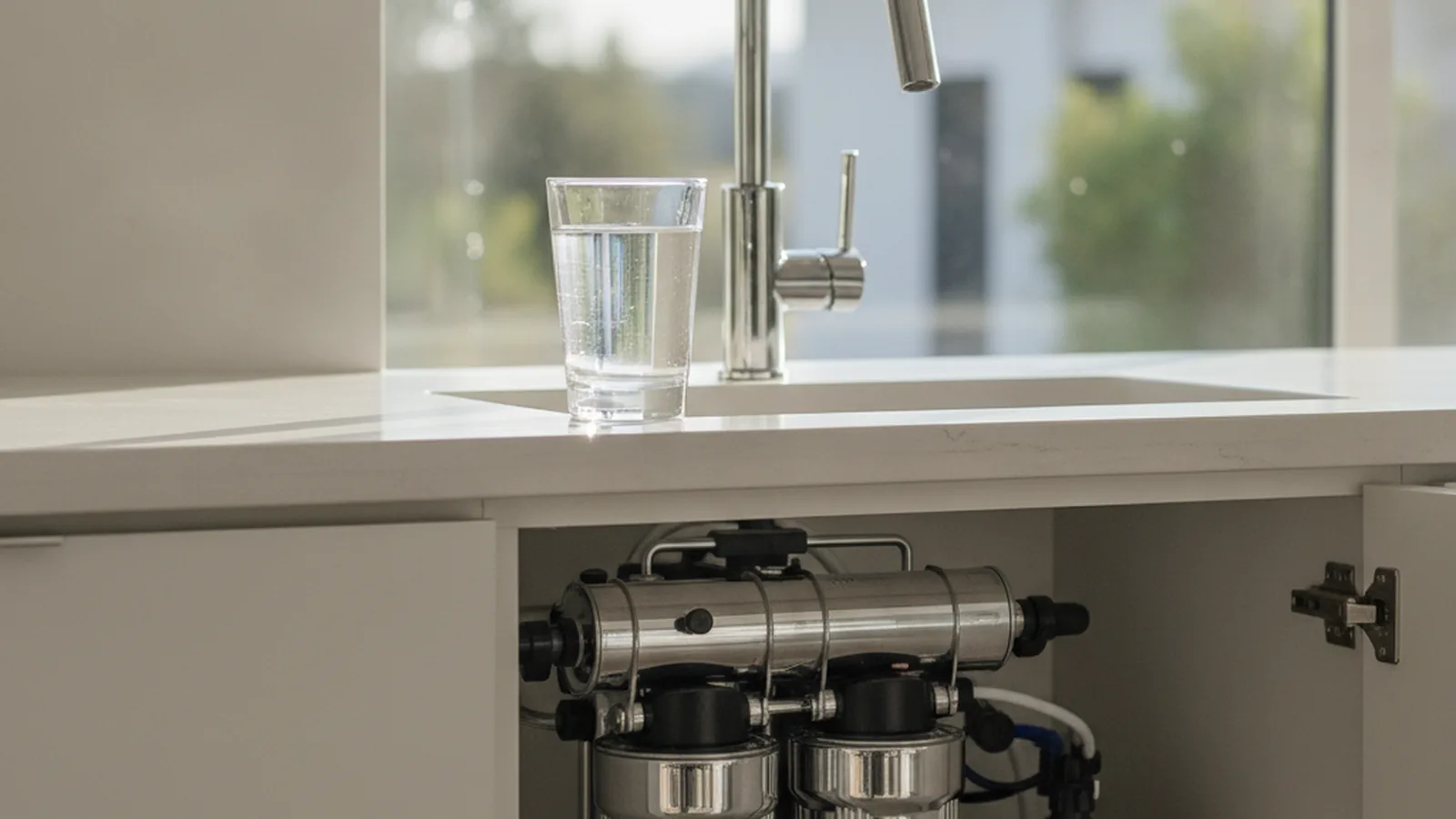
You wash a glass, let it air dry, and it comes out cloudier than when it went in the sink. Your shower door has the same chalky film no amount of scrubbing fully clears. If you don’t have a softener, that’s a straightforward hard water problem. If you do have one and you’re still seeing this, something in the system isn’t doing its job.
What that white film actually is
That residue is calcium and magnesium mineral content left behind as water evaporates. San Diego water is genuinely hard, most of the county reads somewhere between 15 and 28+ grains per gallon depending on your specific supply source, which puts it near the top of the “very hard” range nationally. As water dries on glass, tile, or dishes, those minerals stay put and build up into visible scale over time.
If you don’t have a softener yet
This one’s simple. The minerals are in the water because nothing is removing them before they reach your fixtures. Cleaning the existing buildup and installing softening equipment are two separate steps, one clears what’s already there, the other stops it from coming back. See how to remove hard water stains in San Diego for the cleanup side, and check is San Diego water hard if you want the numbers for your specific area.
If you have a softener and you’re still seeing it
A working softener should stop this almost entirely. If it isn’t, one of five things is usually going on.
Out of salt
No salt in the brine tank means no brine, and no brine means the resin never regenerates, even though the unit is running and powered on normally.
A salt bridge
A hard crust can form above the water level in the brine tank, blocking contact between the water and the salt below it. The tank looks full from the top but the softener isn’t actually pulling brine. This is common enough on its own that we cover it in detail in what a salt bridge is and how to fix it.
Stuck in bypass
A lever or valve near the softener head routes water either through the unit or around it. If it got bumped during a repair, a dishwasher install, or irrigation work, all your water could be running around the softener completely untreated.
Regeneration isn’t running
A misprogrammed timer, a power outage that reset the clock, or a failed valve motor can all stop the regeneration cycle from firing on schedule. The unit looks normal but simply isn’t cycling.
Resin is exhausted or fouled
Softener resin has a working lifespan, usually eight to fifteen years, and it can also get fouled by iron or sediment before it’s technically “old.” Either way, the unit runs through its motions without actually pulling hardness minerals out of the water.
Wait, is this actually a softener problem?
Not always. Soft water swaps calcium for sodium, and that changes how soap behaves. Too much dish soap, or a dishwasher detergent formulated for hard water, can leave a hazy film on glassware in a home with perfectly good soft water. It looks similar to scale but behaves differently.
Hard water scale is gritty, resists a dry wipe, and usually needs vinegar or a scale remover to fully clear. Soap film is a light haze that often wipes away with a dry cloth, and it usually means you need less detergent, not more, once water is actually soft.
Quick checks you can run in a few minutes
- Open the brine tank lid and press a broom handle down through the salt. A layer of solid resistance with open space below points to a salt bridge.
- Check the bypass valve position, it should point to normal or service, not bypass.
- Fill a small bottle with tap water, add a drop of dish soap, and shake it. Poor lathering means the water is still hard.
- If only glassware shows the film and other surfaces don’t, check your dishwasher detergent type and amount before touching the softener at all.
Matching the cause to the fix
An empty brine tank needs a refill. A salt bridge needs to be broken up, not just topped off with more salt. A bypass valve needs to be switched back. A dead timer, failed valve, or exhausted resin needs a technician, since those aren’t things you fix by adding salt. Soap film needs a detergent adjustment, not a service call.
When it’s time to call
If you’ve run through the checks above and the residue is still showing up, guessing at the cause wastes time and salt. A grains-per-gallon water test gives a direct answer on whether your softener is actually softening, and a technician can confirm which of the five mechanical causes is behind it. Start with a free in-home water test, and if the softener itself needs work, that’s covered under water softener repair.
FAQ
My softener says it regenerated last night, but I still have residue. What’s wrong? The display completing a cycle doesn’t guarantee the resin actually recharged. Check for a failed valve motor or exhausted resin, both can let a cycle run through its motions without real results.
Can hard water damage my dishwasher? Yes. Scale builds up on heating elements and internal components over time, which lowers efficiency and shortens the appliance’s working life.
How do I know if it’s a salt bridge versus a broken softener? A salt bridge is a mechanical blockage, not equipment failure. Breaking the crust often restores softening right away. If it doesn’t, move on to checking bypass position, timer settings, and resin condition.
Is San Diego water really that hard? Yes. Most of the county reads hard, which is considered very hard by national standards. See is San Diego water hard for area-specific numbers.