Yes, water in the City of San Diego’s own system is hard. The City reports an average of about 16 grains per gallon (276 mg/L) and a typical range of 16 to 18 grains per gallon (272 to 284 mg/L), depending on area and demand. Those figures apply to the City’s system. They are not a countywide average and do not describe every water district or private well.
Helix Water District provides another useful point of context: it describes water at 10 grains per gallon or more as hard and says the imported Colorado River and State Water Project supply averages about 14 grains per gallon. That is a supply figure, not a measurement for every Helix customer or San Diego County address.
Why the answer depends on your provider
Hardness comes mainly from dissolved calcium and magnesium. Source water and blending can change, and San Diego County contains multiple public systems plus private wells. That is why a regional average should not be used to size equipment for a particular home.
Use the utility named on your bill. Look for hardness in its current water quality report or ask the utility directly. If the property uses a private well, test the well because no public report supplies an address-specific result.
What published figures can and cannot tell you
| Water context | Published information | How to use it |
|---|---|---|
| City of San Diego system | About 16 gpg average; typical 16 to 18 gpg depending on area and demand | Useful starting context for addresses served by the City |
| Imported supply described by Helix | About 14 gpg average; Helix describes 10+ gpg as hard | Supply context only, not a tap result or county average |
| Other public districts | Consult that provider’s current report | Confirm the provider and reporting period |
| Private well | No utility average applies | Measure at the tap and use certified lab testing for contaminants |
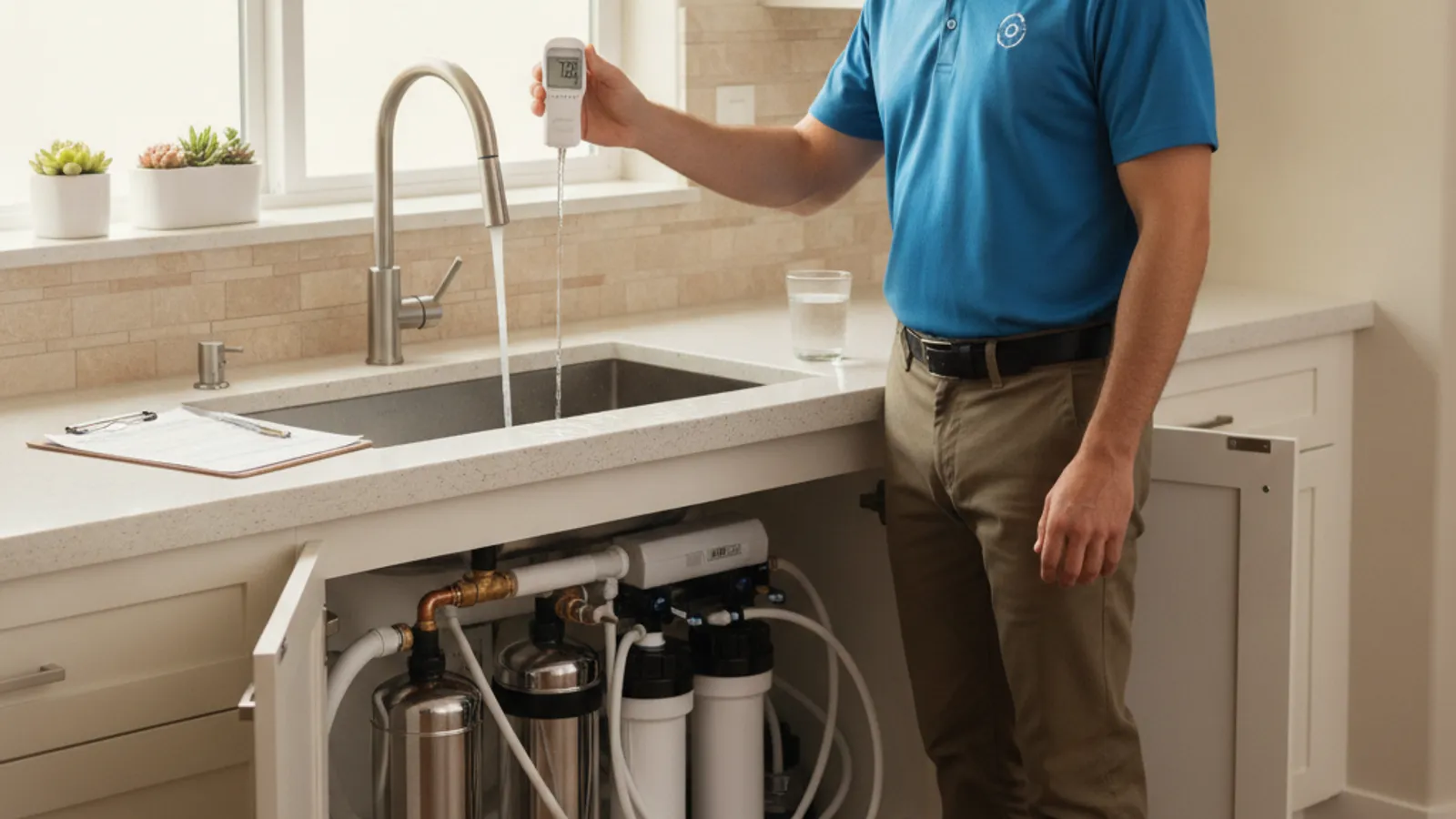
EPA homeowner guidance describes water above 7 grains per gallon as hard. A strip or titration kit can measure hardness at home when used according to its instructions. It cannot determine whether water is safe or test for PFAS and other contaminants. Those questions require the appropriate certified laboratory analysis.
What hard water can do in a home
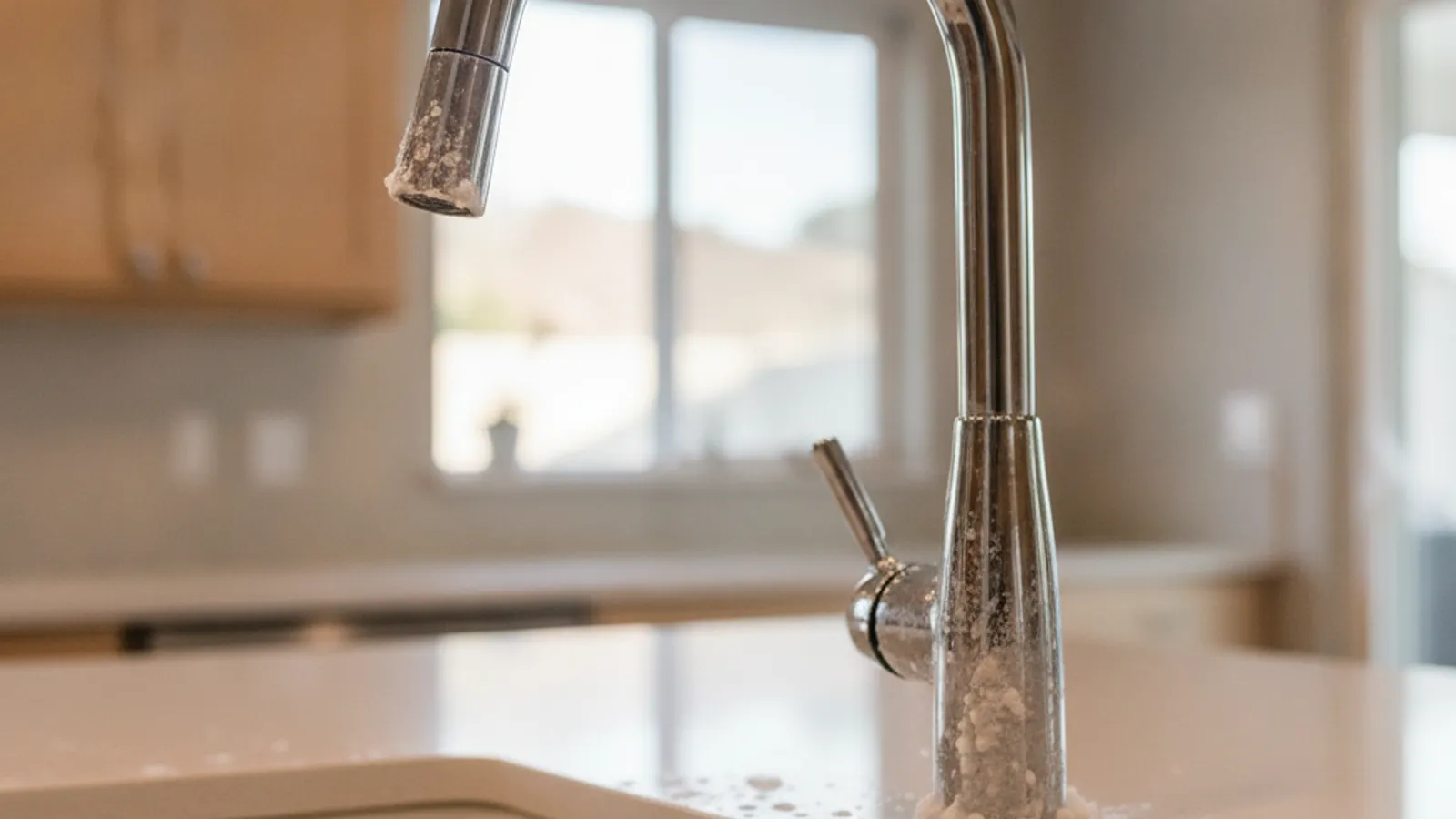
Hard water can leave scale on fixtures and inside water-using equipment. It can also reduce soap lather and leave spotting. The amount and rate of buildup depend on the measured hardness, water use, temperature, and equipment. A visual symptom can support a hardness test, but it does not identify every water-quality issue.
See hard water’s effects on your home for practical inspection points.
Choose treatment from the result and the goal
A water softener uses ion exchange to remove hardness minerals. Size it from measured hardness and actual household water use, excluding irrigation where appropriate, then compare the exact model’s working capacity, salt efficiency, water efficiency, and NSF/ANSI 44 certification where relevant. Oversizing can waste salt and water.
A salt-free conditioner does not remove hardness. Its treatment claim and limitations must be checked for the exact model. If the goal is genuinely soft water, confirm that the proposal is for hardness removal. Our hard water solutions guide explains the distinction.
Before accepting a quote, require the hardness result, water-use assumption, model number, certification, maintenance, drain needs, warranty, and installed price in writing.
Frequently asked questions
Is all San Diego County water hard?
There is no approved single countywide value. The City of San Diego reports hard water in its system, and Helix publishes a hard imported-supply average, but other utilities and private wells need their own source or test result.
What is San Diego’s average hardness?
For the City of San Diego system, the published average is about 16 gpg, with a typical range of 16 to 18 depending on area and demand. Do not apply that number to an address served by another district.
Which part of the county has the hardest water?
No verified countywide ranking supports that comparison. Check the serving utility’s report or test a private well.
Can a free in-home test check PFAS or prove my water is safe?
No. An in-home visit can provide a useful hardness reading for treatment planning. PFAS and other contaminant questions require appropriate certified laboratory testing and interpretation from the utility or health department.
Will a standard water filter remove hardness?
Do not assume it will. Carbon filtration and reverse osmosis have different treatment claims. Verify the exact model and certification against your goal; whole-home hardness removal generally calls for equipment specifically rated for that purpose.
Get the hardness result for your address
A free in-home water test can measure hardness at the tap for planning. Filter Pros San Diego is a referral network that connects homeowners with independent professionals. The professional provides the written recommendation, contract, and work. Call (858) 400-6508 to request a connection. For a contaminant concern, use a certified laboratory.