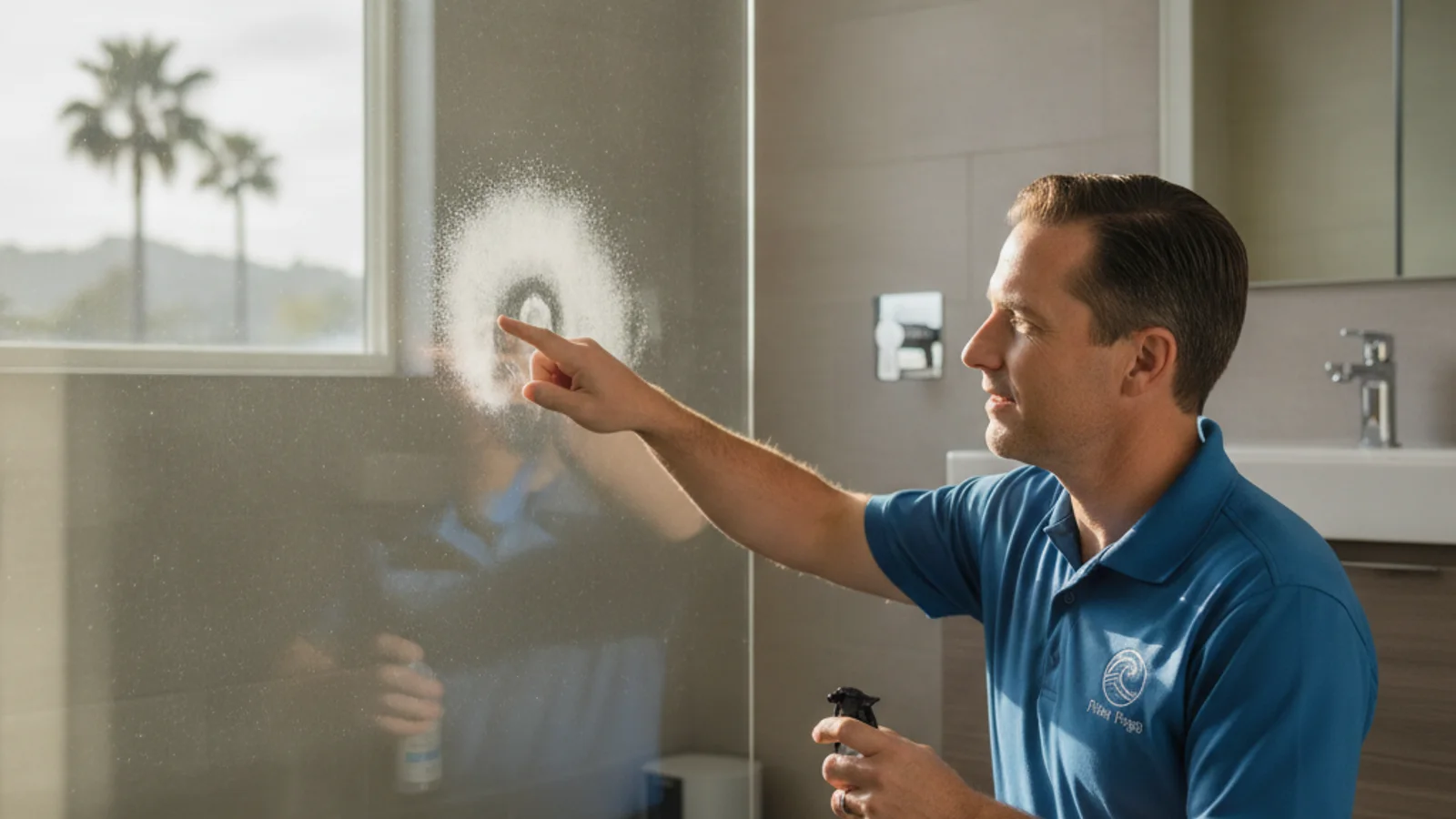
You remove hard water stains in San Diego with an acid, and white vinegar is the one most people already have. The stains are dried mineral scale, mostly calcium and magnesium, and acid dissolves them. The catch is that they come back, because San Diego’s water is hard and those minerals are still in every drop. Scrubbing treats the symptom. A water softener treats the cause.
What causes hard water stains in San Diego?
Hard water stains are dissolved minerals left behind when water evaporates. San Diego tap water is hard: the City of San Diego publishes an average of about 16 grains per gallon, ranging 16 to 18 depending on your area and demand, well past the 10.5 gpg line the U.S. Geological Survey uses for “very hard” water. Most of that supply is imported from the Colorado River and Northern California, and it picks up a heavy load of calcium and magnesium along the way.
When that water dries on a surface, the water leaves but the minerals don’t. What’s left is the white, crusty, or cloudy film you see on glass shower doors, faucets, dishes, and around drains. The harder the water, the faster the buildup, which is why San Diego homes get spotting again within days of cleaning. For the full hardness picture by neighborhood, see is San Diego water hard.
How do you remove hard water stains?
White vinegar is the go-to because acetic acid dissolves the mineral scale without scratching most surfaces. Soak a cloth or paper towel in undiluted white vinegar, lay it directly on the stain so it stays wet, and give it 10 to 30 minutes before wiping. For glass shower doors and fixtures, a 50/50 vinegar and water spray works for light buildup, while heavier scale needs the full-strength soak.
For stubborn spots, a paste of baking soda and water adds gentle scrubbing power after the vinegar has done the dissolving. Commercial descalers like CLR handle scale that vinegar can’t touch. Two cautions matter here. Don’t use vinegar or any acid on natural stone like marble, granite, or travertine, since acid etches the surface permanently. And on glass that’s already etched from years of hard water, cleaning removes the film but can’t undo the etching itself.
Why do hard water stains keep coming back?
They come back because cleaning removes the deposit, not the mineral that creates it. Every time hard water touches a surface and dries, it leaves a fresh layer of calcium and magnesium behind. You can scrub a shower door spotless and it’ll spot again by the end of the week, because the water coming out of the tap hasn’t changed.
This is the part homeowners find frustrating, and it’s the honest reason no cleaning product is a permanent answer in San Diego. The stains aren’t a cleaning problem you’re losing at. They’re a water problem showing up on your surfaces. The only way to stop the cycle is to change the water before it reaches the glass.
Do hard water stains damage anything?
On surfaces, the visible stains are cosmetic at first, but the same minerals cause real damage where you can’t see them. Scale builds up inside water heaters, dishwashers, coffee makers, and ice machines, which shortens their lifespan and raises energy use. On glass shower doors, long-term mineral exposure can etch the surface so it never looks clear again, even after cleaning.
Fixtures and showerheads clog with scale that reduces flow and leaves them looking permanently dull. None of this is dangerous to drink, but it adds up to real money over the years in replaced appliances and fixtures. We break down those costs in hard water effects on your home.
How do you stop hard water stains for good?
A water softener is the permanent fix, because it removes the calcium and magnesium before the water ever reaches a faucet. A softener uses ion exchange to swap those hardness minerals out, so the water that hits your glass, dishes, and skin no longer leaves scale behind. Homeowners who install one usually notice the spotting stop within days, along with softer skin and less soap scum. Our guide on the best water softener for San Diego hard water covers what to look for, and water softener cost in San Diego covers the numbers.
A salt-free conditioner is the other option, and it works differently. It doesn’t remove the minerals, it changes their structure so they’re less likely to stick to surfaces and pipes. That cuts scale buildup, but because the minerals are still in the water, you may still see some spotting. If you want zero stains, a softener is the surer path. If you’re weighing the two, water softener vs salt-free conditioner lays out the tradeoffs.
Which fix is right for your home?
The right choice depends on how hard your specific water is and what matters most to you, whether that’s zero spotting, avoiding salt, or protecting your appliances. A water softener installation gives the most complete results for stains and scale, while salt-free water conditioning suits homes that want scale reduction without adding sodium or maintaining a brine tank.
At Filter Pros San Diego, we connect homeowners across the county, from La Jolla to the inland communities in our water filtration service network, with vetted local water treatment pros. Every recommendation starts with a free in-home water test that measures your actual hardness in grains per gallon, so you’re sizing a hard water solution to your real water instead of a county-wide average. From there the pros match the system to your home.
Frequently asked questions
What causes hard water stains?
Hard water stains are calcium and magnesium minerals left behind when hard water evaporates. San Diego water is hard, so it deposits a heavy mineral film on glass, fixtures, and dishes as it dries.
Does vinegar remove hard water stains?
Yes. The acetic acid in white vinegar dissolves the mineral scale that makes up hard water stains. Soak the stain in undiluted vinegar for 10 to 30 minutes, then wipe. Avoid using it on natural stone, since acid etches marble and granite.
Why do my hard water stains keep coming back?
Because cleaning removes the deposit but not the minerals in the water. Every time hard water dries on a surface it leaves fresh scale behind, so the stains return until the water itself is treated.
Will a water softener stop hard water stains?
Yes. A water softener removes the calcium and magnesium through ion exchange before the water reaches your taps, so it stops leaving scale behind. Most homeowners see the spotting stop within days of installation.
Are hard water stains permanent?
The surface film isn’t permanent and cleans off with an acid like vinegar. But long-term hard water can etch glass shower doors so they never look fully clear again, which is why stopping the buildup early matters.
Call (858) 400-6508 to schedule your free in-home water test, or ask about water softener installation to stop hard water stains in your San Diego home for good.