A steady flow from the softener drain can mean two different things. The unit may be completing a normal regeneration cycle, or it may not be returning to service. Start with the display and product manual before touching any controls.
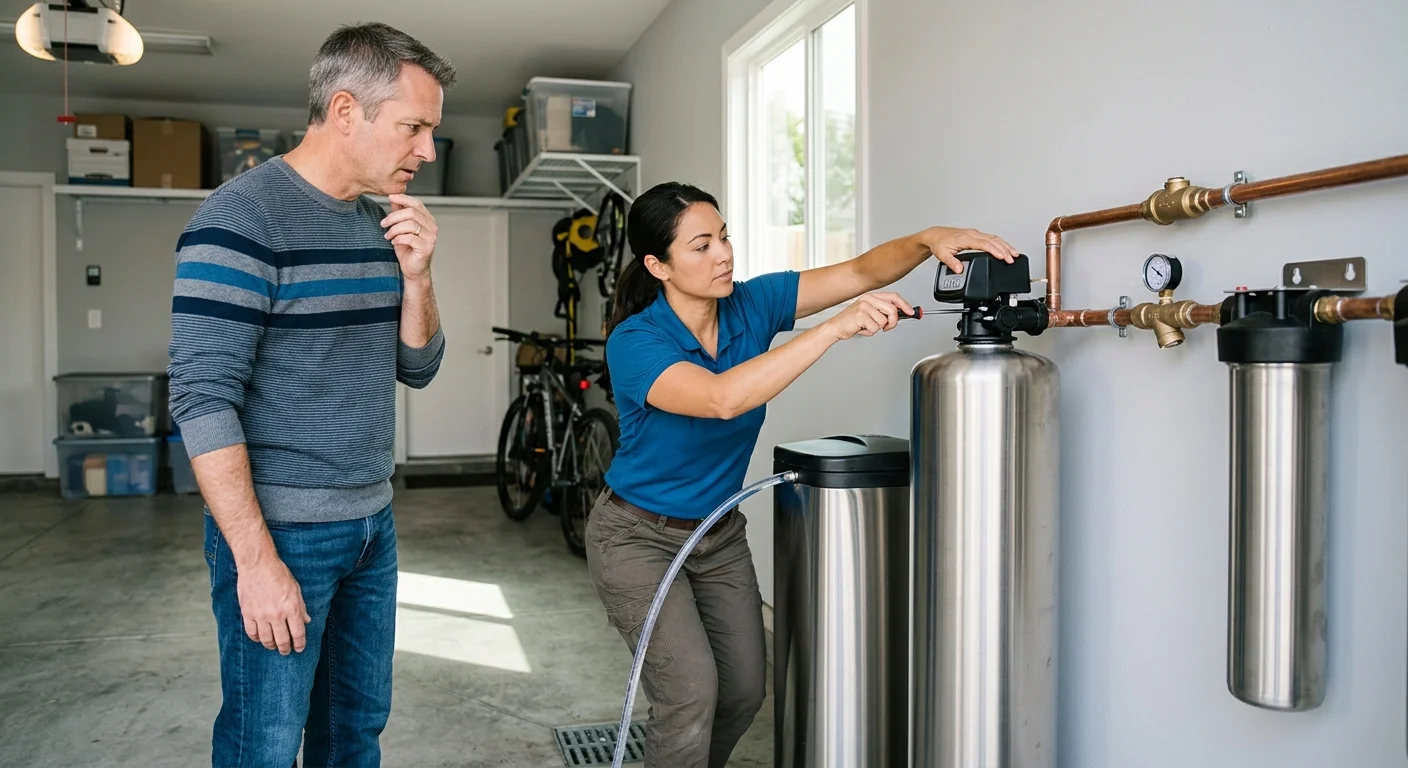
Check whether the unit is in a normal regeneration cycle
Water entering the drain isn’t automatically a repair problem. A softener routes water to its drain during certain parts of regeneration. The correct sequence and duration depend on the exact model and programming.
Look at the display without pressing anything. It may show a cycle name, countdown, moving symbol, or error message. Copy that information exactly. A photo is useful because the display may change before a pro arrives.
Next, find the manufacturer and model number. Check the unit’s label rather than relying on its color or cabinet shape. Use the matching product manual to answer three questions:
- Does the displayed status indicate regeneration?
- Does the current drain flow match that part of the cycle?
- When should the unit return to its normal service display?
Don’t use a generic cycle length from another model. Don’t assume the process started when you first noticed it. You may have entered the garage or utility area midway through the cycle.
Note the time you first saw the drain flow. Then leave the controls alone while you compare the behavior with the manual. If the documented sequence finishes and the display returns to service, the observed flow may have been part of normal operation.
Check again later for water softness and another unexpected cycle. Our guide to checking whether a water softener is working explains the signs you can observe at fixtures. One normal-looking cycle doesn’t confirm that the unit is producing softened water.
If the display doesn’t match the manual, write down what it shows. That detail is more helpful than guessing which internal part has failed.
Look for a stuck cycle without forcing the controls
A water softener regeneration that won’t stop needs model-specific diagnosis. The safest first step is observation. Don’t force a dial, hold random buttons, or change programming based on instructions for a different unit.
Watch whether the display is changing. A changing stage or countdown differs from a screen that remains fixed. Listen for changes in the equipment’s sound, but don’t treat sound alone as a diagnosis.
Record what you can see:
- The exact message or symbol on the display
- Whether the displayed stage changes
- Whether drain flow is steady, intermittent, or has stopped
- Any recent power interruption you know about
- Any programming changes made before the symptom began
- Whether the problem began after salt or maintenance work
These observations help separate one long-running event from repeated new cycles. They also give a licensed pro useful information without requiring you to open the control valve.
Use only reset instructions printed in the correct manufacturer manual. If the manual doesn’t address the displayed condition, stop there. Guessed button combinations can erase useful settings or make the original symptom harder to trace.
Don’t remove the valve cover or loosen a pressurized connection. Don’t pull apart the drain assembly to search for a blockage. Those steps move beyond symptom checking and into repair work.
Review the unit’s maintenance history while you wait. Missing records don’t prove neglect or identify the cause. They simply help a pro understand what’s known. Our San Diego water softener maintenance guide covers the routine observations homeowners can track without dismantling equipment.
Inspect visible drain flow and bypass conditions
Follow the drain line visually from the softener to its discharge point. Don’t disconnect it. Look for an obvious kink, crushed section, loose end, or water escaping somewhere other than the intended drain.
Keep the inspection limited to what’s visible. A line can look clear from the outside while the actual problem sits elsewhere. Moving or shortening it without the installation instructions can create a second issue.
Document what the water is doing at the discharge point. A short video can capture whether the flow stays constant, pulses, weakens, or stops. Avoid describing it only as “a lot” or “a little.” The visible pattern gives the repair pro better information.
Next, locate the bypass assembly. Don’t turn it yet. Bypass designs vary, and handle positions aren’t universal. Compare its present position with the diagram in the exact product manual.
A softener that’s already bypassed may not be treating household water. However, the handle position alone doesn’t explain why a drain flow continues. Report both conditions instead of treating one as proof of the other.
If the manual clearly shows that the handle isn’t fully seated in its intended position, photograph it. Don’t apply extra force to a stiff control. A hard-to-move bypass needs hands-on inspection.
Also check whether another nearby device could be using the same drain area. Condensate lines, filtration equipment, and other household systems may discharge nearby. Confirm that the visible flow actually comes from the softener line.
This inspection shouldn’t include opening tanks, loosening fittings, or removing pressurized parts. Once the source and visible path are documented, further testing belongs with a licensed pro.
Confirm whether hardness has returned
Drain behavior shows what the equipment is doing. It doesn’t show whether the water is currently soft. A hardness test helps answer that separate question.
Use the same testing method for each sample. Take notes about the fixture and whether you sampled cold water. Compare the result with an earlier result only when the method and sampling point are comparable.
San Diego County has many water suppliers, so don’t apply one hardness figure to every address. Start with the current water-quality information from the agency named on your water bill. A private well needs testing of that well rather than a public-system average.
For City of San Diego customers, Public Utilities reports an average of about 16 grains per gallon, or 276 parts per million. It reports a range of 16 to 18 grains per gallon, or 272 to 284 parts per million. The city says the result varies by area and water demand.
Those figures apply only to the City of San Diego’s system. They aren’t countywide figures and don’t characterize a private well.
Helix Water District reports that water at 10 or more grains per gallon is considered hard. It also says imported water from the Colorado River and State Water Project averages 14 grains per gallon. That imported-supply average isn’t a measurement from an individual East County tap.
If hardness has returned, the drain symptom may be affecting treatment. It still doesn’t identify the failed component. A programming issue, bypass condition, or repair need can’t be confirmed from a hardness strip alone.
Filter Pros San Diego can arrange an in-home test and connect you with a separately licensed pro. If the current system no longer fits the property or water conditions, review the available hard water solutions before choosing a repair or replacement.
When to stop troubleshooting and call a licensed pro
Stop homeowner troubleshooting when the documented regeneration should be complete but drain flow continues. The same applies when the display remains fixed, an error persists, or the controls don’t respond as the manufacturer manual describes.
Call a licensed pro if the unit repeatedly starts new cycles or hardness returns at your fixtures. Those symptoms need hands-on diagnosis. They shouldn’t be treated by forcing controls or opening pressurized parts.
Have the following information ready:
- Manufacturer and exact model number
- Display message or cycle stage
- Time the flow was first noticed
- Photos or video of the drain pattern
- Current bypass position
- Recent hardness test results
- Any known power or programming changes
This record helps the pro begin with the observed symptom. It also reduces the chance that a temporary change gets mistaken for the original problem.
Filter Pros San Diego refers homeowners to separately licensed Water Filtration pros. The homeowner contracts with and pays that pro directly. You can confirm a contractor’s license through the California Contractors State License Board before authorizing installation or repair work.
A pro can compare the equipment’s behavior with its manual, inspect the valve and drain setup, and test the treated water. That inspection determines whether the practical next step is adjustment, water softener repair or replacement, or no repair at all.
Don’t approve a replacement solely because water reached the drain. Normal regeneration also uses that path. The decision should follow a model-specific inspection and an actual water test.
When to call us
Call when drain flow continues beyond the documented cycle, the controls won’t return to service, or hardness has returned. We’ll arrange an in-home water test and connect you with a separately licensed Water Filtration pro. Call us at (858) 400-6508 to set up a free in-home water test.