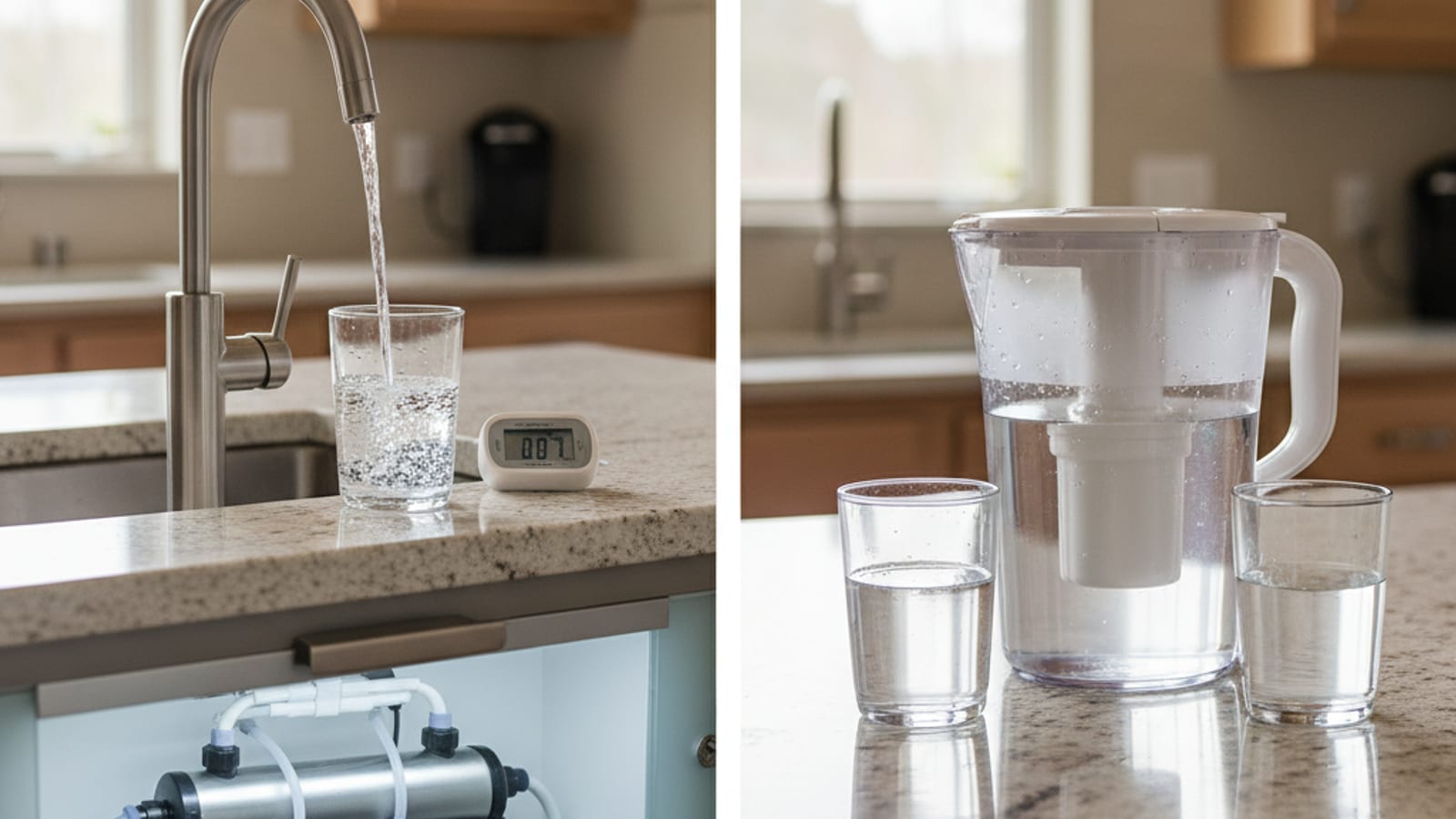
Reverse osmosis is commonly used at one dedicated drinking-water faucet. Whole-house filtration treats water where it enters the home. The better choice depends on the problem you have identified, the exact model’s certified reduction claims, and how many fixtures need treatment. Some homes may use both, but that is a goal-driven decision rather than a default package.
Reverse osmosis or whole-house filtration: which do you need?
Start with scope. EPA describes point-of-use systems as treatment at the tap or place of use, usually for drinking and cooking. Point-of-entry systems treat water as it enters a residence and therefore handle a much larger volume. If the concern is limited to one drinking-water tap, compare point-of-use options. If a documented issue needs treatment across many fixtures, compare point-of-entry options. Use the serving utility’s current report and appropriate testing to define that concern first.
What does reverse osmosis do?
Reverse osmosis moves water through a membrane and may include other filters before or after it. The CDC home-treatment guide explains that RO can remove or reduce different substances, but it also directs shoppers to the product label for the specific chemicals a system addresses. NSF/ANSI 58 identifies an RO system category; it does not prove that every certified model reduces every contaminant. Check the exact model’s certification listing and performance data sheet for the claim you need.
RO also produces treated water and reject water. Efficiency varies by model. EPA’s WaterSense RO product search reports exact-model efficiency and verified contaminant claims, making it useful for side-by-side comparisons.
What does a whole-house filter do?
A whole-house filter is installed near the water-line entry and treats a larger flow for multiple fixtures. Its performance depends on the media, model, flow rate, incoming water, and certified claims. A sediment filter, an activated-carbon system, and a hardness softener perform different jobs. Do not assume one whole-house tank addresses taste, disinfectants, sediment, hardness, scale, or a health-related contaminant unless the exact product documentation supports that claim.
Can you use both together?
Yes, when two documented goals call for different treatment stages. For example, a point-of-entry system may target a whole-home concern while an exact-model RO unit addresses a separately identified drinking-water concern at the kitchen. Confirm compatibility and maintenance requirements with both manufacturers. Pairing systems does not by itself guarantee better water or longer equipment life.
Which is better for San Diego water?
Neither is universally better, and San Diego County includes multiple water providers as well as private wells. Check the current report and notices from the utility serving the address. City customers can begin at the City of San Diego water-quality portal; that information should not be applied to another district or a private well. If a tap-specific contaminant answer is needed, use an appropriate state-certified laboratory.
Reverse osmosis vs whole-house filtration at a glance
| Reverse osmosis | Whole-house filtration | |
|---|---|---|
| Install point | Under the kitchen sink | At the main water line entry |
| What it treats | Only the contaminants listed for the exact model | Only the contaminants or aesthetic issues listed for the exact model and media |
| Coverage | One dedicated faucet | Fixtures connected to the treated plumbing; confirm any bypassed lines |
| Best for | A defined drinking and cooking water goal at one tap | A defined treatment goal across multiple fixtures |
| Maintenance | Model-specific filters, membrane, sanitation, and testing | Model-specific cartridges or media, service, and testing |
Getting the right combination for your home
The system a neighbor installed does not establish what your house needs. Compare the water concern, treatment scope, exact-model claims, rated flow, pressure requirements, water use, installation changes, and replacement costs. Also distinguish filtration from softening: NSF/ANSI 44 covers ion-exchange softeners that reduce calcium and magnesium hardness, while other standards cover specified aesthetic or health-effect reduction claims.
Filter Pros San Diego can introduce homeowners to separately operated, licensed independent providers. A basic in-home water assessment may help discuss equipment fit, but it does not replace a state-certified laboratory analysis for a specific contaminant. Compare whole-house water filtration, reverse-osmosis drinking-water systems, and under-sink filtration against the same written treatment goal.
Call (858) 400-6508 to get matched with a local pro and schedule your test. We cover every part of San Diego County.
Frequently asked questions
Do I need whole-house filtration if I already have reverse osmosis?
Only if you have a separate, documented reason to treat water beyond the RO faucet. A point-of-use RO system does not treat the other fixtures, but that alone does not establish that whole-house treatment is necessary.
Does reverse osmosis remove chloramine on its own?
That depends on the exact model and its pretreatment. Check the manufacturer’s water-quality requirements and certified reduction claims. Do not assume every RO unit or carbon stage has the same chloramine performance.
Which system should I install first if I can only afford one?
If the verified goal is at one drinking-water tap, compare point-of-use systems first. If the verified goal applies across many fixtures, compare point-of-entry systems. For hardness, compare a softener or conditioner separately because filtration and softening are different processes.
Is whole-house filtration the same as a water softener?
No. “Whole-house” describes where treatment occurs, while “softener” describes a process for reducing hardness minerals such as calcium and magnesium. A point-of-entry system may contain filtration, softening, or multiple stages. Verify each stage’s exact function and claim.
How long does installation take for each system?
Installation time depends on the exact equipment, access, drain and electrical needs, main-line routing, required plumbing changes, and permit scope. Ask the installing provider for a written schedule after inspecting the site.
Related: Reverse osmosis vs filter pitcher | Reverse osmosis cost in San Diego | Whole-house water filtration cost in San Diego