Alkaline water may be worth it if you prefer its taste or want a particular measured output from a drinking-water system. Those are product preferences, not reasons to expect a medical outcome. The useful comparison is between exact systems: what each one treats, what it adds after treatment, how the output is measured, and what upkeep it requires.
What “alkaline water” means
Alkaline water has a pH above 7. Products can reach that result in different ways. An ionizer changes the incoming water through electrolysis. A remineralization cartridge is installed after another treatment stage and adds minerals according to its design. Bottled products and mineral drops have their own formulations.
Those methods are not interchangeable, and raising pH is not the same as filtration. A pH reading by itself does not identify fluoride, chloramine, PFAS, hardness, or any other specific constituent. It also does not show that a system has a certified reduction claim.
Why alkaline cartridges are often discussed with reverse osmosis
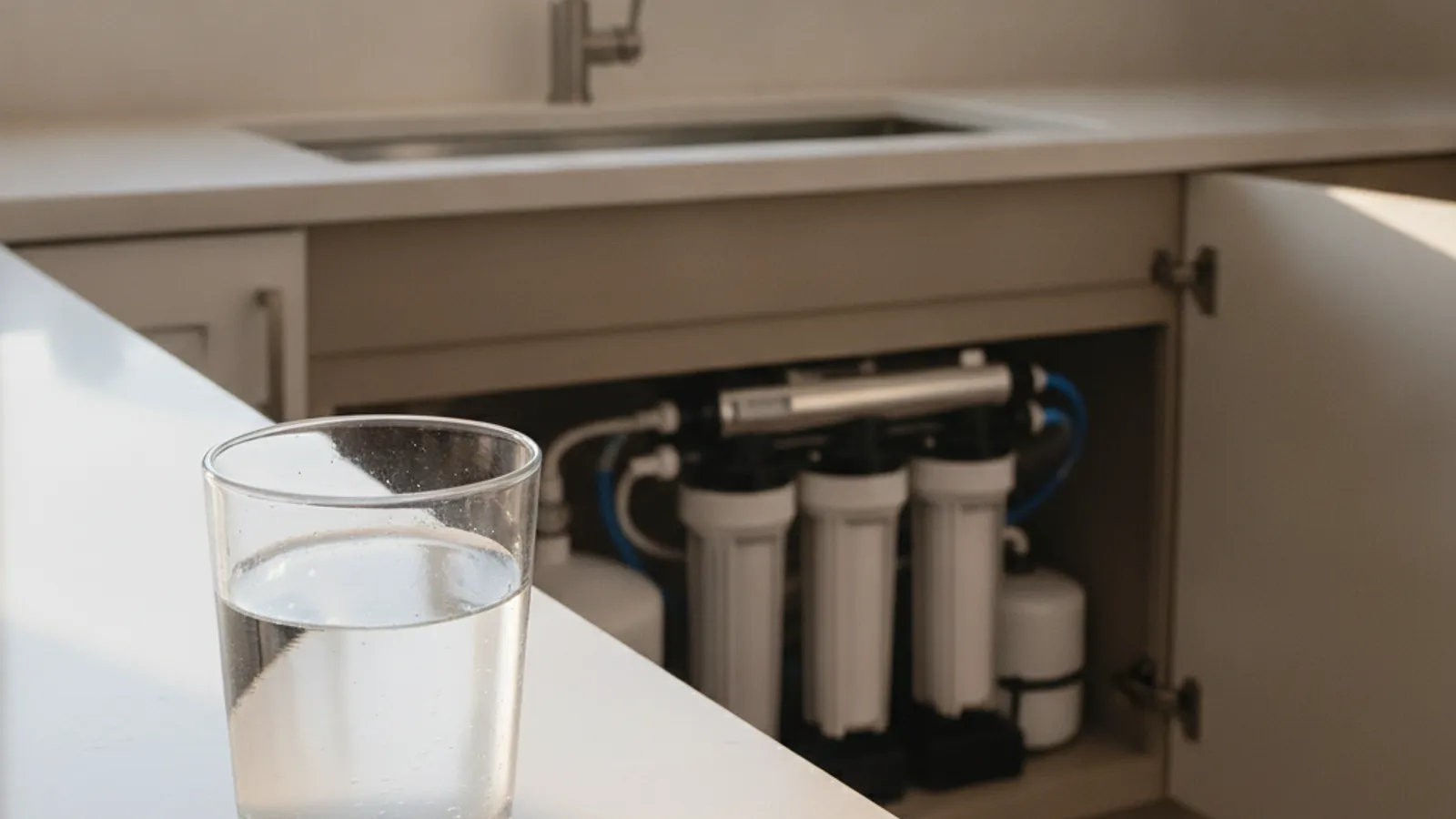
A point-of-use reverse osmosis system sends water through a membrane and produces treated water plus a reject-water stream. EPA notes that RO can lower the pH of treated water in treatment applications. The actual output from a home unit depends on the feed water, membrane, other cartridges, operation, and maintenance.
Some under-sink systems place a remineralization cartridge after the RO stage. Depending on the cartridge, that stage may change mineral content, pH, and taste. Check the manufacturer’s performance information for the exact cartridge instead of assuming a universal pH or mineral dose.
If you are comparing reverse osmosis drinking-water systems, treat remineralization as one selectable feature. It does not expand the RO unit’s certified contaminant-reduction claims.
Compare the common options
| Option | What to verify | Ongoing consideration |
|---|---|---|
| Water ionizer | Required incoming-water conditions and the model’s actual treatment claims | Cleaning, electrode condition, and measured output |
| RO with remineralization | Exact RO reduction claims plus what the final cartridge adds | Membrane, filters, cartridge replacement, and reject water |
| Bottled alkaline water | Label, source, and mineral information | Recurring purchases and container handling |
| Mineral drops or powder | Ingredients, directions, and resulting pH | Repeat dosing and no implied filtration |
If reduction of a named substance is part of your goal, start there. NSF/ANSI 58 covers point-of-use RO systems, but many contaminant-reduction claims under the standard are optional. Verify the exact model and the exact claim. Treatment performance must be checked constituent by constituent.
When remineralization may be worth considering
It can be a reasonable feature when:
- You have tasted the treated water and prefer the output after a remineralization stage.
- The manufacturer clearly states what the cartridge adds and how often it must be replaced.
- A current measurement shows the system is producing the pH range you selected.
- You have compared the added cartridge cost with a standard RO configuration.
It may add little value when you already like the treated water, when the seller cannot document the cartridge’s function, or when “alkaline” is being used as a substitute for specific treatment performance.
How to evaluate your starting water
First identify the utility serving the address and review its current consumer confidence report. Utility data describes the public system during its reporting period; it is not a measurement from your kitchen tap. A private well needs its own testing plan. Our guide to San Diego tap water explains what those reports can and cannot answer.
A provider’s free in-home visit can screen stated field parameters and help with equipment sizing or configuration. Ask what the provider measures and which instruments are used. A pH or hardness screen does not establish the presence or absence of every constituent, and it should not be described as laboratory analysis.
Then compare:
- The treatment goal and whether it applies at one tap or the whole home.
- The exact model’s certified reduction claims.
- The measured output and the conditions under which it was measured.
- Filter, membrane, or remineralization-cartridge replacement requirements.
- Treated-water production, reject water, warranty terms, and the provider’s written quote.
Our guides to under-sink water filtration, reverse osmosis versus whole-house filtration, and reverse osmosis cost factors can help organize that comparison.
Frequently asked questions
Is alkaline water better for your health?
Do not choose a water-treatment system as a way to diagnose, prevent, or treat a health condition. If a medical issue is driving the decision, discuss it with a qualified clinician. For equipment shopping, compare taste, measured output, certified treatment claims, and ownership requirements.
Does reverse osmosis always produce the same pH?
No. Output depends on the incoming water and the exact system configuration and condition. Measure the installed system’s output if a particular pH matters to you.
Does remineralization mean the water is filtered better?
No. Remineralization is a post-treatment feature. It does not prove additional contaminant reduction. Those claims must be verified separately for the exact model.
How broad is an in-home water screen?
A field screen covers only the parameters and methods the provider states. Use the utility report for system-level information and a qualified laboratory when a constituent-specific result is needed.
Filter Pros San Diego can introduce you to an independent licensed provider who can explain the scope of a free in-home water test and compare system configurations. The provider makes the recommendation and supplies the quote. Call (858) 400-6508. The Oceanside water-filtration guide gives local context for readers comparing options there.