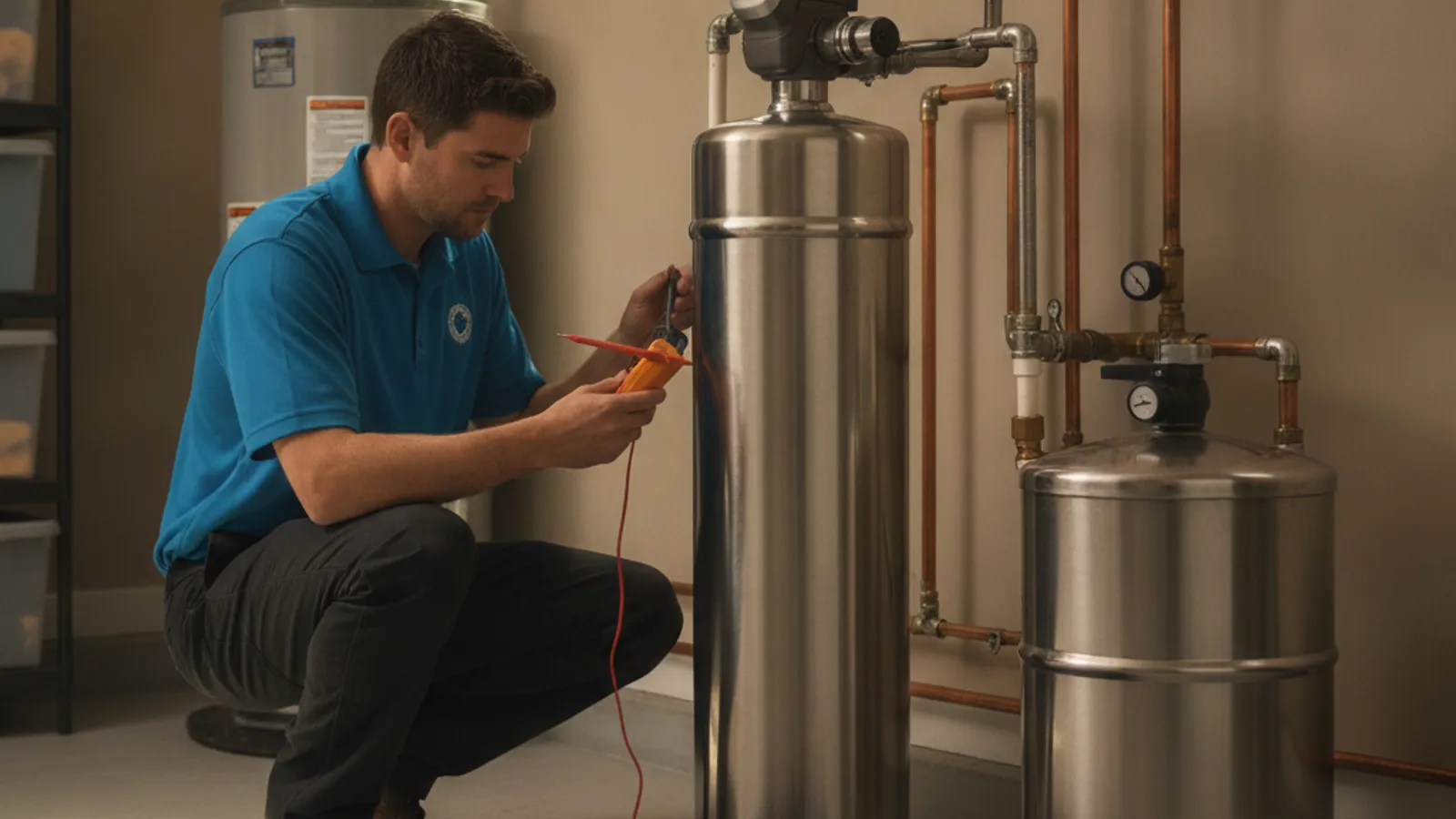
HomeGuide reports a national average water-softener repair range of $150 to $600. This is a general planning estimate published July 14, 2025, not a Filter Pros price, a San Diego average, or a quote for your equipment. The actual cost depends on the diagnosis, exact parts, labor, access, warranty coverage, downtime, and written scope.
How much does water softener repair cost in San Diego?
An individual job cannot be priced from a symptom alone. The table below shows what to document for a provider, without assigning an unsupported price to a particular repair.
| Area to inspect | Symptom to report | What the quote should clarify |
|---|---|---|
| Brine tank and salt | Salt use changed, unexpected water level, or overflow | Diagnosis and model-specific remedy |
| Injector or brine path | Unit cycles but measured hardness has returned | Test results, parts, and labor |
| Valve head and seals | Leak near the head or unusual cycling | Exact leak location and failed component |
| Controls or motor | Blank display, unusual noise, or no response | Compatible parts and expected downtime |
| Resin and capacity | Treated hardness rises while the unit runs | Incoming and treated hardness, settings, and capacity |
| Tank, bypass, drain, and connections | Active leak or persistent drain flow | Safe isolation, repair scope, and warranty |
Ask whether the diagnostic charge is credited toward approved work. A useful written quote identifies the failed component, parts and labor, applicable warranty, expected downtime, and whether a return visit is needed.
What actually fails inside a water softener?
Symptoms help describe a problem, but they do not identify the failed part. A provider should inspect the exact make and model before recommending a water softener repair.
The control valve. Ask the provider to identify the exact valve model, the diagnosed fault, and the compatible parts. The quote should distinguish a serviceable part from a complete valve replacement and explain how operation will be checked afterward.
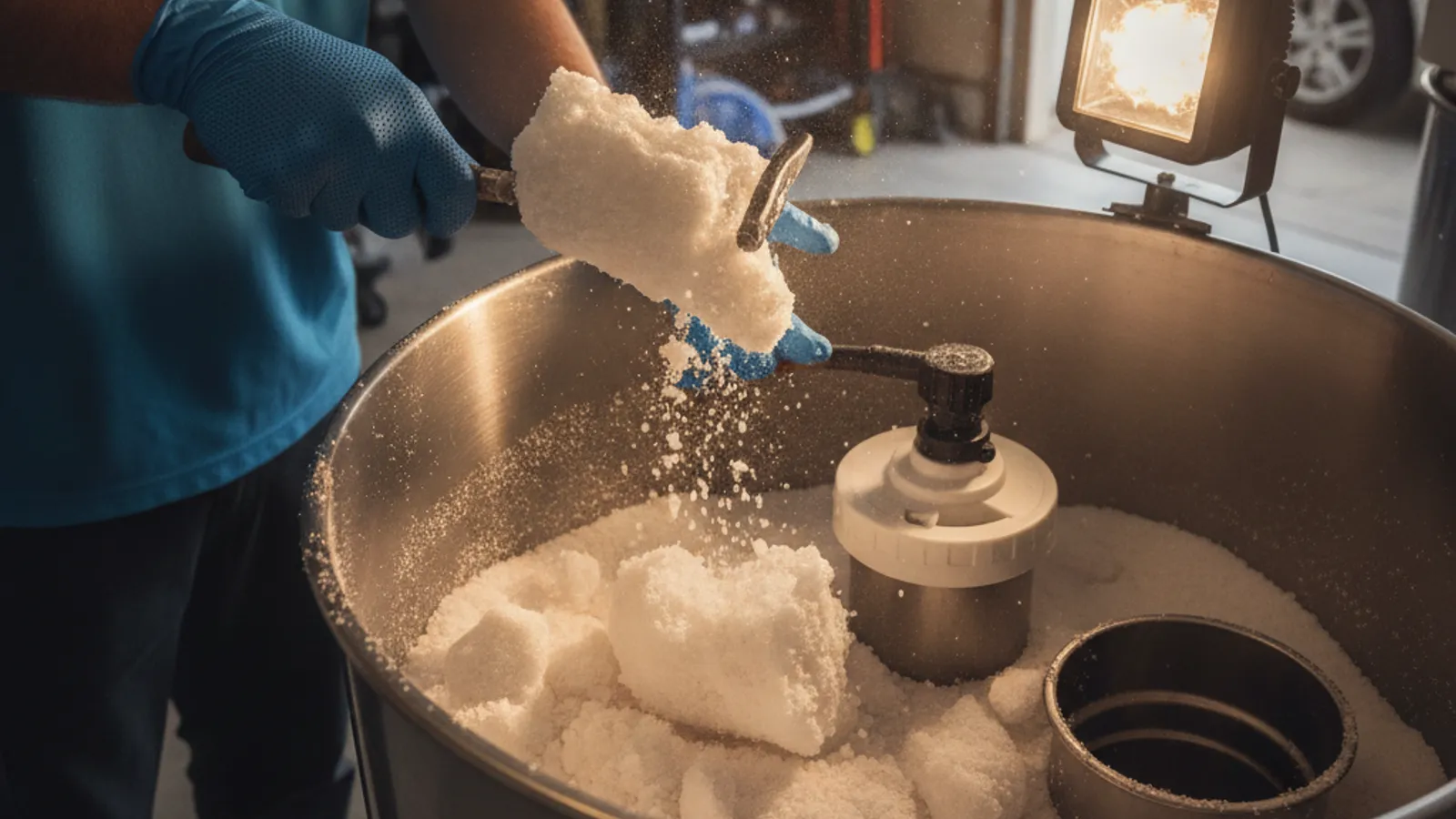
The brine tank. A full-looking salt tank does not explain a malfunction by itself. Ask the provider to identify the cause, show which parts or maintenance are included, and explain how the repair will be verified. Do not rank its price against a valve or resin repair before the diagnosis and scope are known.
The treatment performance. If scale or spotting returns while the unit appears to run, confirm the incoming and treated hardness and compare the result with the model’s settings and rated capacity. The EPA recommends sizing a softener from measured hardness and household water use.
The circuit board or motor. Newer electronic-head softeners depend on a control board and a small motor to drive the valve through each regeneration stage. A blank display, unusual motor noise, or a unit that stops responding needs diagnosis using the exact model’s instructions. These symptoms alone do not establish whether the fault is electrical, mechanical, or related to the power supply.
Repair or replace? How to decide
Age can provide context, but diagnosis, parts availability, warranty, downtime, and the condition of the whole system matter more than a universal cutoff.
Repair can make sense when the failed part is available, the rest of the system is serviceable, warranty coverage helps, and the expected downtime works for the household.
Replacement deserves a closer look when a major assembly is damaged, compatible parts are unavailable, repeated faults remain unresolved, or a repair would leave other known problems in place. Compare complete repair and new water softener installation proposals in writing.
Compare the applicable warranties, maintenance requirements, rated capacity, water and salt efficiency, and total installed scope. The EPA recommends checking the exact model’s NSF/ANSI 44 certification, rated working capacity, and efficiency. Our water softener cost breakdown for San Diego explains what to request in a replacement proposal.
What San Diego water changes about the diagnosis
Hardness and household water use affect sizing and regeneration demand. The City of San Diego says its drinking water typically averages about 16 grains per gallon and can range from 16 to 18 grains per gallon depending on water demand and the area served. That figure applies to the City system, not every San Diego County address or private well.
Start with the current report from the utility serving the property and an appropriate hardness test. Compare those inputs with the exact model’s capacity and programming. The EPA notes that oversizing can waste water and that demand-initiated regeneration responds to use and hardness instead of a fixed timer.
Follow the manufacturer’s maintenance instructions and keep records of settings, salt use, and test results. Our water softener maintenance guide for San Diego explains the checks worth discussing with a provider.
Signs it’s an emergency, and what to do today
Some softener problems can wait a few days. Others can’t.
Act promptly if: you see standing water, an active leak, or a brine tank overflowing. Keep away from wet electrical equipment. Safely isolate the unit according to its manual if possible, then contact the installer or a plumber.
Schedule this week if: water feels hard again but there’s no visible leak, salt isn’t going down at the normal rate, or the unit is cycling at odd hours or more often than usual.
Worth a second look, no rush: minor scale buildup that’s been slowly creeping back over months, or a system that’s simply old and due for an evaluation before it fails outright.
Filter Pros is a referral service that connects San Diego County homeowners with local water-treatment providers. Call (858) 400-6508 or request a free in-home water test to discuss the concern and arrange provider follow-up. A basic in-home reading does not identify every contaminant, and the provider should diagnose the equipment before quoting work.
Frequently asked questions
How much does it cost to repair a water softener in San Diego?
HomeGuide publishes a national average repair range of $150 to $600. Use it as a budgeting reference, not a San Diego average or provider quote. The diagnosis and written scope determine the actual price.
What’s the most common reason a water softener stops working?
A symptom alone cannot establish the cause. Note the leak location, display status, cycling behavior, salt use, and whether hardness has returned, then have the exact model inspected.
How do I know if I need a repair or a replacement?
Compare diagnosis, parts availability, warranty, downtime, remaining known problems, and written repair and replacement quotes. Age does not decide the answer by itself.
Can a water softener be repaired in one visit?
It depends on the diagnosis and compatible-parts availability. Ask the provider to state the expected downtime and whether the work requires a return visit.
Why did my water go hard again suddenly?
Changed hardness can have several causes, including settings, bypass position, salt or brine problems, regeneration faults, capacity mismatch, or equipment failure. Confirm hardness before and after the unit and have the exact model diagnosed.
Is it cheaper to repair or replace an old water softener?
There is no universal age or tank-material rule. Compare the diagnosed repair with a complete replacement proposal, including warranties, maintenance, efficiency, parts availability, and downtime.