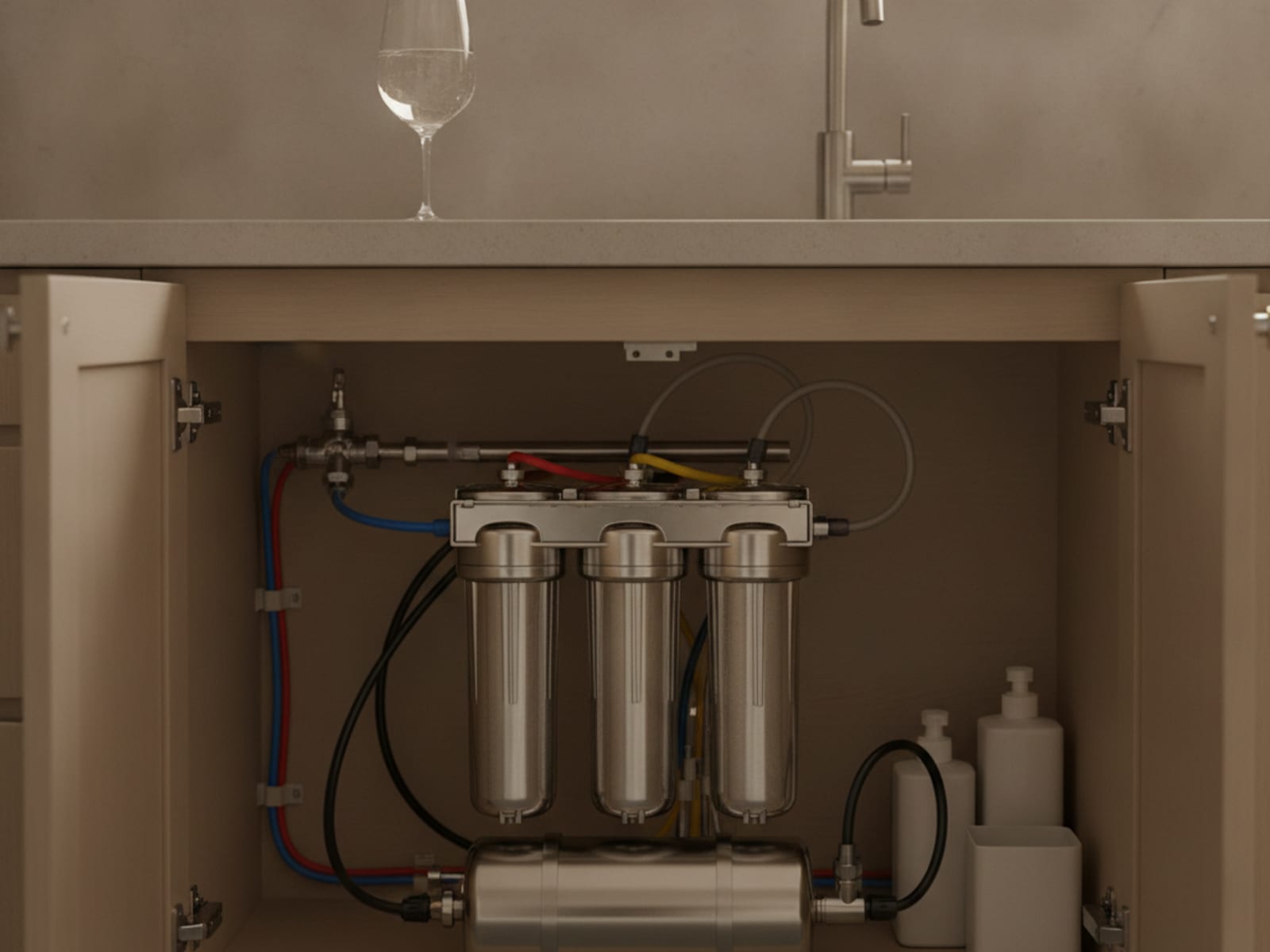
An under-sink water filter in Chula Vista should match your water test, kitchen plumbing, and drinking-water goals. Start with the water reaching your home, not a generic countywide assumption. Then compare carbon and reverse osmosis models using current performance documents. West-side homes may need extra plumbing attention. East-side homes may pair the kitchen filter with whole-house treatment.
An under-sink system treats water at one point of use. That’s usually the kitchen sink or a separate drinking-water faucet. It differs from a whole-house system, which addresses water throughout the home.
That narrower scope can simplify the buying decision. You’re choosing drinking water treatment for one location. You aren’t trying to solve every water concern with one device.
Why your side of Chula Vista matters
Chula Vista is San Diego County’s second-largest city. Its housing and water concerns aren’t identical from east to west.
Western Chula Vista includes the bayfront, Castle Park, and neighborhoods near Third and Fourth avenues. The municipal supply there is influenced by the Otay watershed and surrounding region. Residents also follow local conversations about PFAS and runoff.
Those conversations shouldn’t determine your equipment by themselves. Use your home’s test results and the current Consumer Confidence Report for your water provider. A report for another service area may not describe the water reaching your address.
The west side also has more older housing. About 40.8% of Chula Vista homes were built before 1978, according to Census ACS data. That matters under the sink. Older supply lines, shutoff valves, cabinet changes, and existing mineral buildup can affect the installation plan.
Eastern communities have a different housing pattern. Eastlake, Otay Ranch, Rolling Hills Ranch, and San Miguel Ranch include newer master-planned development. Homeowners there often consider both kitchen drinking-water treatment and whole-house filtration.
A dedicated carbon or reverse osmosis unit can serve the kitchen tap. It may also complement a larger home system. The two systems have different jobs, so one doesn’t automatically replace the other.
Our Chula Vista water filtration guide covers those broader treatment choices. This article stays focused on the kitchen sink.
Start with your water and cabinet
Filter Pros San Diego’s stated starting point is a free in-home water test. It can check hardness, pH, total dissolved solids, and chlorine. PFAS-relevant parameters may also be discussed when requested.
Ask what each result means before choosing equipment. A single reading shouldn’t be stretched into claims it can’t support. For PFAS or another specific concern, ask whether laboratory testing is needed. Then compare the result with documentation for the exact filter model.
Your water bill can help identify the correct provider. From there, locate that provider’s current Consumer Confidence Report. Water hardness and source mix can vary by service area and season. A single number for all of San Diego County won’t guide every Chula Vista home.
The cabinet inspection matters just as much. A pro should look at the supply line, shutoff valve, drain arrangement, faucet layout, and available space. Stored cleaning products and waste bins can reduce usable cabinet room.
In a Castle Park or Third Avenue Village home, older plumbing may shape the work. A newer Eastlake Trails kitchen can present different constraints, including built-in organizers or limited space around other equipment.
Take cabinet measurements before comparing models. Include the depth, height, and width around existing plumbing. Also note whether the sink already has an unused opening for a dedicated faucet.
For a closer look at installation planning, read our San Diego water filter installation guide.
Carbon or reverse osmosis
Carbon and reverse osmosis systems shouldn’t be chosen from the label alone. Model performance varies. The right choice depends on the test results, treatment goal, available space, and upkeep expectations.
Use this framework before requesting a recommendation:
| Decision point | Carbon system may fit | Reverse osmosis may fit |
|---|---|---|
| Treatment goal | The model’s documents address your specific concern | The model’s documents address the dissolved substances named in your results |
| Faucet plan | You want a compact point-of-use arrangement | You can accommodate the faucet and other required components |
| Cabinet space | Space is limited around current plumbing | The cabinet fits the complete selected configuration |
| Water use | You want filtered water at the chosen tap | You want a dedicated drinking and cooking water source |
| Maintenance | You’re comfortable following the model’s replacement schedule | You’re comfortable tracking every replacement item in the system |
| Existing treatment | The kitchen unit will work alone | The unit will complement a whole-house system |
This table is a starting point, not a performance promise. Review the exact model’s current documentation. Confirm that it names the substance or concern you want addressed.
Don’t assume every carbon filter performs the same way. The same rule applies to reverse osmosis systems. Product names can sound similar while their documented performance and installation needs differ.
Reverse osmosis configurations may include more components beneath the sink. Depending on the chosen model, the installation plan may involve a dedicated faucet, storage component, and drain connection. Confirm the full layout before buying the unit.
Our reverse osmosis service page for Chula Vista explains that option in more detail. You can also compare everyday tradeoffs in reverse osmosis versus a filter pitcher.
Plan the installation before buying
A filter that fits the treatment goal can still be wrong for the cabinet. Confirm the installation path before ordering equipment.
Start at the cold-water supply under the sink. The pro should identify the connection point and inspect the shutoff valve. Older fittings shouldn’t be treated like new hardware without inspection.
Next, decide how filtered water will reach the sink. Some configurations use a separate drinking-water faucet. That choice affects the sink deck, countertop, and cabinet layout.
A dedicated faucet also changes daily use. Family members need to know which tap provides filtered drinking water. This sounds minor, but a clear setup makes the system easier to live with.
Then review cabinet access. Filter components need enough room for future service. A tightly packed installation may make routine replacement harder. Keep that access in mind when returning stored items to the cabinet.
Finally, request a written scope for the selected model and kitchen. It should identify the equipment, connection plan, faucet arrangement, and expected maintenance items. Pricing should come from that home-specific scope, not a generic online figure.
The pros we connect you with can review the kitchen and explain the installation approach. Visit the under-sink filtration service page for Chula Vista to request that review.
Decide whether you also need whole-house treatment
An under-sink filter focuses on drinking and cooking water at one tap. It won’t address every fixture in the home.
That distinction matters in larger eastern Chula Vista properties. A homeowner in Otay Ranch or Rolling Hills Ranch may want one system for household water and another for the kitchen tap. The point-of-use unit can then target the family’s drinking-water priorities.
A west-side homeowner may reach a different decision. If the immediate concern is drinking water, an under-sink unit can keep the project focused. The plumbing inspection still comes first, especially in older housing.
Don’t add a whole-house system simply because it sounds more complete. Define what needs treatment and where the concern appears. Then compare the scope against your test results.
Our whole-house filtration cost guide explains what can shape a larger project. For kitchen-only planning, the under-sink service page remains the better starting point.
Living with an under-sink filter
The buying decision continues after installation. Every model has its own service instructions and replacement schedule. Keep those documents where you can find them.
Record the exact model and each replacement component. Don’t rely on appearance alone when buying a replacement. Similar-looking parts may not match the installed system.
Watch for changes in flow, taste, odor, or visible leaks. Those signs don’t identify a cause by themselves. They do signal that the unit and plumbing should be checked.
Retesting can also help when your water source or household concern changes. Use current results rather than assuming the original decision still fits.
If you’re comparing project scopes, our reverse osmosis cost guide for San Diego explains the factors that can affect a home-specific quote. It doesn’t substitute for inspecting your Chula Vista kitchen.
For help choosing a system, call Filter Pros San Diego at (858) 400-6508. We’ll connect you with a local pro who can review your water goals and cabinet layout.
Frequently asked questions
What’s the best under-sink water filter for a Chula Vista home?
The best option is the model whose documented performance matches your water results. Cabinet space, plumbing condition, faucet layout, and maintenance also matter. Start with a water test and an under-sink inspection before choosing carbon or reverse osmosis.
Is reverse osmosis better than a carbon filter?
Neither option is automatically better for every home. Compare the exact model’s performance documents with the substances or concerns identified during testing. Also consider space, faucet placement, system components, and maintenance.
Does an under-sink filter treat the whole house?
No, an under-sink filter treats water at a specific point of use. That’s usually a kitchen drinking-water faucet. Whole-house treatment has a broader scope across the home’s fixtures.
Do older Chula Vista homes need special installation planning?
Older homes may require a closer look at supply lines, shutoff valves, fittings, and cabinet changes. Chula Vista’s west side has a larger share of pre-1978 housing stock than the newer east-side developments. The installation plan should reflect the actual plumbing beneath that sink.
Should Eastlake and Otay Ranch homes pair under-sink and whole-house systems?
They can, when testing and household goals support both treatment scopes. The whole-house system and kitchen unit serve different locations. Compare each system’s job before deciding whether the pairing makes sense.
How do I begin an under-sink filter project in Chula Vista?
Begin with a free in-home water test and a cabinet inspection. Confirm your water provider, review its current Consumer Confidence Report, and define the drinking-water concern. Then compare models and request a written installation scope.