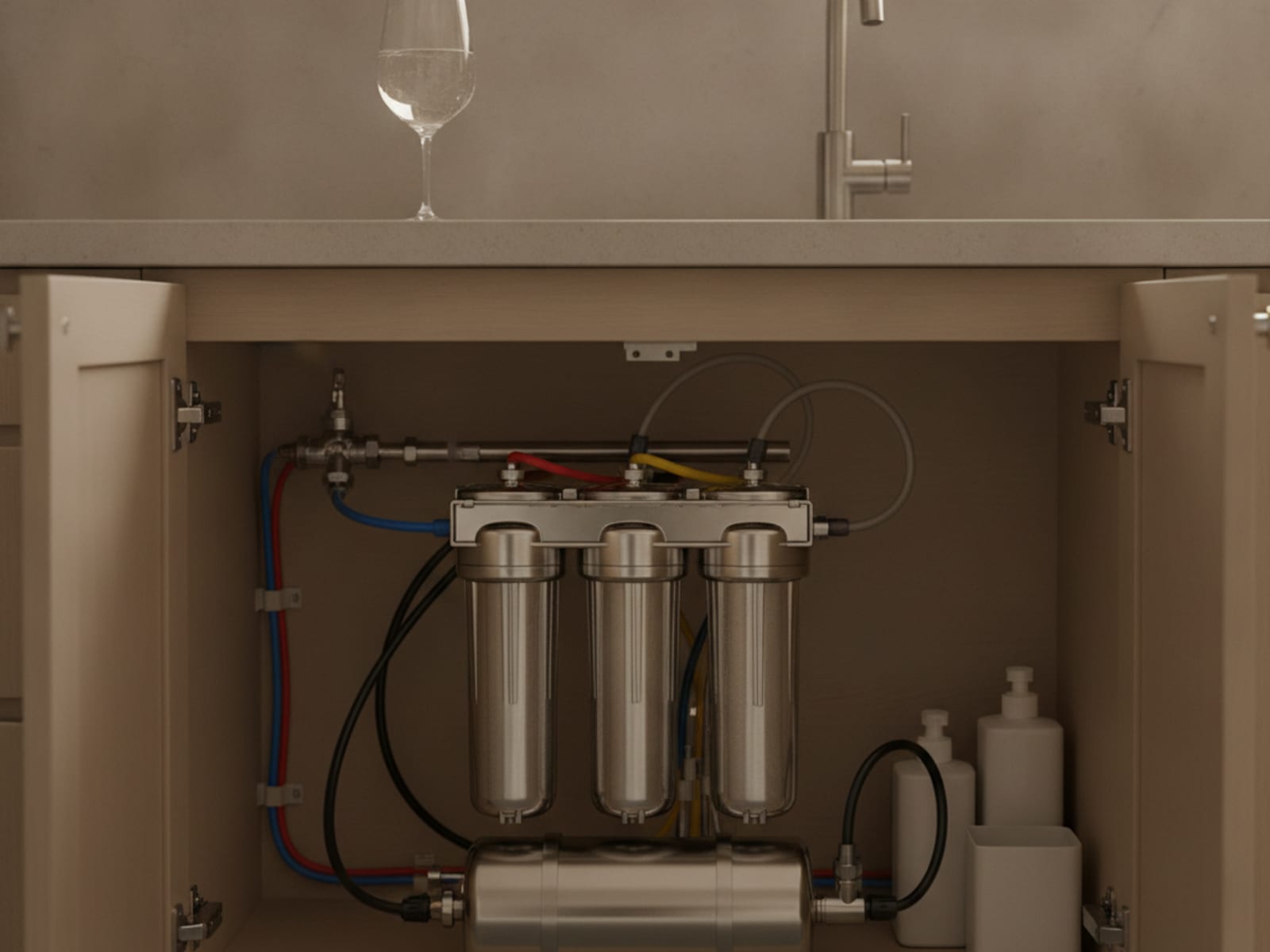
Water filter installation in San Diego usually means one of three jobs: an under-sink or reverse osmosis system, a whole-house filter at the main line, or a water softener paired with a filter. Under-sink and RO installs typically take two to four hours. Whole-house systems usually take a full day. Most homeowners here are filtering for chloramine, hardness, and taste, since San Diego water is a chlorine- and chloramine-treated blend of local, Colorado River, and State Water Project sources.
How does water filter installation work?
Installation starts with confirming what your water actually needs before any equipment goes in. A free in-home water test checks hardness, chlorine and chloramine levels, and any other issues specific to your address, since water quality varies block to block depending on which source is blended in that day.
From there, the process generally follows the same order regardless of system type:
- Site check. The installer looks at your water line, shutoff valve location, available space (under the sink, in the garage, at the point of entry), and whether a drain and power outlet are nearby if the system needs them.
- Shutoff and prep. Water to the affected line gets shut off, and the installer confirms the working area is dry and accessible.
- Mounting and connection. The filter housing, RO unit, or whole-house cartridge system gets mounted and tied into the water line with the appropriate fittings for your plumbing, whether that’s copper, PEX, or CPVC.
- Pressure test and flush. Once connected, the system gets pressurized and flushed to clear carbon fines and confirm there are no leaks at any fitting.
- Walkthrough. The installer shows you the shutoff valve, filter change schedule, and how to reset any indicator lights or timers.
An under sink water filtration or reverse osmosis install adds a small branch line and a dedicated faucet at the sink. A whole house filtration system ties in at the main line where it enters the house, before the water heater and any softener.
How long does installation take?
Most under-sink or RO installs finish in two to four hours, while whole-house systems typically take a full day.
The time depends on how straightforward the connection point is. A kitchen sink with an accessible cold water line and enough cabinet space is a quick job. A whole-house system takes longer because it involves cutting into the main line, adding a bypass valve, and sometimes rerouting pipe to fit the housing. If you’re adding a water softener at the same time, plan on a full day since the softener needs its own drain line and power connection near the unit.
Older homes with galvanized pipe, tight crawl spaces, or a main line that’s hard to access can push either job longer. That’s part of why a site visit before the work day matters: it catches those complications before anyone’s mid-install.
How much does water filter installation cost in San Diego?
Installation labor for a basic under-sink or RO system typically runs a few hundred dollars, while whole-house installation labor runs higher due to the main-line work involved.
Exact numbers depend heavily on the system and your plumbing, so we keep pricing detail in our dedicated cost guides rather than repeating estimates here. For whole-house systems, see our whole-house water filtration cost guide for a full breakdown by system type. For reverse osmosis, installation is usually the smaller line item next to the equipment itself.
What tends to move the installation price in San Diego specifically:
- Distance from the water line to the mounting location
- Whether a bypass valve or additional shutoff needs to be added
- Copper versus PEX fittings, since older homes often need different adapters
- Whether old equipment needs to be removed first
An exact written number comes from seeing your setup, not a phone estimate.
Do you need a permit to install a water filter?
Most point-of-use filters, like under-sink and RO systems, don’t require a permit in San Diego. Whole-house systems that involve modifying the main water line sometimes do, depending on your city and the scope of the work.
A filter that simply attaches to an existing line without rerouting plumbing is generally treated as a fixture install, not a permitted project. Work that involves cutting into the main supply line, adding new shutoff valves, or rerouting pipe can cross into permitted plumbing work depending on your local building department. Rules vary by city within San Diego County, so it’s worth asking your installer directly whether your specific job needs one before work starts, rather than assuming either way.
How do you choose a water filter installer?
Start with a water test, not a sales pitch, since the right system depends on what’s actually in your water.
A few things worth checking before you hire anyone:
- Do they test your water first? An installer who quotes a system before seeing your water quality numbers is guessing.
- Do they explain the tradeoffs? A good installer will walk you through system options and why one fits your home better than another, not just push the most expensive option.
- Do they handle the full job? That includes removing old equipment, pressure testing, and a walkthrough of maintenance, not just dropping in a cartridge and leaving.
- Are they familiar with your city’s plumbing quirks? Older neighborhoods with galvanized pipe or unusual main-line access need an installer who’s seen it before.
At Filter Pros San Diego, we connect homeowners with vetted local installers across San Diego County, starting with a free in-home water test so the recommendation matches your actual water, not a generic package. Scheduling depends on your area and the pro’s availability. Call (858) 400-6508 to get on the schedule.
Frequently asked questions
Can I install a water filter myself?
An under-sink filter cartridge swap is a reasonable DIY task for someone comfortable with basic plumbing. A full RO system, whole-house filter, or anything involving the main water line is a different scope of work, and a mistake there can mean a leak inside a wall or under a slab. Most homeowners have the initial system professionally installed and handle cartridge changes themselves afterward.
Does installing a water filter lower my water pressure?
A properly sized system shouldn’t cause a noticeable pressure drop. Undersized filtration for your household’s flow rate, or a cartridge that’s overdue for replacement, is the usual cause of low pressure after installation. Correct sizing during the initial site visit is what prevents this.
Can a water filter and water softener be installed at the same time?
Yes, and it’s common in San Diego given how hard the water is here. The softener typically goes in first in the water’s path, followed by the filter, so scale doesn’t build up in the filter housing. Installing both in the same visit is usually more efficient than two separate appointments.
How often does a whole-house filter need a new cartridge after installation?
Most whole-house cartridges need replacement every three to six months, depending on your household’s water usage and the sediment level in your area. Your installer should set expectations for your specific system during the walkthrough.
Is a plumber the same as a water filtration installer?
Not always. General plumbers can handle the pipe work, but filtration-specific installers are more likely to size the system correctly for your water hardness and chloramine levels and to know the maintenance schedule for that particular equipment. Ask directly about their experience with the exact system you’re getting.