Two numbers from the same tap can look like translations. They aren’t. A TDS meter gives one combined TDS reading, while a hardness test reports hardness, and neither result identifies everything in the water.
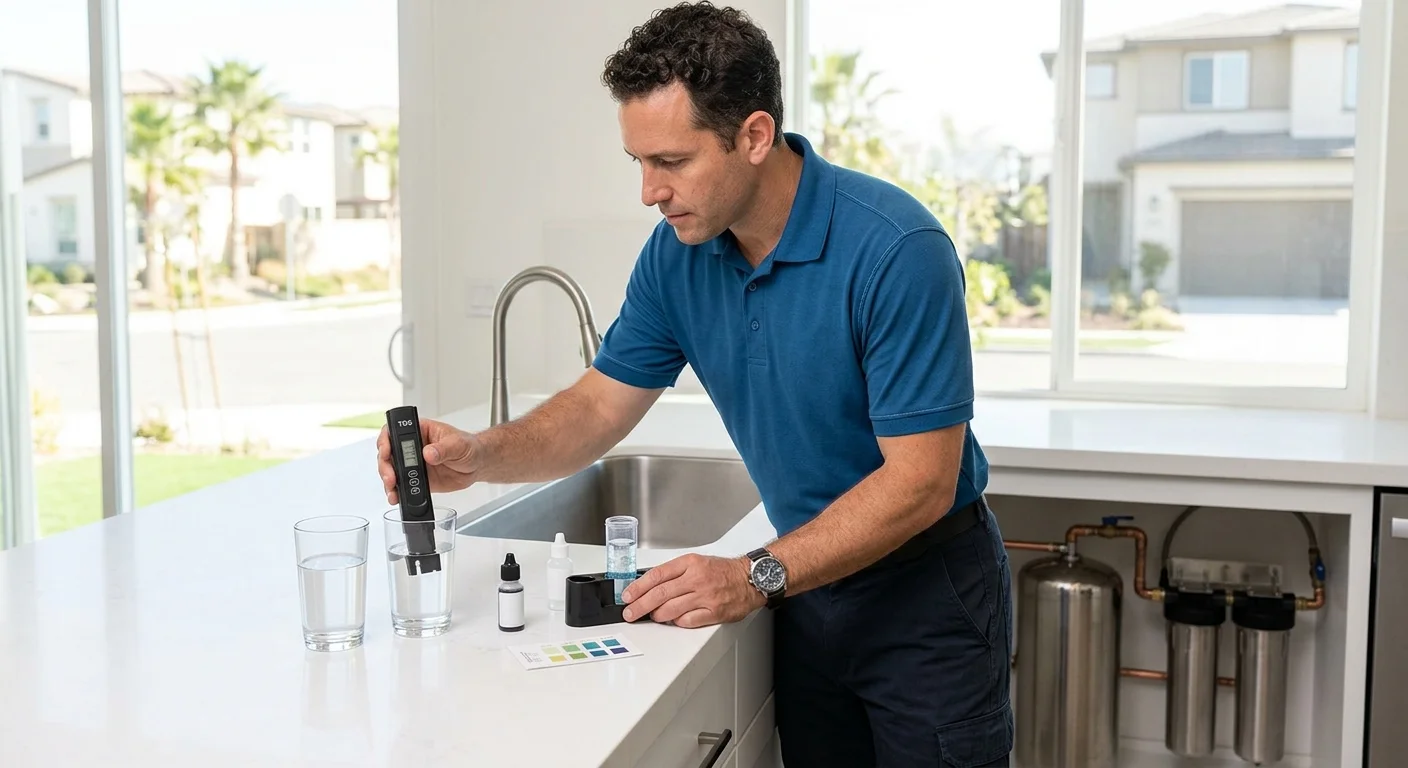
What TDS and hardness measure differently
TDS stands for total dissolved solids. A handheld TDS meter produces one reading for dissolved material in the sample. It doesn’t provide an itemized list of what contributed to that result.
That limitation matters. A single TDS reading doesn’t identify a specific mineral, contaminant, or plumbing issue. It also doesn’t tell you how much of each dissolved substance is present. Think of it as a broad screening result, not a full description of the water.
A hardness test answers a narrower question. It reports the sample’s hardness rather than its total dissolved material. If scale, white residue, or a water-softening decision prompted the test, the hardness result is the relevant measurement.
So, does TDS measure hardness? No, not as a hardness test does. Dissolved material can influence a TDS reading, but that number isn’t a hardness result. You can’t rename it or convert it into one without a verified testing method.
San Diego homeowners often see hardness expressed in grains per gallon or parts per million. The City of San Diego reports that its drinking water averages about 16 grains per gallon, or 276 parts per million. It can range from 16 to 18 grains per gallon, or 272 to 284 parts per million, depending on water demand and the area served. Those figures apply only to the City of San Diego system.
For a fuller explanation of the first measurement, read what TDS means in San Diego water. The key distinction stays simple: TDS is a combined reading, while a hardness test measures hardness.
Why one reading can’t replace the other
A TDS result can’t stand in for a hardness result. The reverse is also true. Each test answers its own question, even when both use a sample from the same faucet.
This is where online conversion shortcuts cause confusion. We couldn’t confirm a TDS-to-hardness formula in the verified City of San Diego, Helix Water District, or regional source material used for this page. Don’t treat an unsupported conversion as a diagnosis.
Helix Water District provides a useful hardness reference. It says water with 10 or more grains per gallon is considered hard. Helix also says imported Colorado River and State Water Project supply averages 14 grains per gallon. That figure describes the imported supply, not the water at every individual tap.
Neither Helix statement turns a TDS result into hardness. A meter reading above or below another sample still doesn’t reveal the hardness measurement. Run the appropriate hardness test when hardness is the question.
The same rule applies when comparing rooms or properties. A kitchen TDS result and a bathroom hardness result aren’t a clean comparison. The samples came from different locations and were measured for different characteristics. Test like against like, then record the location and conditions.
Home kits can help screen for hardness when used as directed. Our guide to testing water hardness at home explains how to organize that check. Keep the result attached to the sample, date, tap, and test method.
A repeated result can help you see whether the reading is consistent. It still can’t prove what the water contains. When the decision depends on a particular substance, move beyond these screening tools.
How source water and plumbing can affect tap results
San Diego County doesn’t have one universal hardness figure. Water characteristics can vary by service area and season. The City of San Diego also says its hardness varies with water demand and the area of the city.
Start by identifying the retail water supplier named on your bill. Its current Consumer Confidence Report is the authority for that system’s reported hardness and source mix. The San Diego County Water Authority offers regional water information, but a regional reference shouldn’t replace your supplier’s report.
Be careful with geographic assumptions. The City of San Diego’s published range doesn’t describe Chula Vista, Oceanside, La Mesa, or another agency’s system. It also doesn’t describe a private well in North County Inland or the backcountry. No verified countywide hardness average was available for this page.
The tap itself adds another layer to the investigation. Record where each sample came from. Note whether it was collected before or after an existing treatment device. Keep the water conditions and testing method consistent when repeating the comparison.
Samples from an entry point and a kitchen faucet can help locate where a difference appears. However, a difference doesn’t identify its cause. The TDS meter can’t tell you that a pipe, fixture, filter, or source-water change produced the result.
This is why one unexplained reading shouldn’t drive an equipment purchase. First compare the result with the correct water supplier’s current report. Then repeat the same test under consistent conditions. Use a hardness test if the concern is hardness.
If results remain unexpected, a licensed pro can review the sampling setup and plumbing path. That review can help determine whether another screening test or certified laboratory analysis makes sense.
When a certified laboratory test is needed
Choose laboratory testing when you need to identify or measure a specific substance. A TDS meter doesn’t separate its result into individual components. A hardness test also doesn’t answer unrelated water-quality questions.
This distinction is especially important when someone needs a documented result. A home screening can guide the next step, but it isn’t a certified laboratory analysis. Don’t present a meter or test-strip result as laboratory confirmation.
Consider a laboratory when a public agency, clinician, lender, or other decision-maker requests a named analysis. It can also be the appropriate next step for an unexplained change that basic screening couldn’t interpret. Private-well owners shouldn’t substitute City of San Diego figures for testing at their property.
Before collecting a laboratory sample, ask the relevant authority what it needs. Your retail water supplier can explain its current report and the information already available for the system. Ask which laboratory qualifications, sample containers, handling steps, and requested analyses apply to your situation. We couldn’t confirm one laboratory process that covers every San Diego County property and testing purpose.
Keep the laboratory question narrow. “What contributed to this TDS reading?” is too broad for a useful test request. Name the concern or ask the laboratory which analysis addresses the observed issue. Don’t order an unrelated panel based only on a high or low meter number.
Our free in-home water test is a screening visit. It helps organize readings, household concerns, and next steps before treatment is discussed. It doesn’t replace certified laboratory work when identification or formal documentation is needed.
Use the results before choosing treatment
Start with the decision you need to make. A homeowner investigating white residue needs a hardness result. Someone comparing water before and after an existing device may record TDS, hardness, or both. A person seeking confirmation of a named substance needs the appropriate laboratory analysis.
Write down what prompted the test. Include the sample location, water source, date, and test type. If the property receives public water, compare the findings with the latest Consumer Confidence Report from its retail supplier. Don’t borrow a neighboring city’s numbers.
Next, separate observations from conclusions. A TDS reading is an observation. A hardness result is another observation. Neither one identifies every condition in the source water or plumbing.
Avoid labeling any TDS value as a universal safe, unsafe, soft, or hard threshold. We couldn’t confirm an approved local TDS range or TDS-to-hardness conversion in the authorities reviewed for this page. The verified hardness references are specific: Helix’s hard-water threshold and imported-supply average, plus the City of San Diego’s published system figures.
Treatment discussions should follow the verified result. Don’t select equipment because a meter displayed a large number. Don’t dismiss a hardness concern because the TDS reading looked familiar. The correct test needs to match the concern.
A licensed pro can review the results, existing plumbing, and household priorities before presenting options. If hardness is the confirmed issue, our hard water solutions page explains the referral process. The homeowner contracts with and pays the selected pro directly.
This order keeps the decision grounded: identify the question, choose the right test, confirm uncertain findings, then discuss treatment. It also prevents one convenient meter reading from carrying more meaning than it has.
When to call us
Call when the readings don’t match your concern or treatment may require a licensed Water Filtration pro. We’ll arrange a screening and connect you with a separately licensed local pro when needed. Call us at (858) 400-6508 to set up a free in-home water test.