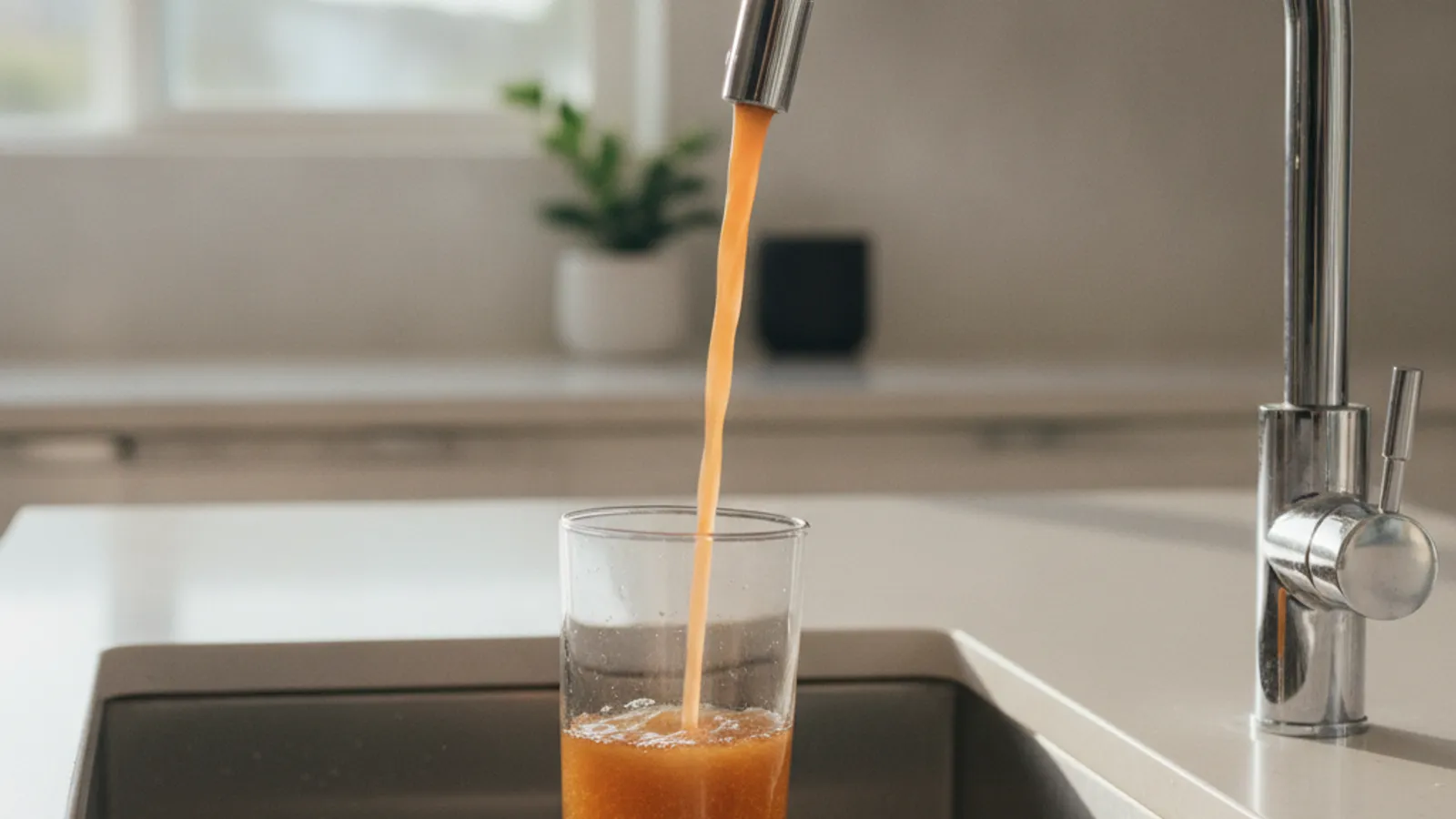
You installed a water softener, and a few months later a copper pipe springs a pinhole leak. It’s easy to connect those two events and blame the softener. The honest answer is more complicated. Soft water is not inherently corrosive, and pinhole leaks almost always trace back to a mix of factors that were in play before the softener showed up. Here’s how to sort the real cause from the coincidence.
What a pinhole leak actually is
A pinhole leak is the end stage of pitting corrosion. Corrosion eats a tiny, deep pit into the pipe wall from the inside until it punches all the way through. The hole is often smaller than a pencil tip, but it leaks steadily and can do real damage inside a wall before anyone notices.
Pitting corrosion is localized. That’s why you get one weeping hole rather than a pipe that fails evenly along its length. Something concentrated the attack at that one spot.
The real drivers of copper pitting
Pitting corrosion in copper is a known plumbing problem, and researchers have studied it for decades. The causes that actually matter are these.
Water chemistry. pH, dissolved oxygen, and the balance of chloride to sulfate in the water all influence how aggressive water is toward copper. Water that sits on the acidic side or carries certain mineral ratios can pit copper over time. This is about the source water chemistry, not whether the water is soft.
Flow velocity. Water moving too fast through undersized or sharply routed copper scours the protective oxide layer off the pipe wall. High velocity is one of the most common real causes of erosion-corrosion and pitting.
Workmanship. Leftover flux from soldering, burrs inside a cut, and debris left in the line during installation all create spots where corrosion starts. A lot of pinhole leaks trace back to how the plumbing was originally built.
Stray electrical current. Improper grounding or stray current running through the plumbing accelerates corrosion at specific points. This is a genuine and often overlooked cause.
Pipe age and sediment. Older copper that has already thinned, plus sediment settling in low spots, gives corrosion a head start. San Diego has plenty of older neighborhoods with aging copper that was installed decades ago.
Where the softener fits in
Here’s the part that gets misunderstood. A properly set softener removes calcium and magnesium hardness. It does not add anything that attacks copper.
The one real connection is indirect. Very hard water leaves a thin mineral scale on the inside of pipes. That scale is a nuisance for appliances, but it can also coat and partly protect the pipe wall. When you soften the water, you stop building new scale. If a pipe was already corroding underneath old scale, softening can make an existing problem visible sooner rather than causing it.
A softener set too aggressively, driving hardness down to near zero with heavy salt use, removes more of that protective mineral layer than necessary. That is a settings issue, and it’s fixable. It is still not the same as soft water being corrosive on its own.
So if someone tells you soft water ate your pipe, be skeptical. The softener may have uncovered a corrosion problem, but the chemistry, velocity, workmanship, or pipe age is what drove it.
How to diagnose it honestly
Don’t guess. A pinhole leak has a cause worth finding, because if you patch the pipe without addressing the driver, the next hole shows up somewhere else.
Start with a water chemistry test. You want pH, total dissolved solids, chloride and sulfate levels, and dissolved oxygen if you can get it. That tells you whether your source water is aggressive toward copper in the first place.
Check the softener settings. If the hardness setpoint is dialed far below what your water actually needs, that’s worth correcting so you’re not stripping every bit of protective mineral out of the water.
Look at the plumbing itself. How old is the copper, how fast is the water moving through it, and is the system properly grounded. A run of pipe with several sharp turns and high pressure behind it is a velocity suspect. A leak near a solder joint points at workmanship.
Our free in-home water test measures the water chemistry that actually drives copper corrosion, so you’re working from real numbers instead of a hunch.
Plumber or water treatment pro
Both, usually. The leak itself is a plumber’s repair. The underlying cause often sits in the water chemistry or the softener settings, which is where a water treatment company earns its keep.
If your water tests aggressive toward copper, treatment options exist, from pH correction to adjusting the softener so it isn’t over-softening. If the leaks keep coming, that’s a strong signal the driver was never addressed, and it’s worth bringing in someone who looks at the water and the equipment, not just the pipe.
Hard water causes its own set of real problems in a home, which we cover in hard water effects on your home, and discolored or rusty water in San Diego has separate causes worth ruling out if that’s part of what you’re seeing.
The honest takeaway
Pinhole leaks are a corrosion problem, and corrosion has causes that were usually present before the softener arrived. A softener can make an existing problem visible, and an over-aggressive setting can contribute at the margin, but soft water on its own is not eating your pipes. Test the water, check the settings, and look at the plumbing before you blame the equipment.
If you’re dealing with repeat leaks and want the water and softener settings checked properly, call Filter Pros San Diego at (858) 400-6508 or schedule a free in-home water test. We serve homeowners throughout San Diego County.
Related: Water softener repair | Hard water effects on your home