Rust-colored or orange water at a San Diego tap almost never means the city’s water supply itself is delivering rusty water. The imported supply here, a blend of Colorado River and State Water Project water, runs low in iron by the time it reaches your meter. When water turns orange or rust-colored at the faucet, the cause is almost always something happening after that point: a disturbance on a nearby water main, corrosion inside older galvanized pipe, or a water heater tank rusting from the inside out. Which one it is changes the fix completely, and a quick check at your own faucet tells you more than any citywide average.

Is rusty or orange water safe to drink in San Diego?
Short-term discoloration from sediment or iron oxide is an aesthetic problem for most households, not a health emergency. It’s unappetizing and it can stain laundry and fixtures, but a brief rust tint after a main break or a plumbing repair nearby usually isn’t dangerous. That said, don’t drink it while it’s discolored. Switch to bottled water or a filtered source until it runs clear, and avoid running hot loads of white laundry during that window since rust sets into fabric.
There are a few situations worth treating as urgent instead of cosmetic: water that’s dark brown or black rather than light orange, water that smells strongly of sulfur or sewage along with the discoloration, or discoloration that shows up alongside a boil-water notice from your water utility. Any of those calls for contacting your water provider directly, not just waiting it out.
Where does the rust in your water actually come from?
Three sources account for almost every case of rusty water in a San Diego home on municipal supply.
A disturbance on the water main. Fire hydrant use, a nearby repair, or a break in the distribution main can stir up decades of accumulated iron and manganese sediment that’s normally settled and harmless inside the pipe. When that happens, water utilities across the county typically post a notice or advisory for the affected area, and the discoloration usually clears within a few hours of flushing.
Corroding galvanized pipe inside the home. Homes built before roughly the 1960s, common in older pockets of central San Diego, National City, and parts of East County, often still run galvanized steel supply lines instead of copper. The zinc coating on galvanized pipe wears through over decades, and the exposed steel underneath rusts from the inside. A sudden pressure change, like a nearby repair or your own plumbing work, can knock loose rust that’s been building for years.
A corroding water heater tank. Every tank water heater has a sacrificial anode rod that corrodes on purpose to protect the tank itself. Once that rod is fully spent, usually somewhere past the 8 to 12 year mark, the tank’s steel lining starts rusting instead. This is the one cause that shows up only in hot water, never cold, which makes it the easiest of the three to identify on your own.
Does San Diego’s tap water naturally contain iron?
Rarely at a level that would cause staining. The EPA’s secondary standard for iron, the threshold where staining typically starts, is 0.3 mg/L, and treated municipal supply in San Diego runs well under that in normal conditions. Iron problems at that concentration are far more common on private wells in the backcountry and rural North County, where groundwater picks up dissolved iron directly from surrounding rock and soil. If you’re on a well rather than city water, well water treatment in San Diego County covers iron and sulfur removal in more depth, since the source and the fix are both different from a municipal-supply home.
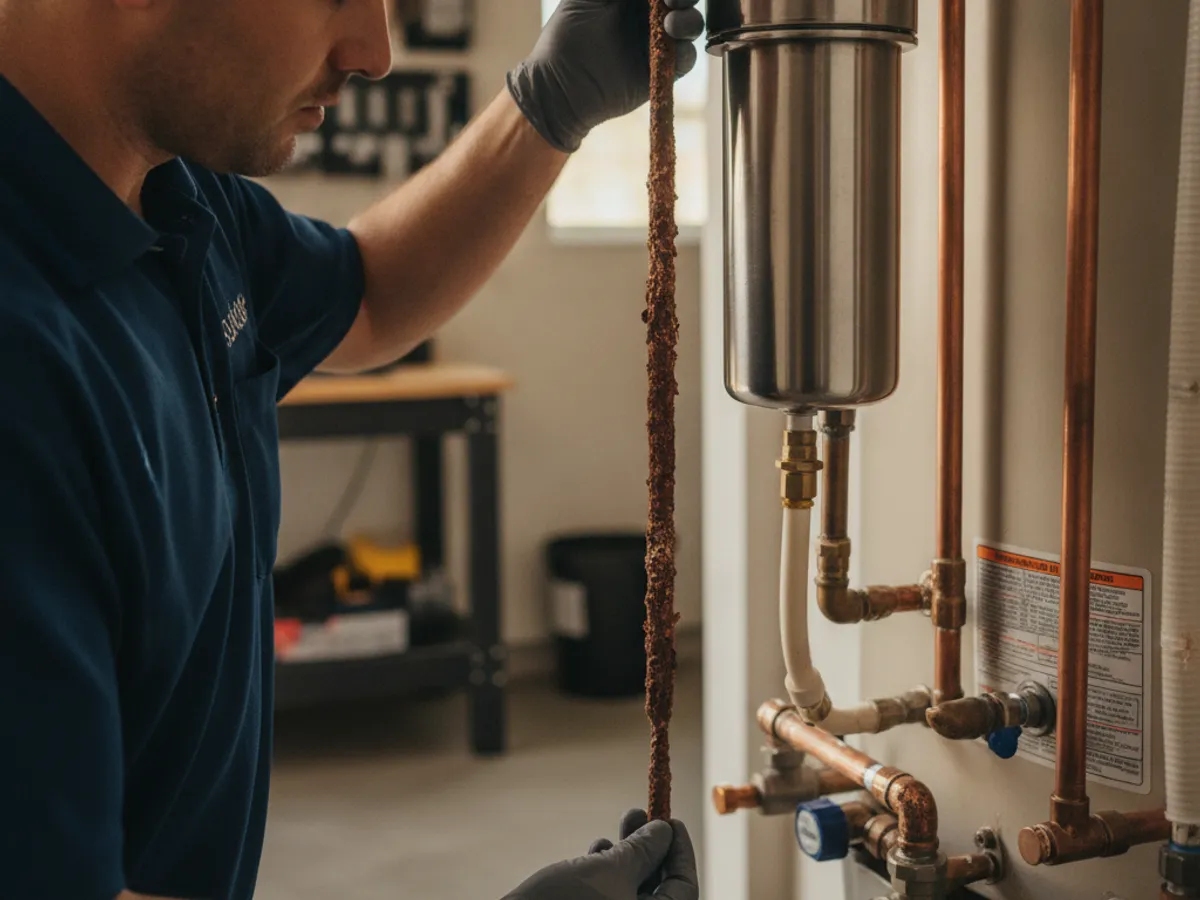
How do you tell what’s causing it?
A few quick checks narrow it down without any equipment.
Run an outside hose bib, the one closest to where your main line enters the property, before it reaches any interior plumbing. If that water runs clear, the rust is coming from inside your home’s pipes or your water heater, not the street. If it’s rusty too, a main-side issue is more likely, and it’s worth calling your water provider (San Diego Public Utilities, Helix, Otay, Padre Dam, Sweetwater, or whichever agency serves your address) to ask about recent work in your area.
Next, isolate hot versus cold. Rust that shows up only in hot water points straight at the water heater. Rust in both hot and cold points toward galvanized pipe or a main-side event instead.
Finally, give it time. Water that clears after running a tap for a few minutes usually traces back to a temporary disturbance. Water that stays discolored day after day is a standing problem, either a water heater at end of life or pipe corrosion that isn’t going to resolve on its own.
What should you do about rusty water?
If an outside spigot test and a call to your water utility rule out a main-side cause, the next step depends on what you found. A water heater showing rust only in hot water usually needs a plumber to inspect the anode rod and tank condition, since that’s a plumbing repair or replacement decision rather than a filtration one. Corroding galvanized pipe is a plumbing question too when it’s isolated to one fixture or section of line.
Where water treatment fits in is protecting everything downstream once the source is identified, or handling a chronic, low-grade sediment issue that keeps recurring even after a one-time cause has passed. A sediment pre-filter or full whole house water filtration system installed at the main line entry catches rust and sediment particles before they reach fixtures, appliances, and your water heater, which matters most in homes with older galvanized supply lines that will keep shedding small amounts of rust for years. In older housing stock in La Mesa and National City, where galvanized lines are still common, water filtration service calls for exactly this complaint are routine.
The starting point either way is knowing what’s actually happening at your address instead of guessing from a symptom. A free in-home water test checks your water directly and flags whether sediment, iron, or something else is behind what you’re seeing, so any recommendation is based on your actual water rather than a general cause list. For homes weighing whether whole-house protection is worth adding on top of a one-time fix, whole-house filtration cost in San Diego breaks down what that typically runs.
Frequently asked questions
Is it safe to drink orange or rusty tap water?
Brief discoloration from iron or sediment is usually an aesthetic issue rather than a health risk, but don’t drink it while it’s visibly discolored. Switch to a filtered or bottled source until it runs clear. Water that’s dark brown or black, or discolored alongside a bad odor or a boil-water notice, should be reported to your water utility right away instead of waited out.
Why does only my hot water turn rusty?
That pattern points almost directly at your water heater. Every tank unit has a sacrificial anode rod that corrodes to protect the tank. Once it’s used up, usually somewhere past 8 to 12 years of service, the tank itself starts rusting and shedding into the hot water line while cold water stays clear. A plumber can check the rod and the tank’s remaining life.
Does San Diego’s city water contain iron naturally?
Rarely at a level that causes staining. The EPA’s secondary standard for iron, where visible staining typically begins, is 0.3 mg/L, and San Diego’s imported municipal supply generally runs well under that. Iron at problem levels is far more common on private wells in the backcountry than on city water.
Will a whole-house filter fix rusty water?
It depends on the cause. A sediment pre-filter or whole-house filtration system installed at the main line will catch rust and sediment particles before they reach your fixtures and appliances, which helps a lot with recurring low-grade sediment from aging galvanized pipe. It won’t fix a corroding water heater tank or a main-side event on its own, since those are plumbing and utility issues rather than filtration ones.
Should I call my water utility or a plumber first?
Test an outside hose bib before it reaches your home’s interior plumbing. If that water is also discolored, call your water utility first, since a main-side disturbance is the likely cause. If the outside spigot runs clear and only your interior taps are affected, a plumber is the better first call, especially if the problem is isolated to hot water only.
How do I know if it’s my pipes or my water heater?
Check hot and cold separately at the same faucet. Rust in hot water only points to the water heater’s anode rod and tank condition. Rust in both hot and cold points toward galvanized pipe corrosion or a main-side event instead. An outside hose bib test before your interior plumbing helps confirm which side of the meter the problem is on.
Get it checked, not guessed
Rusty water always has a specific cause, and guessing between a water heater, old pipe, and a city-side event wastes time and sometimes money on the wrong fix. Filter Pros San Diego offers a free in-home water test that checks what’s actually in your water, and we’ll tell you straight if what you’re dealing with is a plumbing repair, a water heater replacement, or something a whole-house filtration system can handle going forward.
Call (858) 400-6508 or schedule online. We serve homeowners throughout San Diego County.