The under-sink decision usually comes down to carbon filtration or reverse osmosis. Neither option is the automatic winner. Match the exact system to a measured concern, then compare upkeep, cabinet fit, and documented water use.
What carbon filtration is designed to address
A carbon filter sends water through carbon media inside a cartridge or housing. That describes the treatment method, not the performance of every product carrying the word “carbon.” Cartridge size, media, operating conditions, and product documentation can differ.
Start with the exact model, not the category name. Ask the seller to provide its current performance sheet and owner’s manual. Find the specific concern you measured at your tap. Then confirm that the documentation names that concern and explains the conditions behind the claim.
Don’t accept a broad promise that carbon “takes out everything.” The approved evidence for this site doesn’t support a universal contaminant claim for carbon filters. If a product’s documentation doesn’t address your concern, its performance for that concern couldn’t be confirmed.
A hardness reading also shouldn’t decide the question alone. The City of San Diego says its drinking water averages about 16 grains per gallon, or 276 parts per million. It can range from 16 to 18 grains, or 272 to 284 parts per million. The City says those results vary by area and water demand. Those figures apply only to the City’s water system, not every county address.
For a kitchen sink, compare the proposed carbon model against your actual goal. Review its required space, replacement parts, faucet arrangement, and supporting documents. Our under-sink drinking water filtration service page explains how a licensed pro can help assess the cabinet and plumbing.
What reverse osmosis changes at the tap
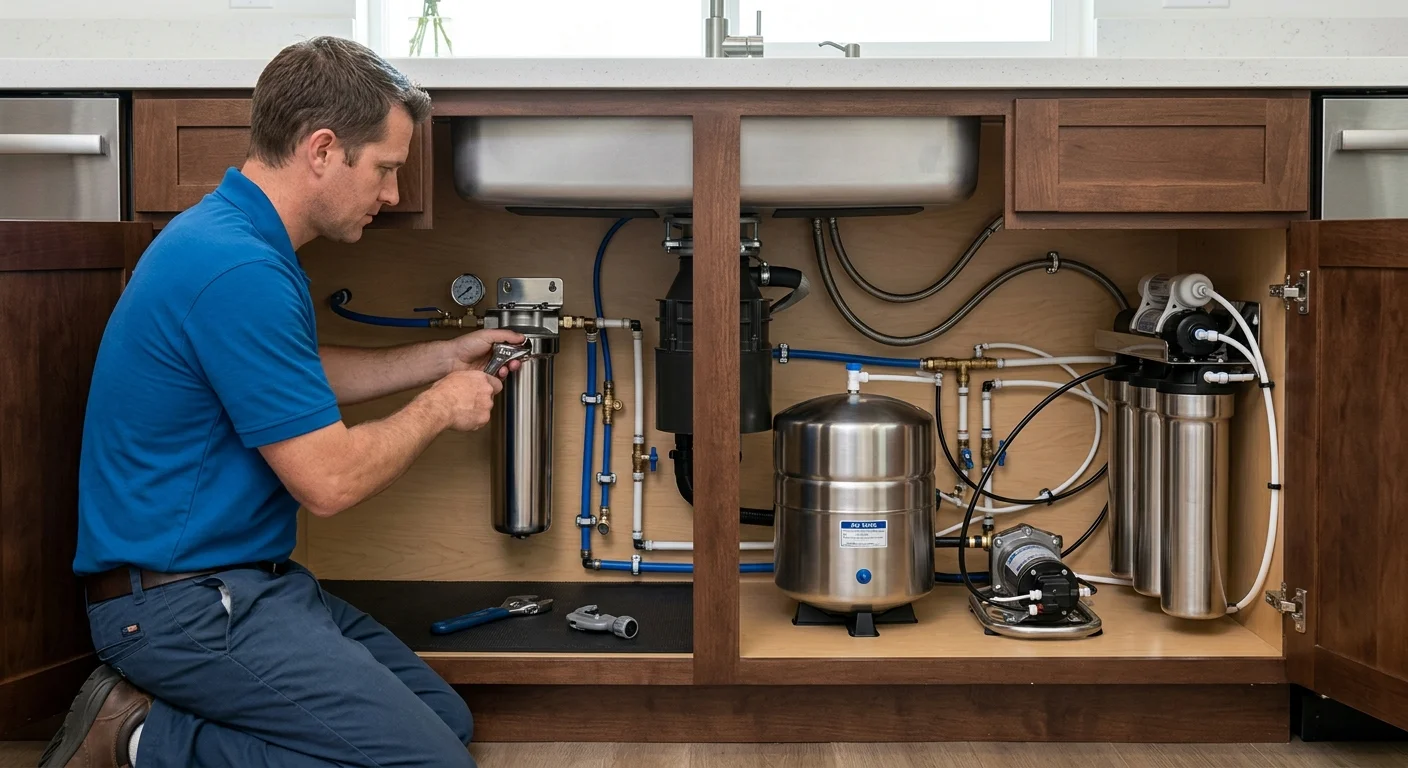
Reverse osmosis, commonly called RO, uses pressure and a membrane. The proposed system may also include additional cartridges, a storage tank, a dedicated faucet, or another documented configuration. Check the actual equipment list before comparing it with a carbon-only proposal.
An RO label isn’t a blanket performance guarantee. This site’s approved evidence doesn’t confirm any universal removal percentage or contaminant list for RO systems. Ask for the current performance data for the exact model. The document should identify what was tested and the conditions used.
The physical layout matters at the tap. Confirm whether the proposed unit needs a tank, where each component will sit, and how the faucet will be supplied. A drawing or cabinet measurement is more useful than a generic product photo. Garbage disposals, drain piping, stored supplies, and electrical equipment can reduce usable space.
Water delivery should be checked against household habits. Ask how the model supplies water during normal use and whether its documented production matches your needs. Don’t rely on an unverified statement that every RO system behaves the same way.
Our reverse osmosis drinking water service covers the installation questions to discuss with a licensed pro. If portability is part of your decision, the comparison between reverse osmosis and filter pitchers offers another useful starting point. Keep the final choice tied to measured water and the selected model’s documentation.
Compare maintenance, space, and water use
The best comparison happens inside your cabinet, with both product sheets open. Marketing labels hide the details that affect daily ownership. Write down the model numbers before accepting any recommendation.
For maintenance, list every replaceable cartridge or component shown in each manual. Record the manufacturer’s stated replacement method and schedule. Then confirm where replacement parts come from. Don’t accept an invented lifespan or a verbal estimate that isn’t supported by the current manual.
Access matters as much as total cabinet volume. Measure width, depth, and height around the drain, disposal, shutoff valves, and stored items. Check the clearance needed to open housings or remove cartridges. For an RO proposal, include every listed component in the layout. A tank or separate faucet shouldn’t appear as a surprise after the work begins.
For water use, ask for the model’s documented production and drain specifications. Compare those figures under the listed operating conditions. If the paperwork doesn’t provide a verifiable figure, treat the water-use rate as unconfirmed. Don’t substitute a generic online estimate from another model.
Also check whether the proposed system needs electricity, a drain connection, or changes to the sink or countertop. These are model and installation questions. The answer should come from the selected equipment documents and an inspection of your plumbing.
Finally, decide who’ll handle future service. The homeowner contracts with and pays the referred pro directly. Before contracted installation begins, confirm the individual license through the California Contractors State License Board. Keep the model number, manual, and replacement-part list after installation.
Match the system to a verified water concern
Begin with the water at the address, not a countywide assumption. Drinking water limits are set federally by the EPA. California adds its own limits through the Division of Drinking Water. Your current Consumer Confidence Report is the local authority for reported water quality and source information.
San Diego County has many water service areas. A City of San Diego hardness figure shouldn’t be applied to every address in Chula Vista, Oceanside, East County, or the backcountry. If you don’t know your provider, the San Diego County Water Authority is a practical place to start looking for local water information.
The City of San Diego reports an average hardness of about 16 grains per gallon, or 276 parts per million. Its reported range is 16 to 18 grains, or 272 to 284 parts per million. The City says the result varies with demand and location within its system.
Helix Water District separately states that water at 10 or more grains per gallon is considered hard. Helix also says imported water from the Colorado River and State Water Project averages 14 grains. That figure describes the imported supply, not the reading at a particular East County tap.
Private wells require address-specific evidence too. Don’t apply a public water system’s report to a well in inland North County or the backcountry. Use the current records for that source and suitable testing for the concern.
Next, compare the measured concern with each product’s exact documentation. If your in-home test doesn’t measure that concern, say so plainly. Check the utility report or arrange the appropriate independent testing. A product should earn its place by matching the evidence, not through a broad carbon or RO sales claim.
When a combined setup makes sense
A proposal may include carbon stages and an RO membrane in one under-sink arrangement. That doesn’t automatically make it a better choice. Each component should have a defined purpose supported by the exact model documentation.
Ask the pro to identify every stage in order. Match each stage to the documented concern it’s meant to address. Then record its replacement requirements and cabinet clearance. If a stage has no supported role, ask why it’s included.
A combined setup can be considered when one documented configuration matches several measured goals. It may also fit when the homeowner wants one dedicated drinking-water faucet and the proposed system’s complete layout works in the cabinet. Those are reasons to review a combined proposal, not proof that every home needs one.
Don’t add stages merely because their names sound reassuring. More components can mean more items to track, source, and access. Compare the complete maintenance list with the carbon-only and RO proposals. The final selection should still depend on measured water, current documentation, and the household’s priorities.
Include the refrigerator in the plan when its water line will be involved. Confirm the proposed route and read the appliance instructions before changing its supply. Our guide to refrigerator water filters in San Diego explains the separate questions that come with that appliance.
A licensed pro can measure the cabinet, review the plumbing, and explain the proposed configuration. Filter Pros San Diego connects homeowners with separately licensed pros, but the homeowner hires and pays that pro directly.
When to call us
Call when the test results, product documents, or cabinet layout leave the right choice unclear. We’ll arrange a free in-home water test and connect you with a licensed Water Filtration pro. Call us at (858) 400-6508 to set up a free in-home water test.