A water softener reduces calcium and magnesium hardness. That does not establish a chlorine- or chloramine-reduction claim. Check the utility report, identify the concern and ask an independent licensed provider to verify the exact treatment model and its documented claims.
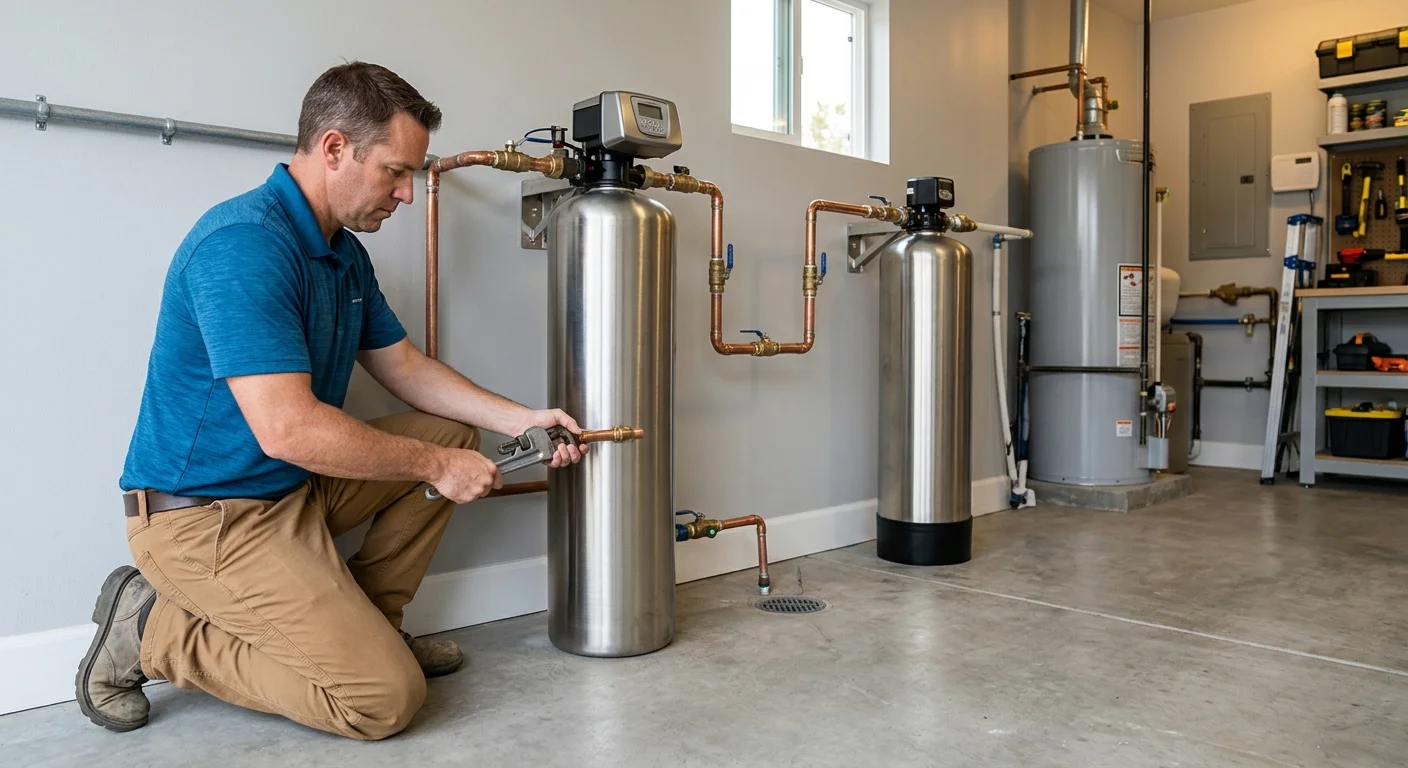
Softening and disinfectant treatment solve different problems
A water softener proposal may be based on a hardness concern. Chlorine or chloramine requires a separate conversation. One equipment recommendation shouldn’t be assumed to answer both questions.
Hardness is a documented local issue, but it varies. The City of San Diego Public Utilities Department reports that its drinking water averages about 16 grains per gallon, or 276 parts per million. Its published range is 16 to 18 grains per gallon, or 272 to 284 parts per million. The city says those figures vary by area and water demand.
Those numbers apply only to the City of San Diego system. They aren’t countywide figures. They also don’t identify which disinfectant reaches a specific address.
Helix Water District provides another useful reference. Its published guidance says water with 10 or more grains per gallon is considered hard. It also says imported Colorado River and State Water Project water averages 14 grains per gallon. That figure describes the imported supply, not every tap in East County.
These hardness facts can support a conversation about water softener installation. They don’t prove chlorine or chloramine treatment. That decision needs its own evidence and equipment documentation.
When comparing proposals, ask the pro to separate each goal in writing. The plan should identify the confirmed water concern, the proposed treatment stage, and how performance will be checked. If chlorine or chloramine is part of the concern, review chlorine and chloramine removal options as a separate part of the system plan.
Why taste and odor can’t identify the disinfectant
A pool-like taste or smell may start the investigation. It can’t confirm whether the water contains chlorine, chloramine, or something else. Our approved sources don’t support identifying a disinfectant through taste or odor alone.
That distinction matters when someone searches for a water softener for chlorine. A noticeable taste doesn’t prove the softener is the right treatment. It also doesn’t show that an existing filter has failed.
Start by recording what changed. Note where you noticed it, whether it affects hot and cold water, and whether it appears at more than one fixture. These observations help a pro understand the complaint. They aren’t laboratory results or a substitute for the serving utility’s report.
If the taste appeared after a filter change, don’t assume the replacement cartridge caused it. Don’t assume the cartridge is removing the disinfectant, either. Check the product documentation, installation details, and water information separately. Our guide to chlorine taste after a filter change explains how to organize those checks without guessing at the cause.
The same caution applies when the water has no noticeable odor. An absent smell doesn’t document what the utility uses. Treatment planning should rely on current records, a defined test, and written equipment claims. Sensory clues can describe the experience, but they shouldn’t select the system.
Check the serving utility’s current water report
San Diego County has many water providers. A report for one system shouldn’t be applied to another address. Even the City of San Diego says its hardness varies by area and water demand.
Find the provider named on the current water bill. Then open that provider’s latest Consumer Confidence Report or water quality report. Check the report year and confirm that it covers the address being evaluated. An older report can provide background, but it shouldn’t be presented as the current answer.
The San Diego County Water Authority is a useful regional starting point. The serving utility remains the authority for the water delivered through its system. If the provider or report isn’t clear, contact that utility and ask where it identifies its current disinfection practice.
Look for the serving utility’s own wording and current notices. Do not infer the disinfectant at your address from a neighboring district, a search snippet or a salesperson’s assumption.
The report and a home water test answer different planning questions. The utility report describes the public system and names its reporting period. Testing describes the sampled water under the stated test conditions. Before relying on a result, ask what was tested, where the sample was collected, and what the result can confirm.
Private-water properties need the same discipline. If no public utility serves the source, don’t borrow data from the nearest city. Ask a qualified testing provider which analysis fits the concern. Get the test scope and results in writing before selecting equipment.
For more context, read our guide to chlorine versus chloramine in San Diego water. Use it to prepare questions, then confirm the answer with the current provider report.
Match treatment media to the confirmed water concern
Treatment labels can sound interchangeable. “Filter,” “softener,” and “whole-house system” don’t establish what a specific unit addresses. The equipment must be matched to the confirmed concern and supported by documentation for that exact configuration.
Confirm the water concern first, then require the exact model’s independently certified reduction claim. A softener label does not establish chlorine or chloramine reduction, and a carbon label alone does not prove that a filter addresses both.
Ask the recommending pro to document:
- Which confirmed concern each treatment stage addresses.
- Which water report or test result supports that recommendation.
- The exact media and equipment proposed.
- The source supporting each performance claim.
- Any operating conditions or maintenance requirements tied to that claim.
- How the selected performance will be checked after installation.
A general badge, category name, or sales phrase isn’t enough detail. Ask for the underlying product documents and read what they actually cover. Don’t extend a claim from one model, media type, or test condition to a different system.
System order also deserves a written explanation. A drawing may show a filtration tank and softener connected in sequence, but an image isn’t a treatment specification. The separately licensed pro should explain why each stage is present and how the property’s plumbing affects the plan.
This approach prevents a common planning mistake. Homeowners sometimes buy equipment for a hardness complaint and expect it to change every taste or odor. Others focus on disinfectant taste while leaving the hardness question unexamined. Separate the goals, evidence, and proposed equipment before signing a contract.
Test before combining treatment stages
Testing should come before a combined-system recommendation. Start with the exact question you need answered. “What’s in my water?” is broad. “Does this sample support the treatment claim in this proposal?” gives the tester and licensed pro a clearer task.
Bring the current utility report to the appointment. Also bring any product information for equipment already installed. If a filter was recently changed, note the model and change date. If the concern appears only at one fixture, say so. Those details help define the next check without turning observations into unsupported conclusions.
Ask what the in-home test includes before relying on it. A test shouldn’t be described as confirming chlorine, chloramine, hardness, or another concern unless that item is actually within its stated scope. Some questions may require a different collection method or outside analysis. If that happens, get clear instructions and written results before equipment is selected.
A useful proposal should keep the evidence trail visible. The utility report identifies the serving system and reporting period. Test paperwork identifies the sample and measured result. Equipment documents identify the model, media, and supported application. The proposal should connect those records without filling gaps through assumptions.
This is also the right time to discuss installation responsibility. Filter Pros San Diego arranges the free in-home water test and connects homeowners with separately licensed Water Filtration pros. The homeowner contracts with and pays the selected pro directly.
Don’t approve extra treatment stages because they sound reassuring. Ask what verified concern each stage addresses. If the answer depends on a fact that couldn’t be confirmed, pause the equipment decision and contact the relevant utility, testing provider, or product authority. A documented gap is safer than a confident guess.
When to call us
Call when your utility report doesn’t settle the treatment question, or when a combined system needs review by a licensed Water Filtration pro. We’ll arrange a free in-home water test and connect you with a local pro who can recommend equipment from the available evidence. Call us at (858) 400-6508 to set up a free in-home water test.