Comparing water softener companies in San Diego comes down to four things: the exact equipment, treatment media, an appropriate water assessment, and a written price before any work starts. Knowing what to check before you sign makes it easier to spot an undersized system, an incomplete scope, or equipment that does not match the water concern. This guide covers companies that install and service treatment equipment, not the public utilities that supply your tap.
What separates complete proposals from incomplete ones
The City of San Diego reports an average hardness of about 16 grains per gallon and a range of 16 to 18, depending on area and water demand. Those figures apply only to the City’s system. Use the serving utility’s current report and measured hardness at the property when comparing proposals.
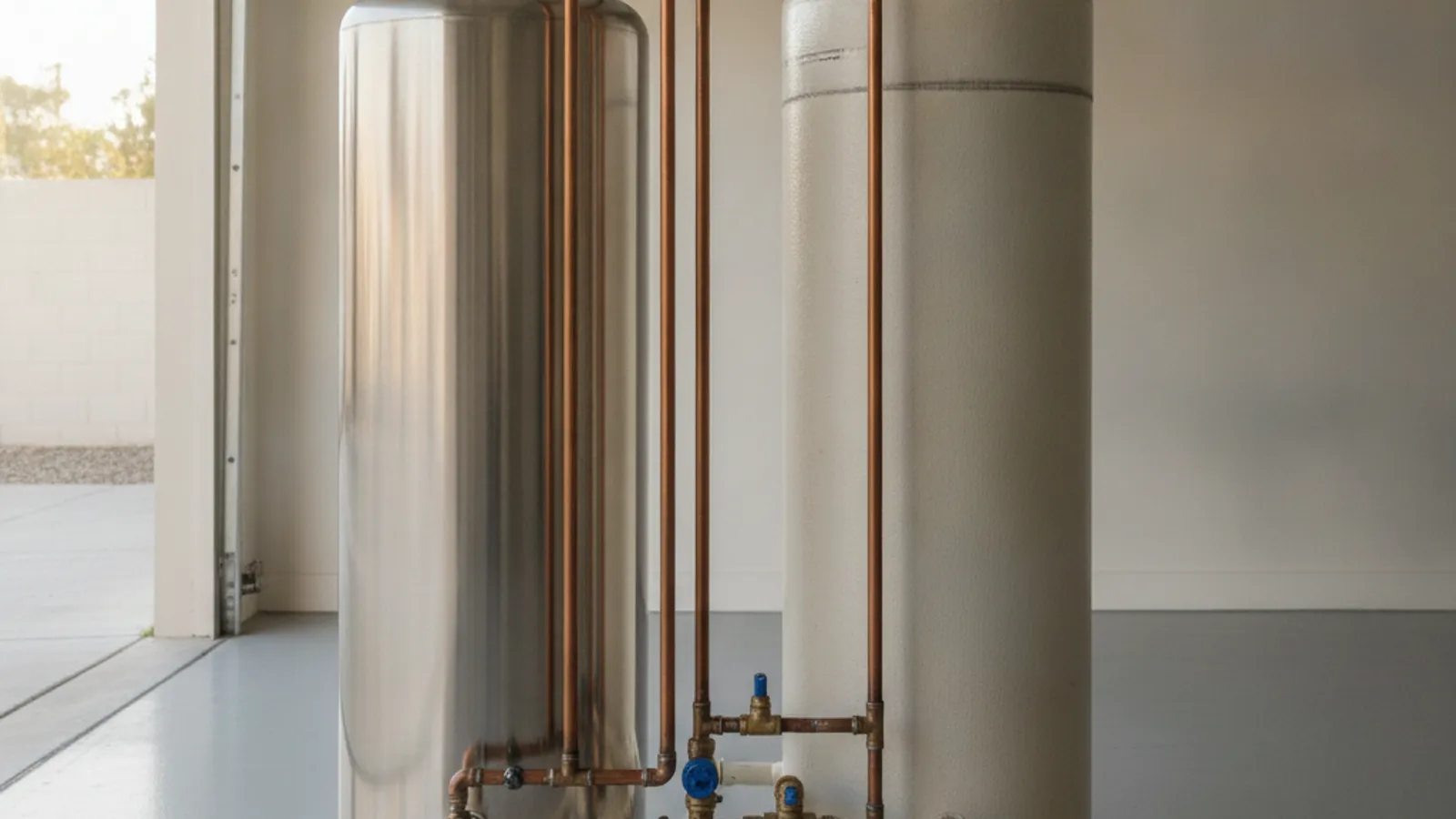
Tank construction. Ask for the exact model, materials, applicable certification, warranty, and maintenance requirements. Stainless steel and fiberglass pressure vessels are both used in residential systems; material alone does not prove treatment performance, water quality, or lifespan.
Treatment media. If a company proposes carbon filtration alongside softening, first check the serving utility’s current report to identify its disinfectant. Then ask for the exact model’s applicable certified reduction claim. A generic reference to carbon does not establish reduction of chlorine, chloramine, or any other specific substance.
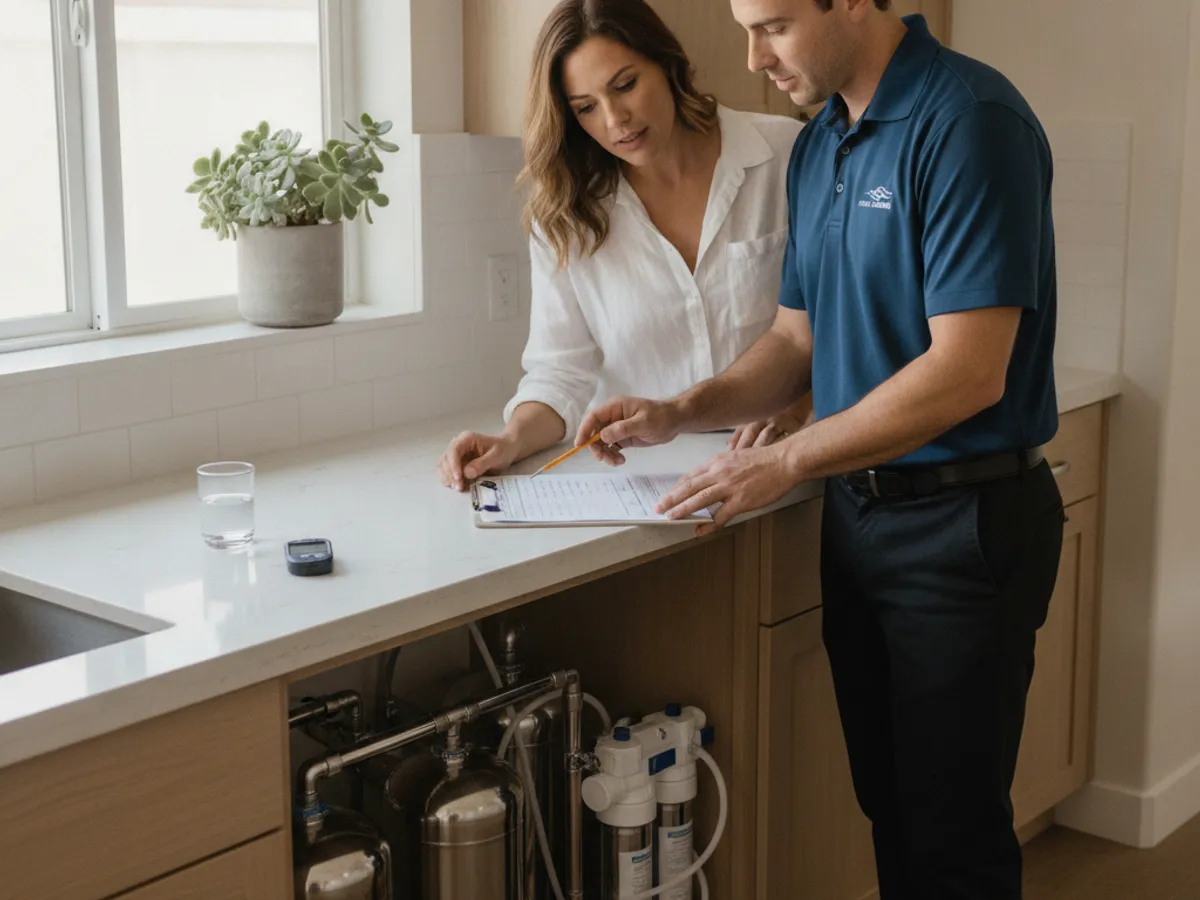
An appropriate water assessment. System sizing should use measured hardness and household water use, with irrigation excluded when appropriate. A field test can screen selected measurements, while concerns such as lead, PFAS, or other specific contaminants require suitable laboratory analysis. Ask to see the measurements and how they support the recommendation.
An exact written price before work starts. This is the one that catches people off guard most often. A written quote, tied to the test results and the specific tank and media specified, protects you from a “final price” that creeps up once the crew is already in your garage. If a company won’t commit to a number in writing before the appointment, that’s the answer.
Red flags when you’re comparing water softener companies
A useful comparison should flag missing information:
- A quote with no mention of tank material at all. If stainless vs. fiberglass never comes up, ask.
- A price given over the phone with no home visit or water test behind it.
- Heavy pressure to sign same-day, especially paired with a “today only” discount.
- No exact certified reduction claim for the substance identified in the utility report or laboratory result.
- A verbal quote that isn’t followed up with anything in writing before the appointment.
- No discussion of permit, drain, septic, or installation requirements that apply to the property. Check these with the authority having jurisdiction and the applicable equipment documentation. The City of San Diego lists eligible softener installations under its Simple No-Plan plumbing permit route; that guidance does not apply countywide.
None of these automatically means a company is dishonest. But two or more together is worth pausing on before you commit.
Questions to ask before you sign
Bring this list to any estimate, whether it is from a provider introduced through Filter Pros or another company:
- What is the tank made of, and what’s its expected lifespan?
- What hardness number did the test show, and how was it measured?
- Which exact certified reduction claims apply to the proposed filter, if one is included?
- What size system (grain capacity) are you proposing, and why that size for my household?
- Is the total price in writing, and does it include installation labor, permits if needed, and haul-away of old equipment?
- What’s the warranty on the equipment, and separately, on the labor?
- If I have a septic system, what do the septic manufacturer and local service provider say about capacity, warranty, and performance?
Clear, documented answers make the quotes easier to compare and preserve what the provider represented before work begins.
How to compare two quotes side by side
Once you have two or three estimates in hand, this is the difference that actually shows up over the life of the system:
| What to check | Incomplete quote | Documented quote |
|---|---|---|
| Tank and valve | Material or model omitted | Exact models, water-contact materials, ratings, certification, and warranty |
| Sizing | National average hardness assumed | Sized to your actual tested gpg |
| Treatment claim | Category-level promise | Exact certified claim matched to the identified concern |
| Price | Verbal estimate, “final price” may change | Exact written price before work starts |
| Installation | Permit, drain, and site conditions omitted | Applicable requirements and site conditions addressed |
| Warranty | Equipment only, vague terms | Equipment and labor, stated in writing |
If a quote omits documentation, ask for it before comparing price alone. Include salt or other consumables, regeneration water, scheduled service, replacement media, installation, and warranty terms in the ownership comparison. Do not assume service life or premature failure from tank material. Our water softener cost breakdown explains the cost categories in more detail.
Apply local information to the address
The City of San Diego reports an average of about 16 grains per gallon and a range of 16 to 18, depending on area and water demand. Those figures are for the City’s system only. Other utilities and private wells can differ, so use the current report for the serving utility and measured hardness at the property.
If you’re unsure about your water, start with the serving utility’s current report. A free in-home water test from an independent provider can screen selected field measurements, but it is not laboratory analysis or proof of safety from every contaminant. Filter Pros San Diego introduces homeowners to independent licensed providers; the provider supplies the recommendation, contract, and written price.
Call (858) 400-6508 or book the free test online to request an introduction. Independent licensed providers offer water softener installation and water softener repair across San Diego County, including Oceanside and the rest of North County.
Frequently asked questions
How do I choose among water softener companies in San Diego?
Compare the exact equipment and water-contact materials, measured sizing inputs, applicable certified treatment claims, maintenance, warranty, and a written installed price. Material alone does not establish performance or service life.
What’s the biggest mistake people make when picking a water softener company?
Comparing price alone without checking the scope behind it. Put equipment, installation, permits when applicable, consumables, scheduled maintenance, replacement media, and warranty terms side by side.
Do all water softener companies in San Diego account for chloramine?
Do not assume. Check the current report for the serving utility, then verify that the exact proposed model has the applicable certified reduction claim.
Should I get more than one quote before choosing a company?
Yes. Two or three quotes let you compare tank material, sizing logic, and pricing structure side by side. If one quote skips details the others cover, like tank material or a written price, that’s useful information on its own.
Are all water softener companies allowed to install salt-based systems anywhere in San Diego County?
Requirements depend on the authority, property, installation, and discharge arrangement. Check the current rules for the address. The City of San Diego identifies eligible softener work under a Simple No-Plan plumbing permit route, but that is not a countywide rule.
What should be in writing before I let a company start work?
The exact price, the tank material and grain capacity, what the price includes (labor, permits if needed, haul-away of old equipment), and the warranty terms for both equipment and labor. If any of those is missing, ask for it before scheduling the install.