A private well needs a testing plan tied to current guidance. It shouldn’t follow a guessed calendar. The approved EPA and San Diego County sources for this page didn’t confirm a fixed testing interval, so ask the current county office and your laboratory to set the schedule.
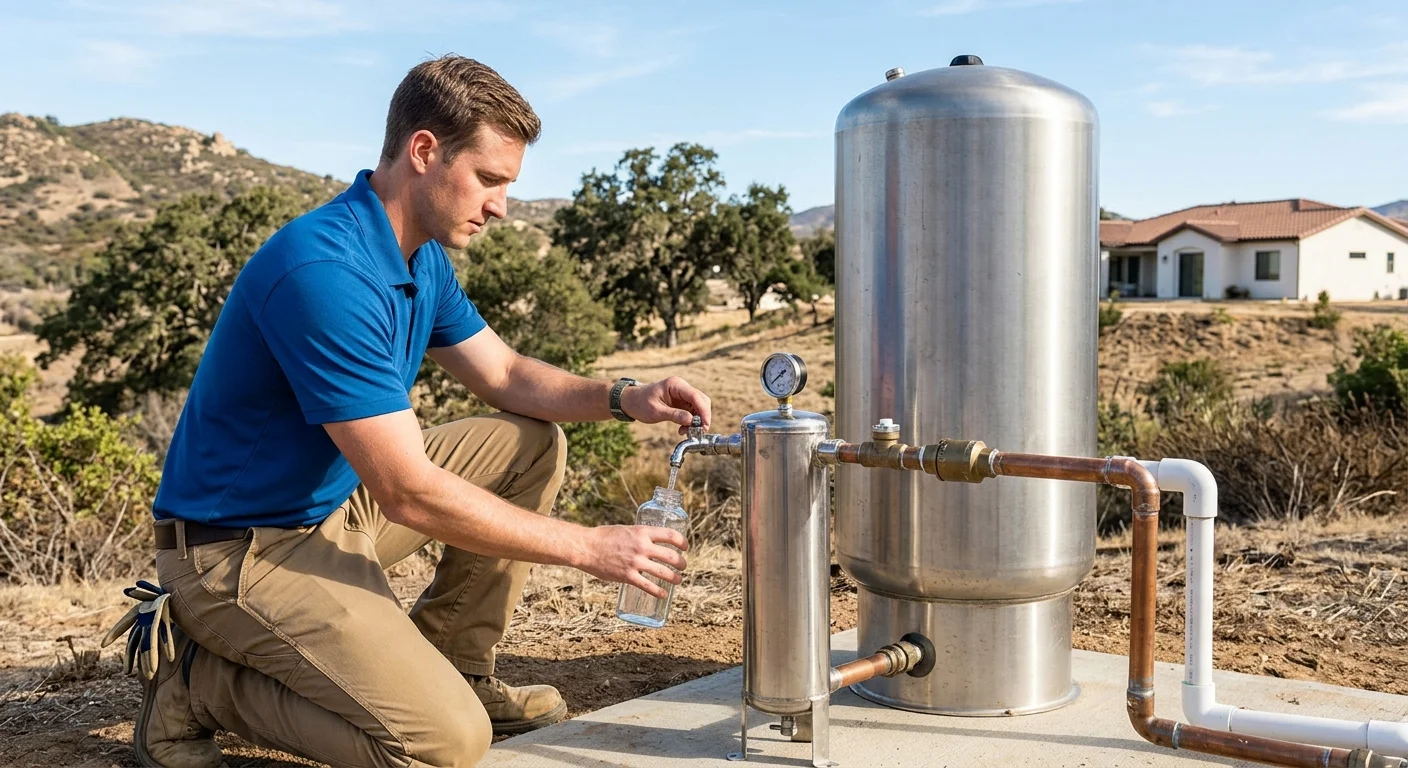
Separate routine testing from symptom-driven testing
Routine testing and symptom-driven testing serve different purposes. Keeping them separate makes your plan easier to follow.
Routine testing happens on a schedule provided by a current authority or laboratory. That schedule may reflect your well, previous results, and the requested analysis. Keep each report so later results can be compared with the same property’s history.
We couldn’t confirm a current testing frequency in the approved sources. That means we can’t responsibly tell every household to test after a particular number of months. Contact San Diego County through its official website and ask which office currently handles private-well water questions. Then confirm the interval directly with that office or an accepted laboratory.
Symptom-driven testing starts with a change you can observe. That might include a new color, odor, taste, or sediment. Those signs don’t identify the cause by themselves. They’re reasons to document what changed and ask which analysis fits the situation.
This distinction matters around Ramona, Valley Center, Fallbrook, Alpine, Jamul, and other rural communities. A public water report doesn’t describe the sample coming from your private well. A neighbor’s result can’t replace a sample from your tap either.
Public-system hardness figures aren’t a shortcut. The City of San Diego says its drinking water averages about 16 grains per gallon, or 276 ppm. It reports a range of 16 to 18 grains, or 272 to 284 ppm, depending on area and water demand. Those figures apply only to the City’s system. They don’t describe private wells.
Use routine testing to maintain a record. Use symptom-driven testing when something changes. In both cases, let current instructions determine the actual analysis.
Use current EPA and county guidance
EPA sets federal drinking water contaminant limits under the Safe Drinking Water Act. California’s Division of Drinking Water adds state limits. Those roles are verified, but they don’t create a testing frequency we can quote from the approved sources.
San Diego County should be checked directly for current local guidance. We couldn’t confirm the present office name or a county testing interval from the material approved for this page. Agency names, responsibilities, and web pages can change. Use the County’s official directory instead of relying on an old blog or saved phone contact.
When you reach the appropriate office, ask focused questions:
- What testing schedule applies to a private household well?
- Which analyses should be requested for this property?
- What laboratory credentials does the County recognize?
- Are special bottles or collection instructions required?
- Should samples come from before or after existing treatment?
- When should a result lead to another sample?
Write down the office, contact date, and guidance you receive. That gives your household a traceable plan without inventing a universal rule.
Match each result to the correct authority and purpose. For example, the EPA’s secondary drinking water guidance lists an iron standard of 0.3 mg/L. EPA associates that level with rusty color, sediment, metallic taste, and reddish or orange staining. That verified figure can help frame a laboratory conversation about iron. It doesn’t tell you whether your well contains iron.
Regional public-water information may still provide context. It shouldn’t be treated as evidence about a private source. Your well decision should come from your sample, the requested analysis, and current agency guidance.
Our guide to well water treatment in San Diego explains how test findings can shape later treatment conversations. Testing comes first. Equipment selection follows the verified result and the household’s water goals.
Choose a certified laboratory when needed
An in-home screening and a laboratory report aren’t interchangeable. If an agency, property professional, or another party requests formal results, ask that party which laboratory credentials and methods it accepts.
Don’t choose a laboratory based only on a nearby address. Start with the current San Diego County office responsible for private-well questions. Ask whether it maintains or references an accepted laboratory list. We couldn’t confirm that list from the approved sources, so its current location and requirements must be checked directly.
Before collecting water, contact the laboratory. Explain that the sample comes from a private well in San Diego County. Describe any visible color, sediment, odor, taste, recent well work, or existing treatment. Ask what information the laboratory needs before recommending an analysis.
Follow the laboratory’s directions exactly. Use the containers it specifies. Confirm the requested sampling tap, tap preparation, storage, labeling, and delivery instructions. Don’t transfer water into a household jar unless the laboratory directs you to do that.
Ask how the report identifies what was tested. A result can answer only the analysis actually performed. It can’t rule on something that wasn’t included.
Keep the complete report, not just a verbal summary. Record where the sample was collected and whether treatment was operating. If you later change equipment, those details help distinguish the old setup from the new one.
Laboratory testing also keeps product selection grounded. A filter shouldn’t be chosen because a salesperson guessed what might be present. Start with the finding, then ask a separately licensed Water Filtration pro what equipment is designed for that specific concern.
Test again after repairs, flooding, or treatment changes
Repairs, flooding near the well, and treatment changes are reasonable triggers for fresh guidance. This is a cautious planning approach, not a confirmed San Diego County testing mandate. Ask the current county office or laboratory when another sample should be collected.
After well or plumbing work, an older report describes the earlier setup. Tell the laboratory what changed and when. Ask whether it wants a new sample, where that sample should come from, and whether more than one location is useful.
Treat flooding the same way. Don’t assume the water changed, and don’t assume it stayed the same. Record what happened around the well. Contact the appropriate county office for current instructions before choosing a test or drawing conclusions.
A treatment change also creates a new comparison point. If equipment was added, removed, bypassed, or adjusted, tell the laboratory. Ask whether it needs water collected before treatment, after treatment, or at another specified tap.
Keep the earlier report beside the newer one. Check that the laboratory, analysis, units, and collection points are clearly identified before comparing results. If something isn’t clear, ask the laboratory to explain its report rather than interpreting it from appearance alone.
Testing should guide the equipment conversation. It shouldn’t be used to force every well into the same system. Depending on confirmed findings and household goals, a pro may discuss whole-house water filtration or another targeted approach.
Some well owners also ask about ultraviolet equipment. Read our guide to UV water treatment in San Diego before comparing options. A UV product discussion doesn’t replace laboratory testing or current agency guidance.
If installation work is recommended, confirm the contractor’s status through the CSLB license check. Filter Pros San Diego connects homeowners with separately licensed pros. The homeowner contracts with and pays the selected pro directly.
What an in-home screening can and can’t replace
A free in-home screening helps organize the next decision. It can document the water conditions included in that specific screening. It can also support a conversation about household concerns, existing equipment, and possible next steps.
Before the appointment, ask what the screening includes. Confirm whether its findings are field observations, instrument readings, or laboratory results. Those categories shouldn’t be blended together.
An in-home screening can’t certify that well water is safe. It can’t replace a certified laboratory report requested by an authority. It also can’t identify something that wasn’t part of the screening.
That limit protects the homeowner. A single reading shouldn’t become a broad claim about every possible substance in the water. The next step may be a laboratory analysis, a review of existing treatment, or confirmation that current equipment matches a known concern.
Our free in-home water test gives homeowners a starting point before a sales decision. Filter Pros San Diego arranges the appointment and connects you with a separately licensed Water Filtration pro. Ask the pro to explain what was screened, what wasn’t, and when laboratory work is appropriate.
Bring previous reports to the appointment. Also note changes in taste, odor, color, sediment, pressure, well work, flooding, or treatment settings. Those details help keep the discussion tied to your property.
Don’t accept a safety promise based only on appearance or a limited field reading. Request the relevant laboratory work when formal confirmation is needed. Then use those findings to compare treatment options without guessing.
When to call us
When laboratory results suggest treatment, a licensed Water Filtration pro can review suitable system options for your home. Call us at (858) 400-6508 to set up a free in-home water test.