Skin that feels tight after a shower can make the water seem guilty. But dry skin has many possible causes, so that feeling can’t prove dry skin from water. Start by separating what you noticed from what a water test can measure.
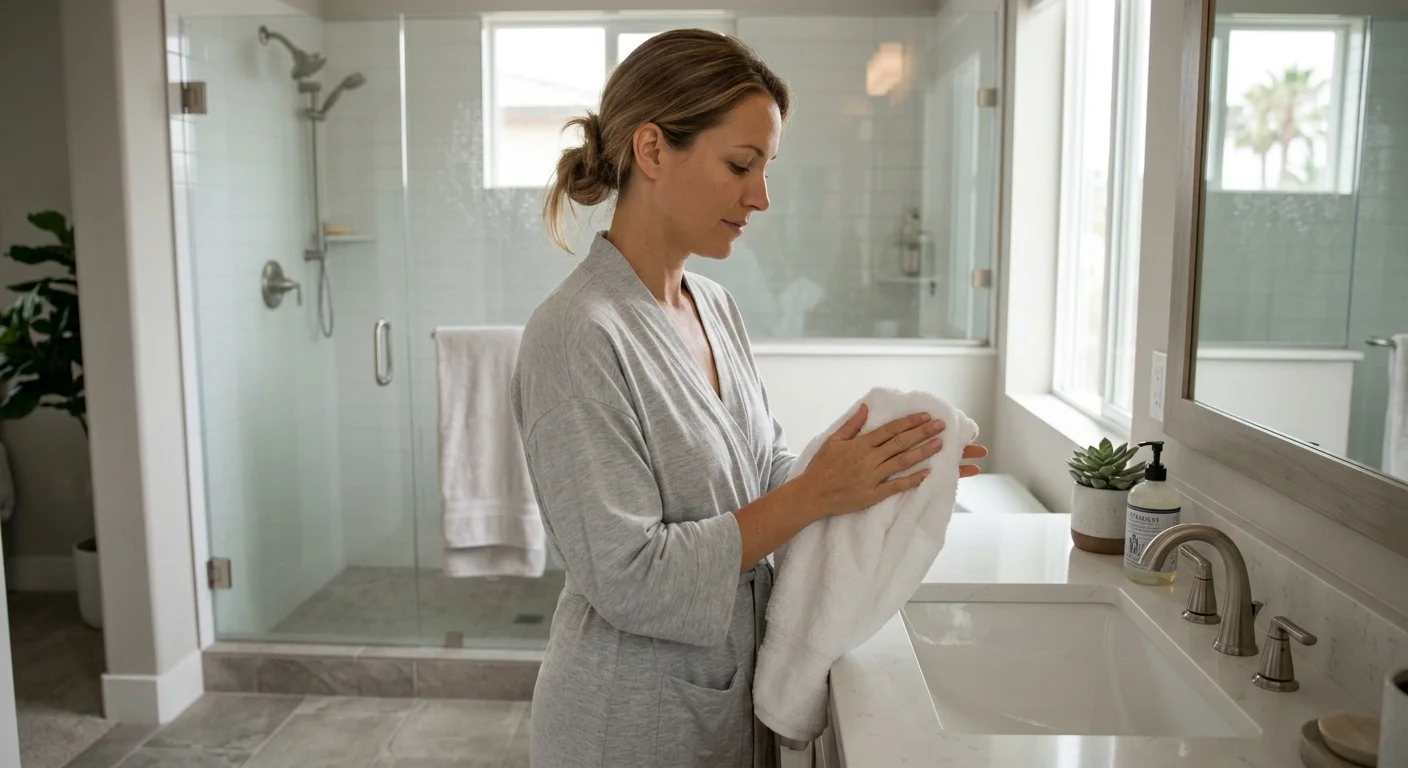
Water can affect skin feel without proving the cause
The timing gives you a useful clue. It doesn’t give you a diagnosis. Skin that feels different after bathing may lead you to examine the water, shower routine, personal care products, and your own skin history.
Begin with a simple record. Note which shower produced the concern and where it happened. Compare your home with another location you regularly visit. A shower in City Heights and one in Clairemont may feel different, but that comparison doesn’t identify the reason.
Keep the observation narrow. Record the shower temperature, its approximate length, and which products you used. Note whether the same feeling follows handwashing or only a full shower. Changing several things at once makes the pattern harder to interpret.
Avoid treating residue, odor, taste, or skin feel as a laboratory result. Those observations can guide testing, but they can’t tell you which water characteristic is present. They also can’t establish that water caused the skin concern.
This distinction matters when reading treatment claims. A device may be marketed toward a symptom without showing what exists at your tap. Our page about water for sensitive skin and eczema explains the water-focused options without treating a filtration consultation as medical care.
San Diego homeowners should begin with their actual water source. A City of San Diego customer shouldn’t borrow a hardness number from another district. A private well in the backcountry or inland North County needs its own result. The right first step is evidence from the water serving that property.
Separate hardness, heat, and personal skin conditions
Hardness is one possible water measurement. Heat, shower habits, products, and personal skin conditions are separate questions. Grouping them together can lead to buying equipment before identifying the concern.
The City of San Diego reports that its drinking water averages about 16 grains per gallon, or 276 parts per million. It gives a range of 16 to 18 grains per gallon, or 272 to 284 parts per million. The city says the result varies by area and water demand. Those figures apply only to the City of San Diego system, not the entire county. The current wording appears on the city’s water hardness information page.
Helix Water District provides another useful reference point. It says water at 10 or more grains per gallon is considered hard. Helix also says imported Colorado River and State Water Project supply averages 14 grains of hardness. That figure describes the imported supply, not a guaranteed reading at any particular tap.
These published numbers provide context. They don’t prove why one person’s skin feels dry. They also shouldn’t be assigned to Chula Vista, El Cajon, Encinitas, or another community without confirmation from the agency serving that address.
Treat heat as its own variable. If you want to compare shower routines, keep everything else as consistent as practical. Change one factor, then record what you notice. Don’t interpret the result as a medical test.
Personal skin concerns belong in a separate lane. A water professional can measure water characteristics. That person shouldn’t diagnose eczema, allergies, or another condition. If you’re comparing hardness with a diagnosed condition, read our guide on water softeners and eczema with that limitation in mind.
What a hardness test can and can’t show
A hardness test can provide a reading for the sampled water. That helps replace a broad assumption with information tied to your tap. Ask the person performing the test to identify the method, units, sampling point, and date.
For City of San Diego customers, compare the result with the city’s published range. Don’t force the reading to match. The city already notes that hardness varies by location and water demand. If the result seems unexpected, ask whether another sample or confirmation method makes sense.
Customers outside the city system need a different reference. Start with the agency listed on the water bill. The San Diego County Water Authority can also provide regional context, but the serving agency remains the better source for a local published figure. If no agency figure can be confirmed, say that clearly and rely on the measured sample.
Private wells require property-specific attention. A City of San Diego average doesn’t describe a private well in inland North County or the county’s backcountry. Don’t copy a neighboring city’s number and call it close enough.
A hardness test can’t diagnose a skin condition. It can’t prove that hardness caused dryness, itching, redness, or discomfort. It also can’t show whether changing hardness will resolve a symptom. Those conclusions extend beyond what the test measures.
The result should instead guide a focused conversation. If hardness is confirmed, a licensed pro can explain available hard water solutions and connect each recommendation to the reading. Ask for that connection in plain language.
Keep a copy of the result. Record where the sample came from, including whether it was hot or cold water. If treatment is later installed, ask how its performance will be checked. A comparison works better when the sampling details remain consistent.
When to speak with a medical professional
Water testing and medical care answer different questions. A water test examines the sample. A medical professional evaluates your skin, symptoms, history, and personal circumstances.
Speak with a qualified medical professional when dry skin is persistent, severe, sudden, painful, or otherwise concerning. Do the same when symptoms interfere with sleep or daily routines. Don’t delay medical attention while waiting for a water appointment.
Bring specific observations to that conversation. Note when the concern began, where it appears, and whether anything changed around the same time. Include changes to soaps, shampoos, moisturizers, medications, or bathing routines. A clinician can decide which details matter.
Don’t ask a water treatment company to identify eczema or another condition. Don’t treat a product recommendation as proof that a symptom came from water. Filter Pros San Diego connects homeowners with water professionals, not medical providers.
The same limit applies to hair concerns. Our article about hard water and hair loss separates water observations from medical conclusions. Neither skin feel nor hair changes can substitute for a water result or professional medical assessment.
Be careful with before-and-after impressions, too. A personal observation may matter to you, but it doesn’t establish a health outcome. Avoid any company promising that filtration or softening will treat eczema or cure dry skin. The approved sources for this page don’t support such an efficacy claim.
You can pursue both paths at once. A clinician can assess the health concern while a water test checks the property’s water. Keeping those roles separate protects you from overconfident sales claims and unsupported self-diagnosis.
Choose treatment only after confirming the water concern
Don’t choose equipment from a symptom alone. First identify the water source, test the relevant water, and define the result you want addressed. Then ask a licensed pro to explain how the proposed system relates to that result.
Start with the scope. Is the concern limited to one shower, several fixtures, or the entire home? Was the sample taken before or after an existing device? Has anyone confirmed hardness at that same property? These details help prevent a recommendation based on a countywide assumption.
Next, request a clear explanation of the proposed equipment. Ask which measured issue it addresses and which issues it doesn’t address. Get the product name and model in writing. Review the manufacturer’s documentation rather than relying on broad claims about skin, health, or contaminant removal.
Specific performance claims about tank materials couldn’t be confirmed from the approved source ledger for this page. Ask the licensed pro for model-specific documentation before relying on those claims. The same caution applies to maintenance promises and expected results.
If installation changes the home’s water system, confirm who’ll perform that work. Filter Pros San Diego arranges testing and connects homeowners with separately licensed pros. The homeowner contracts with and pays the selected pro directly. You can check the individual contractor’s status through the California Contractors State License Board.
Don’t assume every dry-skin concern calls for water treatment. A measured hardness result may support a conversation about treatment, but it still won’t prove the cause of a symptom. The purpose of testing is to narrow the water question before equipment enters the discussion.
A careful proposal should remain tied to the property. City water figures offer context, not a substitute for sampling. District averages don’t describe every tap, and public-system figures don’t describe private wells. Confirm the current information with the serving agency and the licensed pro before making a decision.
When to call us
Call when you want the water checked before discussing equipment, or when confirmed hardness may require work by a licensed Water Filtration pro. Filter Pros San Diego will arrange the test and connect you with a separately licensed local professional. Call us at (858) 400-6508 to set up a free in-home water test.