Yes, a water softener adds sodium ions to treated water. It doesn’t pour brine into the glass. The added amount depends on hardness removed. City of San Diego water already contains sodium before any home treatment.
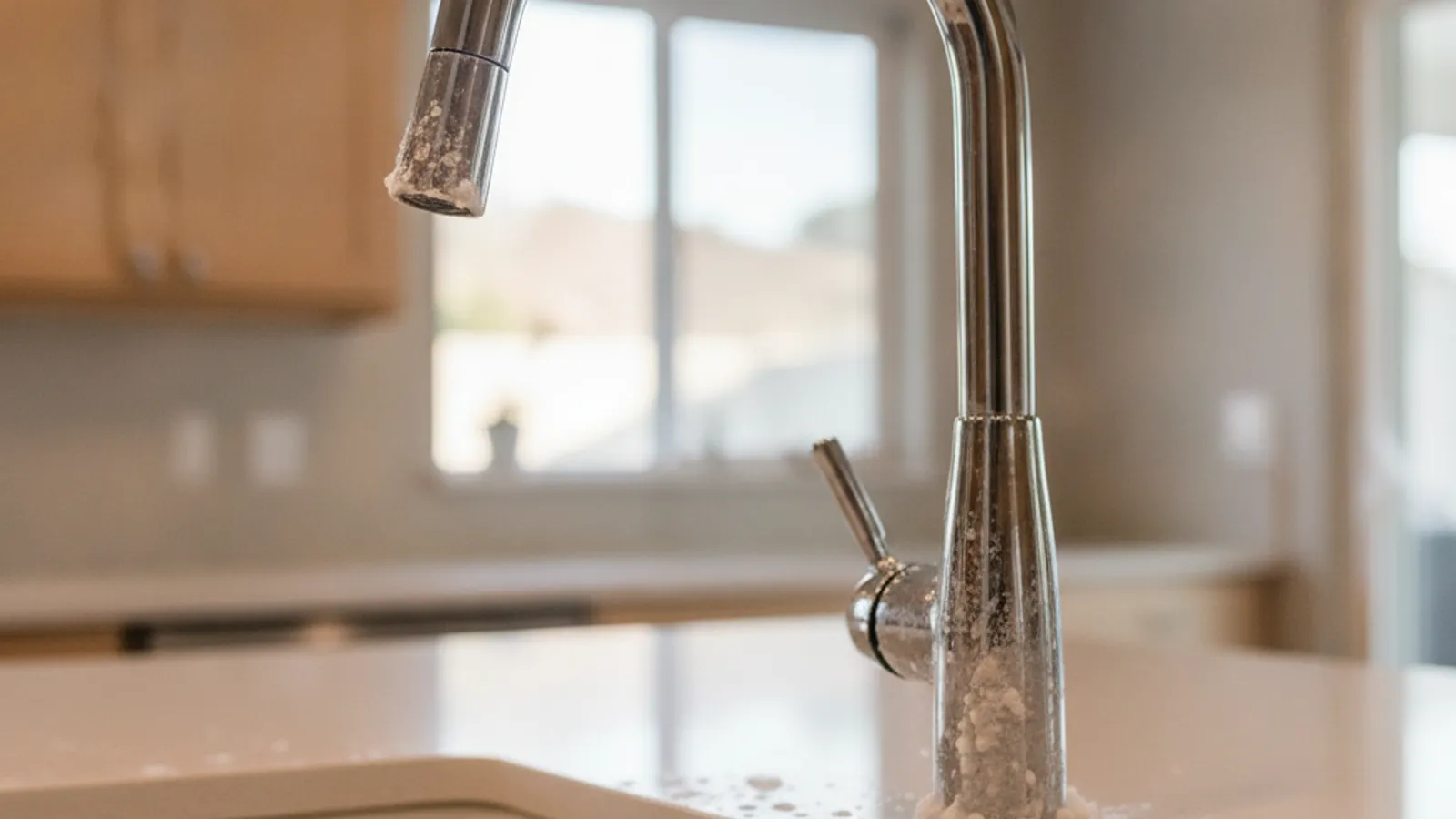
Sodium ions, not salt water in the glass
The sodium in softened tap water comes from ion exchange, not from brine mixing into the glass. Water passes through a resin bed charged with sodium. Calcium and magnesium ions stick to the resin. Sodium ions go into the water in their place.
The salt in the brine tank is for regeneration. It recharges the resin after the bed fills with hardness minerals. Used brine is sent to a drain when the unit runs as designed. Household taps should not receive that brine.
University of Nebraska-Lincoln Extension NebGuide G1491 describes this swap. UNL also states that ppm equals mg/L.
A salt-free conditioner doesn’t make this exchange. It leaves hardness minerals in the water. If the goal is scale control without ion-exchange sodium, read the water softener versus salt-free conditioner comparison.
How much sodium the ion-exchange step adds
UNL estimates about 8 mg/L of sodium added per grain per gallon of hardness removed. Their own example is 10 gpg of hardness, which yields about 80 mg/L of sodium after treatment. Read that 80 mg/L as UNL’s estimate of sodium added by the exchange, not as a San Diego tap total.
City water already contains sodium, so the added amount sits on top of that starting figure. How much is added depends on hardness actually removed at the home. Label every step below as an estimate, not a laboratory sample.
- Rate. UNL G1491: about 8 mg/L sodium added per gpg of hardness removed.
- Hardness used in the example. The City of San Diego 2025 Consumer Confidence Report lists Miramar average hardness at 14.1 grains per gallon. Alvarado averaged 13.8. Otay averaged 14.2. A round 14 gpg figure is only an illustration next to those plant averages. It isn’t a kitchen-tap result.
- Arithmetic. 14 gpg × 8 mg/L ≈ 112 mg/L added. Using the named Miramar average, 14.1 × 8 ≈ 113 mg/L added. Both are estimates.
- Sodium already reported. Miramar’s 2025 average sodium is 86.2 ppm. That sodium is already in the treated supply.
- Stacked planning figure. 86.2 + 113 ≈ 199 mg/L. That sum mixes a CCR plant average with UNL arithmetic. It isn’t a lab result for any address.
Purchased treated water in the same report averaged 8.5 gpg. 8.5 × 8 ≈ 68 mg/L added. That estimate is lower because less hardness is removed.
Added sodium follows hardness removed. Measure hardness at the tap before you size equipment. See how to size a water softener and whether San Diego water is hard.
This page is not medical advice. People on a restricted sodium diet should consult a physician.
Sodium already in City of San Diego water
The City’s 2025 report already lists sodium in treated water. It sets no MCL for sodium. The report says sodium is generally naturally occurring. The figures below are for public water system 3710020. They are plant and purchased-water rows, not a countywide average.
| 2025 CCR source | Average sodium (ppm) | Reported range (ppm) | Average hardness (gpg) |
|---|---|---|---|
| Alvarado | 87.8 | 73.1 to 102 | 13.8 |
| Miramar | 86.2 | 76.6 to 98.4 | 14.1 |
| Otay | 111 | 92.5 to 136 | 14.2 |
| Purchased treated water | 71.2 | 47.8 to 87.0 | 8.5 |
Otay’s average sodium is higher than Miramar’s at similar hardness, so the starting figure can differ even when the add-on estimate looks similar. Another district needs its own current report. A private well needs a test. Use the City water-quality portal for City addresses, and confirm the utility on the bill.
Options if you need to limit sodium in drinking water
UNL describes a kitchen cold line that bypasses the softener so drinking and cooking water stay unsoftened. That dedicated kitchen cold line isn’t the equipment bypass valve. The softener bypass valve isolates the whole unit. Whole-unit bypass sends untreated water to every fixture while the softener is out of service.
If a physician has limited sodium, take that instruction to the physician. This page is not a diet plan.
Some softeners can regenerate with potassium chloride instead of sodium chloride. UNL says to consult a water-treatment professional. Confirm the model’s manual. Do not assume every unit can switch.
Point-of-use reverse osmosis is a drinking-water option with its own certified claims. It isn’t a whole-house softener. NSF/ANSI 58 covers reverse osmosis systems. A standard name is not a ranking. Verify the exact model’s certified reduction claim. See reverse osmosis drinking water.
What a softener still does not treat
UNL states that softening does not remove bacteria, hydrogen sulfide, silt or sand, lead, nitrate, pesticides, and many other organic and inorganic compounds. NSF/ANSI 44 covers ion-exchange softeners that reduce calcium and magnesium hardness. It does not establish reduction of every contaminant.
EPA home-treatment guidance says no single technology removes every contaminant. Start with the serving utility’s current report and the actual goal. For system-level safety questions, read whether San Diego tap water is safe.
Request a local referral
Filter Pros San Diego is an independent information and referral site. We do not install or repair equipment. We connect homeowners with separately licensed water-filtration professionals. The homeowner contracts with and pays the selected professional directly.
A free in-home water test can measure hardness at the tap for planning. That visit isn’t a laboratory sodium analysis unless that method is stated. Ask what is measured.
Call (858) 400-6508 to request a local match. Share the serving utility and whether kitchen drinking water should stay off the softener.
Frequently asked questions
Does a water softener add sodium to drinking water?
Yes. Ion exchange replaces calcium and magnesium with sodium ions. The brine tank salt is for regeneration, not for filling the glass.
How much sodium does a water softener add?
UNL estimates about 8 mg/L per grain per gallon of hardness removed. Their 10 gpg example is about 80 mg/L added. A 14 gpg illustration is about 112 mg/L added. Use a measured hardness result for a home estimate, and label the math as an estimate.
Does City of San Diego tap water already contain sodium?
Yes. The 2025 CCR lists plant averages from 71.2 to 111 ppm. There is no MCL for sodium. Those rows are not countywide and do not describe a well.
Can I keep unsoftened water at the kitchen sink?
UNL describes a dedicated kitchen cold line that bypasses the softener for drinking and cooking. That plumbing line isn’t the whole-unit bypass valve.
Can I use potassium chloride instead of salt?
Some units can, if the model allows it. Confirm the owner’s manual and ask a water-treatment professional. Diet questions belong with a physician.
Does a water softener remove lead, nitrate, or bacteria?
UNL says it doesn’t. Those concerns need the right test and a treatment with a matching certified claim.