The activated carbon vs catalytic carbon decision has no verified universal winner in this site’s approved evidence. Start with your serving utility’s current report, then arrange a water test. Choose only after the seller documents what the complete proposed system should do.
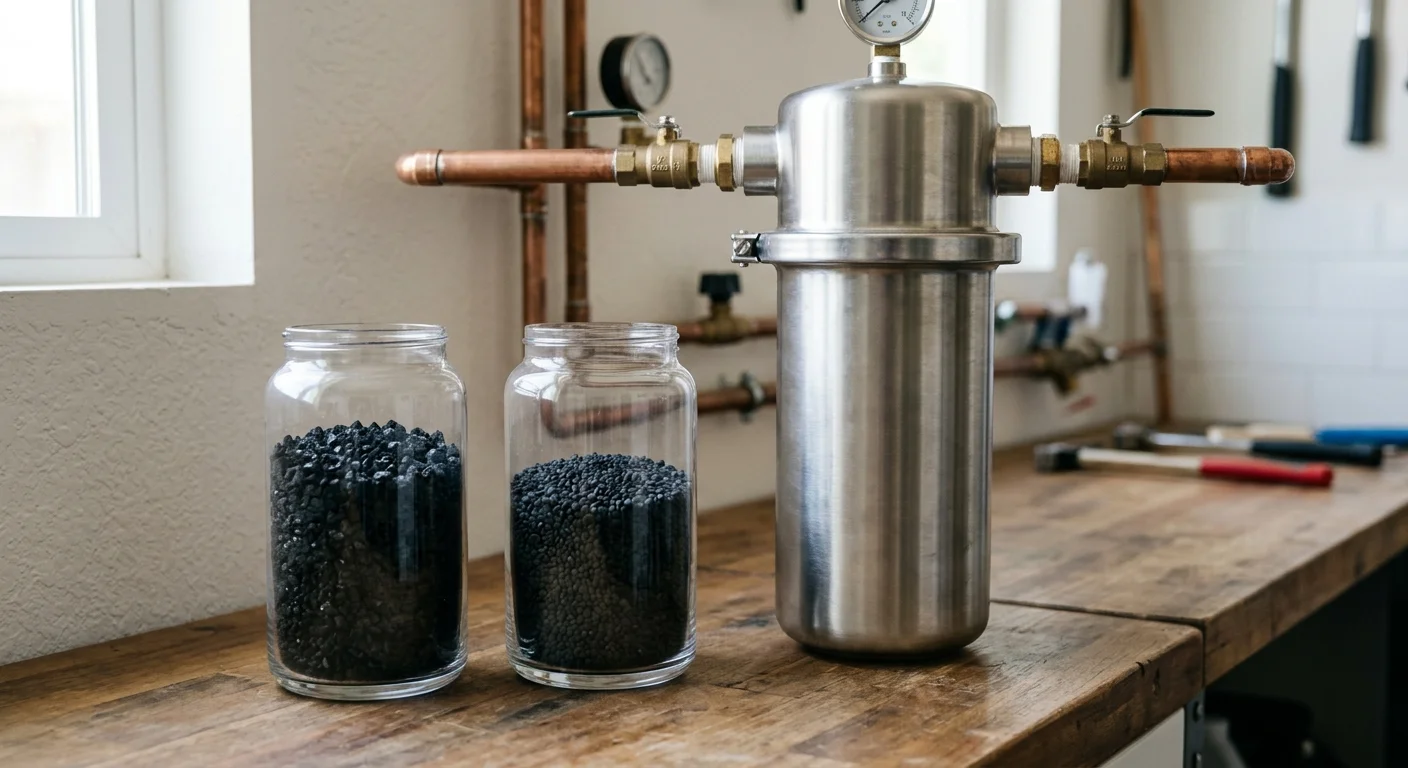
How activated carbon and catalytic carbon differ
A proposal may place activated carbon and catalytic carbon side by side. That comparison can sound complete, but the media label isn’t enough. Our approved primary-source ledger doesn’t contain verified chloramine performance claims for either option. It also doesn’t confirm a universal technical definition that applies to every product sold under those labels.
That evidence gap matters. We can’t responsibly claim catalytic carbon always performs better. We also can’t claim activated carbon can’t address chloramine. Either statement would need primary documentation tied to a specific product and system. Until that documentation is available, treat broad winner claims as unconfirmed.
Ask the seller to identify the exact media manufacturer and product. The proposal should also identify the vessel, media quantity, operating conditions, and intended service flow. Request the written chloramine claim for that complete setup. A loose description such as “upgraded carbon” doesn’t provide enough information for a buying decision.
The same rule applies across San Diego County. A proposal prepared for a Chula Vista address shouldn’t be copied to an El Cajon home without checking the serving utility’s information and the home’s test results. Local source conditions can differ by service area and season.
Our chlorine and chloramine removal service starts with an in-home test arranged through Filter Pros San Diego. We then connect homeowners with separately licensed pros who can recommend equipment. The homeowner contracts with and pays that pro directly.
Why chloramine needs a source-matched approach
Don’t select catalytic carbon for chloramine until chloramine is confirmed for the property. Start with the current information from the utility serving that exact address. If its published report or notices don’t answer the disinfectant question, contact the utility and ask for confirmation.
The San Diego County Water Authority is a useful regional starting point. Still, a countywide statement doesn’t replace information from the serving utility. San Diego County includes several service areas, and one report shouldn’t be treated as universal.
Our verified ledger confirms that local hardness varies by service area and season. It also identifies the local Consumer Confidence Report as the authority for source mix and hardness. Any reported figure must name the report year. Because no current countywide figure is approved, this page doesn’t publish one.
Federal drinking water contaminant limits are set by the EPA under the Safe Drinking Water Act. California’s Division of Drinking Water adds state limits. Those authorities govern water quality, but that fact doesn’t select a carbon product for your house.
Use our guide to chlorine versus chloramine in San Diego water for background vocabulary. Then return to current utility information before comparing equipment. If the source can’t be confirmed, write that uncertainty into the proposal. Ask the pro to explain what must be verified before any system is selected.
A source-matched decision also needs a defined goal. Record the taste, odor, fixture, or existing-filter issue that prompted the search. That gives the pro a clear problem to investigate without assuming its cause.
What contact time and flow change
Contact time and flow often appear in carbon system proposals. Our approved sources don’t provide a verified formula, minimum contact time, maximum flow, or required tank size for chloramine treatment. Publishing a convenient benchmark would turn an evidence gap into an invented rule.
Instead, make each seller explain those terms for the proposed system. Request written answers to these questions:
- What service flow was used for the chloramine claim?
- What installed media quantity does that claim cover?
- Which household demand assumptions were used?
- What changes when water demand rises or falls?
- How will the result be checked after installation?
Don’t turn a product chart into a whole-house promise on your own. Ask whether the chart covers the exact media, vessel, and configuration in your proposal. If the seller can’t connect those details, the comparison remains incomplete.
Household use belongs in that conversation. Tell the pro which fixtures may run together and when demand feels highest. You don’t need to estimate a flow rate yourself. The pro should measure or document the conditions used for the recommendation.
Existing equipment also needs attention. A changed taste doesn’t prove that a particular carbon medium failed. Our guide to water that tastes like chlorine after filtration helps organize the issue before replacement discussions begin.
For a whole house water filtration proposal, ask where samples will be taken before and after treatment. Also ask what operating conditions must be recorded during each check. That creates a clearer comparison than choosing by the word “catalytic.”
How to compare media claims and certifications
Begin with the exact claim, not a logo or sales category. The proposal should name the product, system model, target substance, test conditions, and document supporting the claim. If one item is missing, ask the seller to provide it before you compare bids.
Use a consistent checklist for both media options:
- Does the document name activated carbon or catalytic carbon?
- Does it address chloramine specifically?
- Does it cover the complete system or only one component?
- Is the exact proposed model listed?
- Are the operating conditions stated?
- Is there a written method for checking the installed result?
- Who issued the document, and where can it be verified?
Our approved ledger doesn’t verify what NSF/ANSI 42, 53, or 58 cover. This page therefore doesn’t assign a treatment scope to any of those standards. If a seller cites one, check the certifier’s current database. Confirm the exact model and the exact claim attached to it.
Don’t treat a certification mark as proof of a claim that isn’t listed. Likewise, don’t accept an unlabeled brochure as independent verification. Ask for the original document and its current status. Save a copy with the final proposal.
Installation credentials are a separate issue from media performance. When a project includes contracted installation work, verify the pro through the California Contractors State License Board license check. Filter Pros San Diego is the referral service, not the installation contractor.
No verified price, warranty, media lifespan, or performance percentage is available in our approved ledger. We won’t fill those gaps with estimates. Request an itemized proposal, written warranty terms, maintenance instructions, and the name of the party responsible for each promise.
When to test before choosing a system
Test before choosing when the utility information doesn’t settle the question. Testing also makes sense when an existing filter isn’t meeting the homeowner’s stated goal. The test should support the recommendation, not serve as a prop for a predetermined product.
Use this sequence:
- Find the current report for the serving utility.
- Record the report year and service address.
- Write down the specific water concern.
- Document the existing filtration equipment.
- Arrange an in-home water test.
- Ask which findings support the proposed system.
- Request a written verification plan.
Ask exactly what the in-home test measures. Don’t assume that every test identifies chloramine or every other water characteristic. If the test doesn’t answer the media-selection question, ask which qualified laboratory or public authority can provide the missing result.
This address-specific approach applies from Oceanside to the City of San Diego and the South Bay. Use the report tied to the serving utility, not a countywide number copied from another page. Remember that local hardness can vary by service area and season.
Testing might support activated carbon, catalytic carbon, another treatment approach, or no equipment change. We can’t choose among those outcomes without verified findings and product-specific evidence. A licensed pro should explain how the recommendation follows from the water information.
Filter Pros San Diego arranges the free in-home test and connects you with a separately licensed pro. That keeps the first decision focused on your water, rather than a media label.
When to call us
Call when you’re comparing carbon proposals, investigating possible chloramine, or considering equipment at the home’s water entry point. A licensed Water Filtration pro should evaluate the findings and any installation work. Call us at (858) 400-6508 to set up a free in-home water test.