Microplastics have been detected in tap water, bottled water, rainwater, and human blood. That’s not speculation. Multiple peer-reviewed studies from research institutions and public health agencies have confirmed their presence.
What remains genuinely uncertain is the health effect. Science is still working that out. What is clear is that certain types of filtration significantly reduce microplastics in drinking water, and that bottled water isn’t a solution.
Here’s an accurate look at what’s known, what isn’t, and what you can actually do about it.
What microplastics are
Microplastics are small plastic particles, generally defined as less than 5 millimeters in size. That category includes everything from fragments of larger plastic items that have broken down over time to microbeads that were manufactured at tiny sizes for use in personal care products, to fibers from synthetic clothing.
Nanoplastics are even smaller, below one micrometer, and have been the subject of more recent research attention because their small size may allow them to cross biological barriers that larger particles can’t.
Plastics get into water through multiple pathways: breakdown of plastic waste in the environment, runoff from roads and urban surfaces, degradation of plastic pipes and infrastructure, and atmospheric deposition from air that contains plastic particles.
What the research shows
A 2017 study conducted by researchers at the State University of New York at Fredonia tested tap water from more than a dozen countries and found microplastics in the majority of samples. The United States had among the higher detection rates.
The World Health Organization published a review of microplastics in drinking water in 2019. The report confirmed their presence in tap and bottled water globally and called for more research on health effects, while noting that available data at that time was insufficient to draw firm conclusions about risk at detected levels.
More recent research has found microplastics in human blood, lung tissue, and the placentas of newborns, indicating that particles do enter the body. Studies published in journals including Environmental Science and Technology and Environmental Health Perspectives have continued to characterize the problem. The long-term health significance of these findings is still being studied.
The California State Water Resources Control Board and the EPA have been monitoring microplastics in water supplies and developing analytical methods and regulatory frameworks. The EPA’s research agenda includes microplastics as an area of active investigation, as documented in its drinking water and ground water resources.
What about bottled water
Bottled water is not a solution to microplastics, and in some respects makes it worse. Multiple studies have found that bottled water often contains higher concentrations of microplastics than tap water. The plastic bottles themselves are a source of contamination, particularly when water sits in warm conditions or is consumed from a bottle that’s been exposed to heat.
Beyond the microplastics question, bottled water generates significant plastic waste and costs substantially more per gallon than filtered tap water. It’s worth being skeptical of the assumption that bottled water is cleaner.
What we don’t yet know
The honest answer is that the long-term health effects of ingesting microplastics at the concentrations found in typical drinking water aren’t fully established. Animal studies have raised concerns at high exposure levels. Human epidemiological data is still being collected.
Researchers are particularly interested in nanoplastics, which are harder to detect and measure and may behave differently in biological systems than larger microplastic particles. The field is moving quickly.
The absence of a definitive health verdict doesn’t mean inaction is the right call, especially for households with infants, young children, or pregnant members where precautionary approaches to contaminant exposure make sense.
Which filtration actually reduces microplastics
Not all filters are equal here. Here’s what the evidence supports.
Reverse osmosis
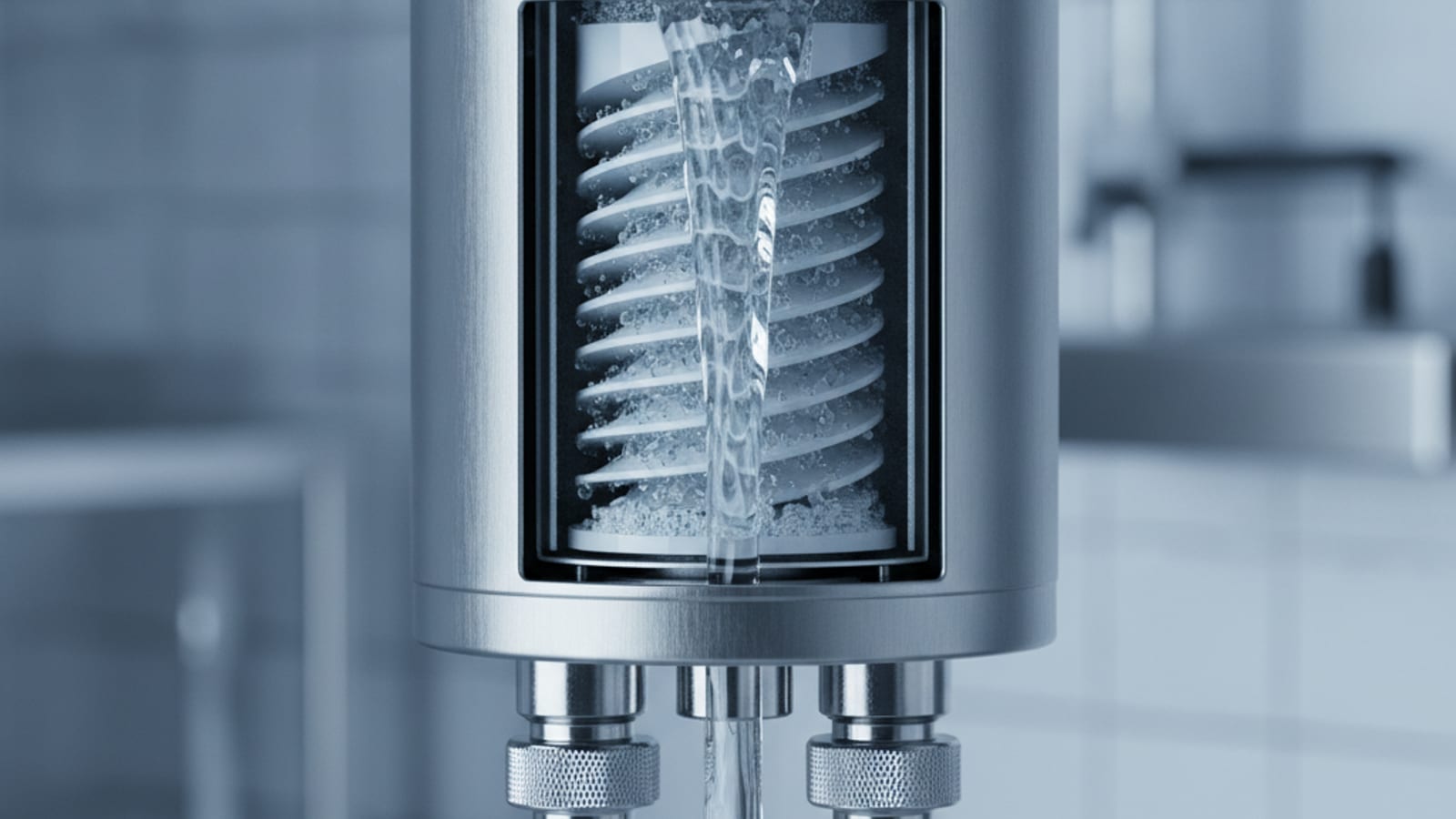
Reverse osmosis (RO) is the most effective residential technology for reducing microplastics. Water is forced through a semi-permeable membrane with pores small enough to block particles, dissolved contaminants, PFAS, heavy metals, and microplastics. Studies examining RO filtration have found it removes the vast majority of microplastics detected in tap water.
A quality under-sink reverse osmosis drinking water system addresses microplastics, PFAS, chloramine byproducts, nitrates, and other contaminants simultaneously. It’s the most comprehensive drinking water solution available at the residential level.
Fine mechanical filtration
Filters rated at 1 micron or finer can capture microplastic particles above that size. Ceramic filters and some advanced carbon block filters fall into this category for larger microplastics. They’re less effective than RO for nanoplastics and dissolved contaminants.
Standard activated carbon filters
Common pitcher filters and most refrigerator filters use activated carbon, which reduces chlorine, some volatile organic compounds, and certain taste and odor issues. They’re not designed for microplastics and don’t have a meaningful effect on particles of that type.
What doesn’t help
Boiling water concentrates microplastics rather than removing them. Letting water sit in a container, including a plastic one, can add particles. Refrigerator filters and most simple pour-through filters aren’t rated for microplastic removal.
San Diego’s specific situation
San Diego’s water travels long distances through aging infrastructure before reaching your home. It’s treated with chloramine, which adds disinfection byproducts to the picture. The distribution system includes pipes of varying ages and materials.
An under-sink RO system addresses the full spectrum of concerns in one installation: microplastics, PFAS, chloramine and its byproducts, heavy metals, and hardness minerals at the point of use. For drinking and cooking water, it’s the most complete answer available for a San Diego household.
Pairing an RO system with a whole-house conditioner for the rest of the home addresses both the water you drink and the water you shower and wash with. Learn more about PFAS removal and whole-home hard water solutions if you’re evaluating a more complete approach.
Making a practical decision
Microplastics are present in tap water. The health science is still developing. The filtration science is not, and reverse osmosis is a well-established, effective technology for reducing them alongside a range of other contaminants.
If your primary concern is drinking water quality, an under-sink RO system is the most evidence-based answer. A free in-home water test gives you a clear picture of what you’re working with before you decide.
Schedule your free in-home water test or call us at (858) 400-6508 to talk through what a reverse osmosis system would look like for your home.