Water itself, the H2O molecule, doesn’t break down or go bad. It doesn’t have a shelf life the way food does. What changes over time is everything around the water: the container, the seal, and whatever the water has been exposed to since it was bottled or stored.
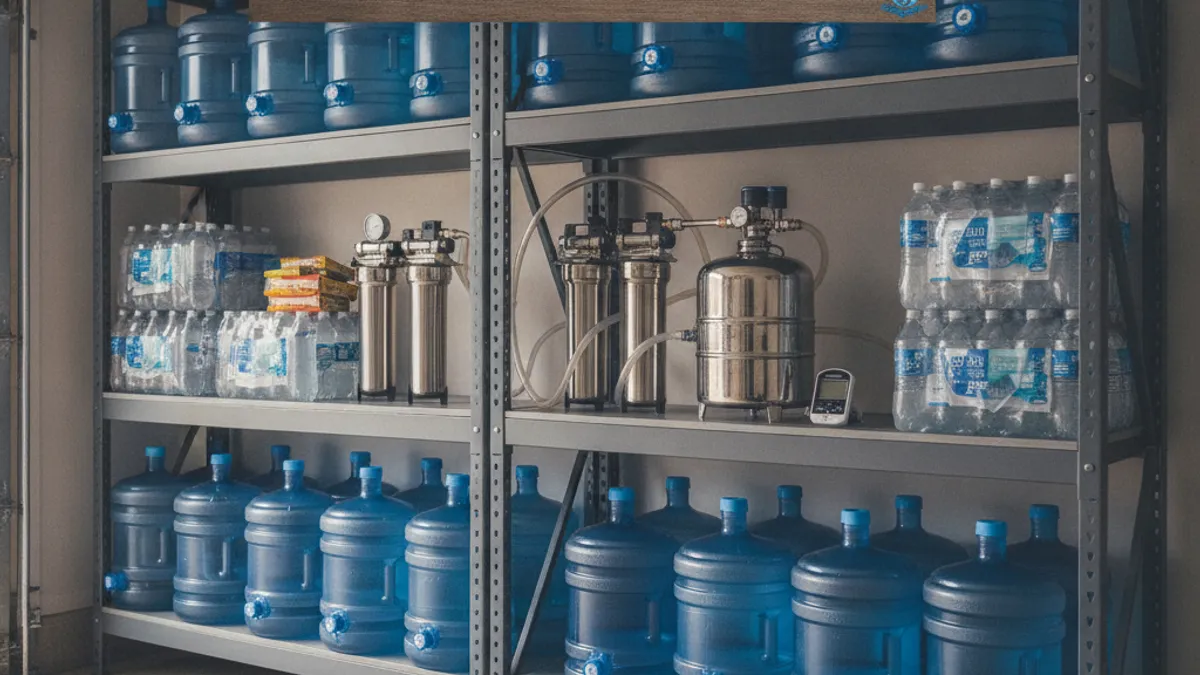
Why bottled water has a date printed on it
Most bottled water carries a best-by or use-by date, and that date is generally about the packaging, not the water molecule itself. Plastic bottles are slightly permeable over long periods, which means outside odors and flavors can migrate in, and in some cases trace amounts of plastic compounds can migrate out, especially if the bottle has been stored somewhere hot, like a garage or a car trunk during a San Diego summer.
Heat accelerates this process. A case of bottled water left in a hot garage or vehicle for months will taste noticeably different, often described as plasticky or flat, well before anything is technically unsafe. That’s a taste and quality issue more than a safety one, but it’s real enough that most people notice it.
What actually happens to stored tap water
Tap water stored in a clean, sealed container behaves similarly. It doesn’t spoil, but it can go flat-tasting as dissolved gases, including the chlorine or chloramine used to disinfect it, dissipate over time. That’s harmless, and some people actually prefer the taste of water that’s lost its chlorine edge.
The bigger concern with long-term stored water is contamination risk if the seal isn’t airtight or the container wasn’t food-safe to begin with. An open or loosely covered container can pick up dust, bacteria, or algae growth if it’s exposed to light over an extended period. A properly sealed, food-grade container kept in a cool, dark place avoids most of that risk.
Emergency water storage in San Diego
Given the region’s earthquake risk and the occasional water service disruption, plenty of San Diego households keep an emergency water supply on hand. Most emergency preparedness guides suggest periodically rotating stored water rather than filling containers once and forgetting about them indefinitely, since even a well-sealed container benefits from a fresh fill every so often. Check the specific guidance from a preparedness resource like Ready San Diego for current recommendations on quantity and rotation, since guidance can be updated over time.
Commercially bottled water designed for long-term storage, and water treated at home with a reverse osmosis or distillation process before sealing, both tend to hold up better over long storage periods than untreated tap water sealed in a repurposed container. If you’ve ever wondered whether bottled water beats what comes out of a home filter in the first place, we cover that comparison directly in is bottled water better than filtered.
Ice, humidifiers, and other water that sits around
The same logic applies to water sitting in less obvious places. Ice cube trays and automatic icemakers left unused for a long stretch can produce ice that tastes stale, usually from absorbing freezer odors rather than the water itself degrading. Humidifier tanks left filled between uses are a bigger concern, since standing water at room temperature is a decent environment for bacteria or mold to grow inside the tank, which is why most humidifier manufacturers recommend emptying and drying the tank between uses rather than topping it off indefinitely.
Refillable water bottles carry a similar issue on a smaller scale. A bottle that gets refilled without a regular wash can build up a biofilm inside, especially around the mouthpiece, regardless of how clean the water going in is. None of this means the water expired. It means the container became the problem.
When to actually throw stored water out
A few signs are worth acting on rather than ignoring: a broken or compromised seal, cloudiness that wasn’t there originally, any visible growth inside the container, or a container that wasn’t food-safe plastic to begin with. Any of those are reasons to dump the water and start fresh rather than risk it, even though the water itself doesn’t have a hard expiration point.
Frequently asked questions
Can I drink bottled water past its printed date?
The date is generally about taste and packaging quality rather than a hard safety cutoff, but if the seal is broken or the water tastes or smells off, don’t drink it.
How often should I rotate emergency water storage?
Guidance varies, and checking a current preparedness resource for your area is more reliable than a fixed rule. Rotating periodically rather than storing indefinitely is the general practice most guides recommend.
Does filtered water store better than tap water?
Water that’s been through reverse osmosis or distillation before storage tends to have fewer dissolved solids to interact with the container over time, which some people find results in better-tasting long-term storage water.
Is it safe to reuse plastic bottles for water storage?
Food-grade containers designed for water storage are a safer bet than reusing single-use bottles repeatedly, since repeated reuse can degrade the plastic and make it more prone to leaching or cracking.
A whole house filtration system takes the guesswork out of what’s in the water you’re storing to begin with. If you’re setting up a system and want water that stores and tastes better from the start, call Filter Pros San Diego at (858) 400-6508.