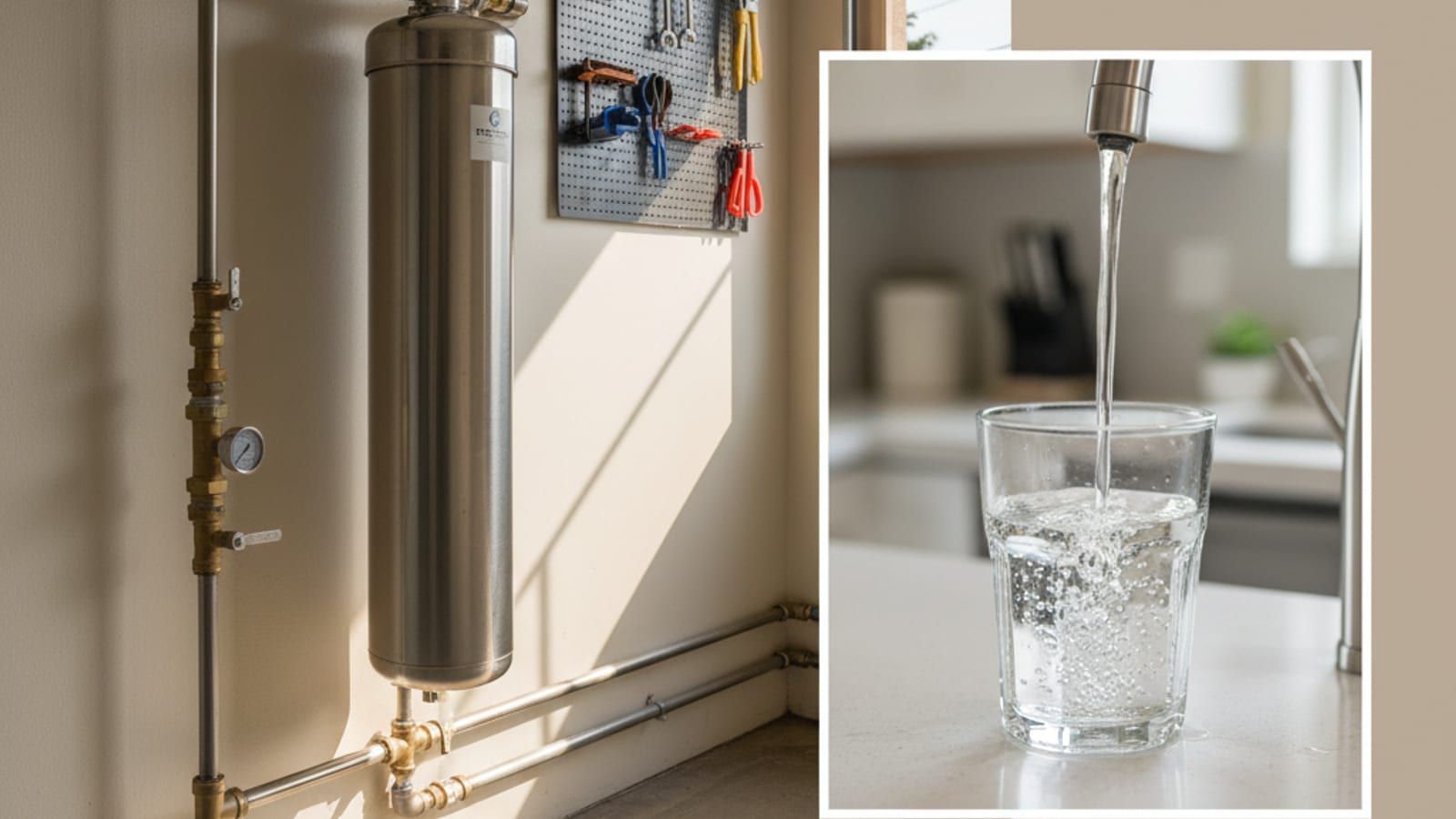
A chlorine-like taste does not tell you by itself which disinfectant is present or whether the cause is the utility supply, building plumbing, or an overdue filter. San Diego County has multiple water providers, so the useful first step is to identify the utility serving the address and read its current water quality report and notices. Then you can compare filters against the disinfectant and conditions actually reported for that service area.
Why does tap water sometimes taste or smell like a swimming pool?
Public water systems maintain a disinfectant residual as water moves through the distribution system. The disinfectant used, reported levels, and operating conditions are utility-specific and can change. The CDC explains that water containing chlorine can taste or smell different from untreated water or water containing chloramine. Use the utility report to identify its disinfectant instead of guessing from taste.
Find your serving utility on a bill or property record. Read its latest Consumer Confidence Report for the reporting year, disinfectant name, reported range or average, units, and any explanatory notes. Also check current utility notices because an annual report is a historical summary, not a live reading at your faucet. The City of San Diego’s water quality portal, for example, is relevant to customers served by the City’s system; another city or district may publish a separate report.
Check the pattern before buying a filter
Run cold water after it has been sitting, then compare more than one fixture. If the issue appears only at one faucet, inspect that faucet’s aerator and any local cartridge. If it appears only on the hot side, the water heater or hot-water plumbing deserves separate attention. A taste that appears throughout the home and at the same time for nearby customers is a reason to check with the serving utility.
If a filter is already installed, confirm that it is not in bypass, review the installation direction, and check the manufacturer’s replacement indicator or rated capacity. A sudden return of taste can reflect an exhausted cartridge, a flow problem, or a maintenance issue. Do not use taste alone to decide which one.
Contact the utility when the taste or odor is new, unusually strong, or accompanied by a change in color or another water-quality concern. Follow any current advisory instead of assuming a household filter addresses it.
Why filter labels matter
Filters vary by model. A package that mentions chlorine taste and odor does not automatically establish a chloramine claim, and a media name alone does not prove performance in a particular installation. Check the exact model’s performance data sheet or certification listing for the substance or aesthetic effect you want to reduce.
Compare these details before requesting a quote:
- the exact reduction claim and the standard or test method behind it;
- the rated flow, capacity, and replacement interval;
- incoming pressure and the household’s peak-flow needs;
- whether treatment is needed at one drinking-water tap or at the home’s point of entry;
- maintenance cost, replacement availability, warranty terms, and who performs service.
A pitcher, faucet cartridge, under-sink unit, and whole-house water filtration system solve different coverage and flow problems. The right scale depends on where the taste occurs and what the exact model is documented to reduce. If chloramine is reported by the utility, compare models with an explicit chloramine claim rather than assuming every carbon filter performs the same way. Our chlorine and chloramine removal service page explains the questions to bring to a provider.
What can an in-home visit establish?
A provider can inspect the existing equipment, note the plumbing layout, measure relevant field conditions, and gather the flow information needed to size a proposed system. Ask which tests are being performed, what each result can establish, and whether a certified laboratory is needed for a particular constituent. A quick field check is not a complete contaminant analysis.
Filter Pros offers a free in-home water test through its referral network. Filter Pros connects homeowners with separately licensed providers; the provider should identify the proposed model, its documented claims, the maintenance schedule, and the full quote before work begins.
Does a chlorine-like taste mean the water is unsafe?
Taste alone cannot answer that question. Use the serving utility’s current notices and latest water quality report to understand regulated monitoring, and contact the utility about an abrupt or unusual change. Our guide to San Diego tap-water safety shows how to find the correct report and separate utility results from possible building-plumbing concerns.
Frequently asked questions
Why didn’t my pitcher filter fix the taste?
The cartridge may lack a claim for the disinfectant reported by your utility, may be past its rated capacity, or may be operating outside its stated conditions. Check the exact model documentation and replacement status before assuming all pitcher filters will give the same result.
How often should I replace a cartridge?
Use the exact manufacturer’s interval and capacity, then account for actual water use and operating conditions. There is no San Diego-wide three-, four-, or six-month interval that applies to every model and home.
Should I choose an under-sink or whole-house system?
Choose based on coverage. An under-sink system treats a designated tap. A point-of-entry system can serve multiple fixtures but must be sized for household flow and carries different installation and maintenance requirements. Compare exact model claims for the disinfectant your utility reports.
Should I test before requesting a filtration quote?
Start with the serving utility’s report and current notices. A provider can then inspect site conditions and explain any field measurements. If you need to identify or quantify a specific substance at the tap, ask whether a certified laboratory test is appropriate.